
Latest insights

How to Remove Oil Stain from Concrete in Rockwall, TX (2026 Guide)

October 25, 2026

By HI-TEK Paving

If a dark blotch is spreading across your driveway, you need to remove oil stain from concrete Rockwall, TX homeowners fight every summer before the Texas heat locks it in permanently. The good news: most stains respond to the right sequence of absorb, degrease, and rinse. This guide walks through that sequence, plus when it makes more sense to call a concrete crew than spend another weekend scrubbing.

Act Fast: First Aid for a Fresh Oil Spill

A spill you catch the same day is far easier to beat than one that's had a week to soak in. Work through these steps before the oil has a chance to cure in the Texas sun.

  1. Blot, don't rub. Press paper towels or rags straight down on the spill. Rubbing just spreads the oil and pushes it deeper into the pores.
  2. Cover it with an absorbent. Pour on cat litter, baking soda, or sawdust until the stain is completely hidden.
  3. Let it work. Leave the absorbent for at least 30 minutes on a small spill, or overnight on a larger one.
  4. Sweep it up, then move to the degreasing step below.

Step-by-Step: How to Remove Oil Stains from Concrete

Once the loose oil is absorbed, you're left with residue bonded into the slab's surface. These are the methods that actually work, ordered from mildest to strongest.

Dish Soap and Hot Water

Pour dish soap directly on the stain, add hot (not boiling) water, and scrub with a stiff nylon brush. Rinse with a hose and repeat if any discoloration remains. This works best on light, fresh residue rather than anything that's been baking in the driveway for months.

Baking Soda Paste

Mix baking soda with water into a thick paste, spread it over the stain, and let it dry completely before scrubbing it off. This is a gentle, kid-and-pet-safe option, but it's really only effective on light staining.

WD-40 or a Dedicated Degreaser

Spray the stain, let it sit for a few minutes, then scrub and rinse. A number of garage-floor oil stains respond to WD-40 Specialist Degreaser, which is formulated to "remove all evidence of a hard day's work." For a purpose-built option, check the manufacturer's product page before buying so you know which formula is rated for concrete.

Alkaline Concrete Degreaser

For stains that laugh off dish soap, an alkaline degreaser is the next step up. Apply it, let it soak 15 to 30 minutes, scrub with a stiff brush, then rinse. Repeat as necessary; most moderate stains need at least two passes.

Stain Age Recommended Method Typical Dwell Time Best For
Fresh (same day) Absorbent + dish soap 30 min to overnight Surface oil, wet spills
A few days to weeks Alkaline degreaser + stiff brush 15–30 minutes Moderate penetration
Months to years (set-in) Poultice + hot water extraction Several hours, repeat as needed Deep, dark, permanent-looking stains

Removing Old, Set-In Oil Stains

A stain that's been through several Texas summers has oil sitting millimeters deep in the slab, and surface scrubbing alone usually just lightens it. A poultice pulls the oil back out of the pores instead of pushing it around.

  • Mix baking soda or clay-based absorbent with a solvent like acetone or mineral spirits into a spreadable paste.
  • Spread it about a quarter-inch thick over the stain and cover with plastic.
  • Let it sit for several hours to a full day. As it dries, it should darken as it draws oil out of the concrete.
  • Sweep up the dried poultice and inspect once the slab is fully dry; wet concrete hides residual discoloration.
  • Repeat if any shadow remains. Deep stains often need two or three rounds.

White circular patch taped over a crack in asphalt with blue painter’s tape and clear plastic.

Hot Water Pressure Washing: Why It Finishes the Job

Cold water pressure washing can rinse surface grime, but it struggles with oil. Hot water "melts" grease and grime, while cold water only pushes it around. That's why professional crews lean on heated-water extraction equipment for anything past a light surface stain, pairing it with a chemical pre-treatment rather than relying on pressure alone.

If you're renting equipment for a DIY attempt, you'll want at least a 3000 PSI unit and a wide fan tip to avoid etching the slab. Our concrete tools rental guide for Rockwall covers what's available locally and what it costs to rent for a weekend.

Why Concrete Absorbs Oil in the First Place

Concrete looks solid, but it's full of microscopic capillary channels. ACI Committee 201 defines permeability as the ability of concrete to permit liquid or gases to pass through, since concrete is inherently a porous material. That's why oil doesn't just sit on top waiting to be wiped away; it migrates into the slab, and hot Rockwall pavement pulls it in even faster before it re-thickens and sets once the surface cools at night.

Why This Matters More in Rockwall, TX

Rockwall sits on the shore of Lake Ray Hubbard, and anything that washes off a driveway during a Texas downpour eventually reaches a storm drain. Vehicle maintenance areas are stormwater hot spots because spills and improper disposal of oil and other fluids can let oil and grease, heavy metals, and hydrocarbons enter ground and surface water supplies. That's one more reason to treat a spill the week it happens rather than let it spread across the slab. For the full regulatory picture, the EPA's vehicle maintenance stormwater guidance lays out the best practices most North Texas municipalities point homeowners toward.

There's a neighborhood angle too. Many master-planned communities in Rockwall and surrounding Kaufman County enforce exterior-maintenance standards through HOA covenants, and a dark, spreading driveway stain is exactly the kind of thing that draws a notice ahead of a home inspection or sale.

Other Driveway Stains That Get Mistaken for Oil

Not every dark mark is oil. Rust from a leaking sprinkler head or old patio furniture leaves a similar-looking circular stain, but an oil degreaser won't touch it since rust needs an acidic rust remover instead. Tire marks are usually rubber transfer that responds better to a strong surface cleaner than to degreasing chemistry, and algae or mildew in shaded, damp spots needs an antimicrobial treatment rather than either one. Misidentifying the stain wastes a weekend and a bottle of the wrong product.

Three dark stains on a concrete sidewalk, including a rust-colored ring in the center.

When to Call a Professional Concrete Crew

DIY methods have a ceiling. A stain needs professional attention when it's darkened into a permanent-looking blotch, feels slick underfoot, has spread well beyond the original drip pattern, or still smells of oil days later. In our experience resurfacing and finishing driveways across Rockwall and Kaufman County, roughly a third of the oil-stain calls we get aren't really cleaning jobs at all; the slab has started to pit or flake under the stain, and the better long-term fix is a finish or resurfacing pass rather than another round of degreaser.

If scrubbing isn't cutting it, our concrete finishing and concrete paving teams can assess whether the slab just needs a deep clean or whether the stain has gone far enough to warrant a resurface. Get a free estimate and we'll tell you straight which one it is before you spend money on either.

Preventing the Next Stain

Sealing a driveway after cleaning creates a barrier that slows future oil absorption, so the next spill is easier to wipe up before it sets. It's a reasonable add-on for homeowners who've just gone through the work of lifting a stain and don't want to repeat it. Parking a drip pan under a known leak and sweeping the driveway instead of hosing it down also go a long way between oil changes.

Property managers dealing with oil stains across a shared lot rather than a single driveway face the same porosity problem at a larger scale, just with more vehicles and more leaks going unnoticed longer. Our parking lot maintenance service covers scheduled cleaning cycles built for exactly that.

Homeowners anywhere from Rockwall to the surrounding Dallas suburbs can start with our concrete contractor services page to see the full scope of what we handle beyond stain removal, from finishing to full slab replacement. You can also browse HI-TEK Paving & Construction directly for our complete service area and project gallery.

About the Author

This guide was written by the HI-TEK Paving & Construction field team, concrete and asphalt contractors serving Rockwall, Dallas, and Kaufman County since our founding. Our crews handle residential driveway resurfacing and commercial lot maintenance across North Texas, which is where the stain-versus-resurface guidance above comes from. Questions about a specific driveway? Contact us and we'll take a look.

FAQ

Is it possible to remove old oil stains from concrete?

Yes, though age and depth determine how much work it takes. Fresh spills often respond to DIY degreasers in one or two passes, while stains that have had months or years to penetrate typically need a poultice, hot water extraction, or professional-grade equipment and repeated treatment to fully clear.

Can WD-40 remove oil stains from concrete?

Yes, for lighter and moderate stains. Spray it on, let it sit a few minutes, scrub with a stiff brush, and rinse. WD-40 Specialist Degreaser is specifically positioned for tough garage-floor oil stains, but deep, set-in stains usually need a dedicated concrete degreaser or a poultice on top of it.

Does Dawn dish soap get rid of oil stains on concrete?

Dawn works as a mild surfactant and can help lift light, fresh oil residue through basic degreasing action. On a set-in or older stain, it usually isn't strong enough on its own to fully lift oil that's penetrated deep into the concrete's pores.

Will baking soda or vinegar remove an oil stain?

Baking soda alone is a gentle absorbent that works on light, fresh stains but rarely clears anything set-in. Adding vinegar creates a fizzing reaction that can help loosen surface residue on minor stains, but neither is strong enough for oil that's penetrated deep into older concrete.

Will CLR remove oil from concrete?

No. CLR is formulated to dissolve calcium, lime, and rust deposits, not petroleum-based stains. Using it on an oil stain may clean surrounding grime without touching the oil itself, leaving the original mark largely unchanged.

Do you need to seal a driveway after removing an oil stain?

It's not required, but it's a smart follow-up. Sealing creates a barrier that slows future oil absorption, so your next spill is easier to wipe up before it sets. Ask whichever contractor cleans your driveway whether sealing is included or priced separately.

More Paving Tips


More from HI-TEK Paving

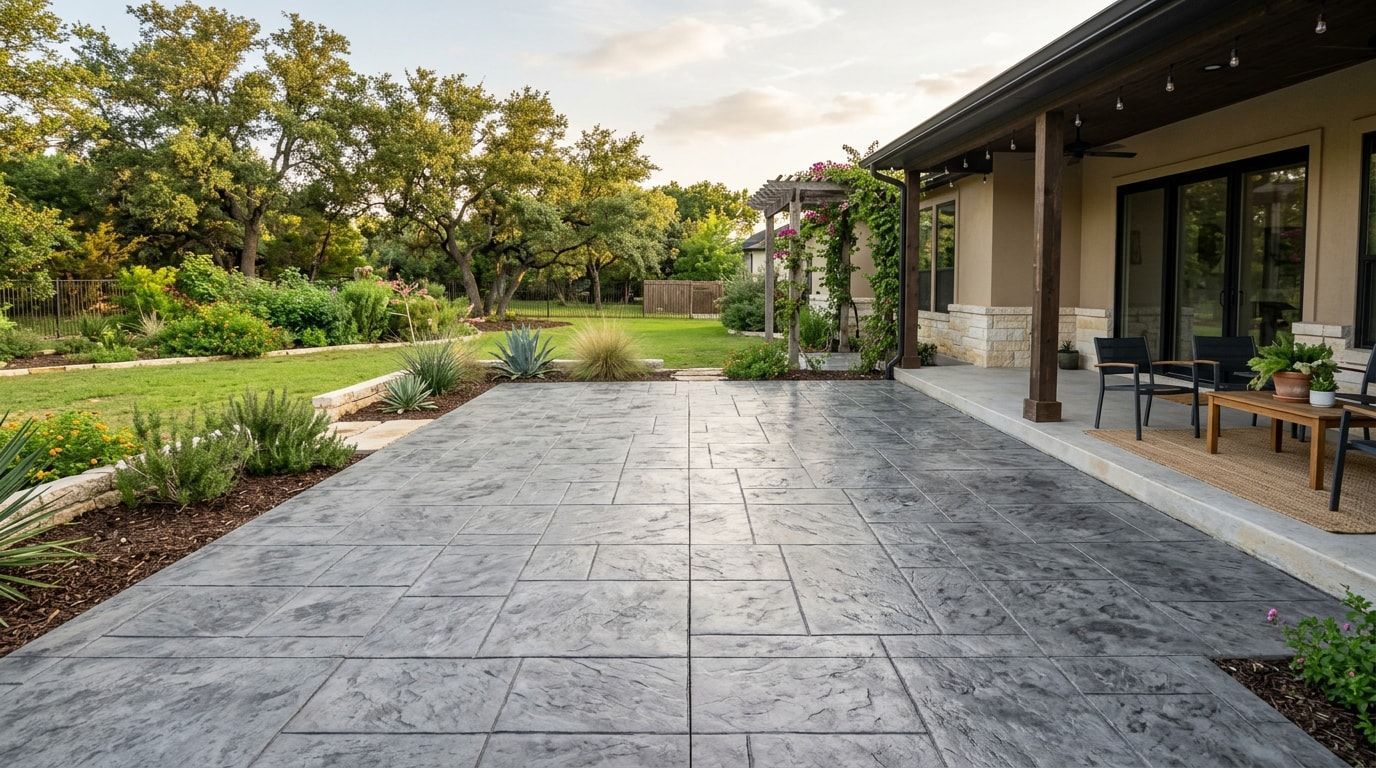
Large stamped concrete patio beside a house, overlooking a lush garden at sunset
November 2, 2026
Modern stamped concrete patterns in Waxahachie, TX now rival real stone, wood, and pavers at a fraction of the price. Homeowners across Ellis County are swapping busy, high-contrast stamp jobs for cleaner geometric layouts and large-format textures. This guide breaks down which patterns actually read as "modern" in 2026, what they cost, and why Waxahachie's soil and summer heat change how they need to be installed.
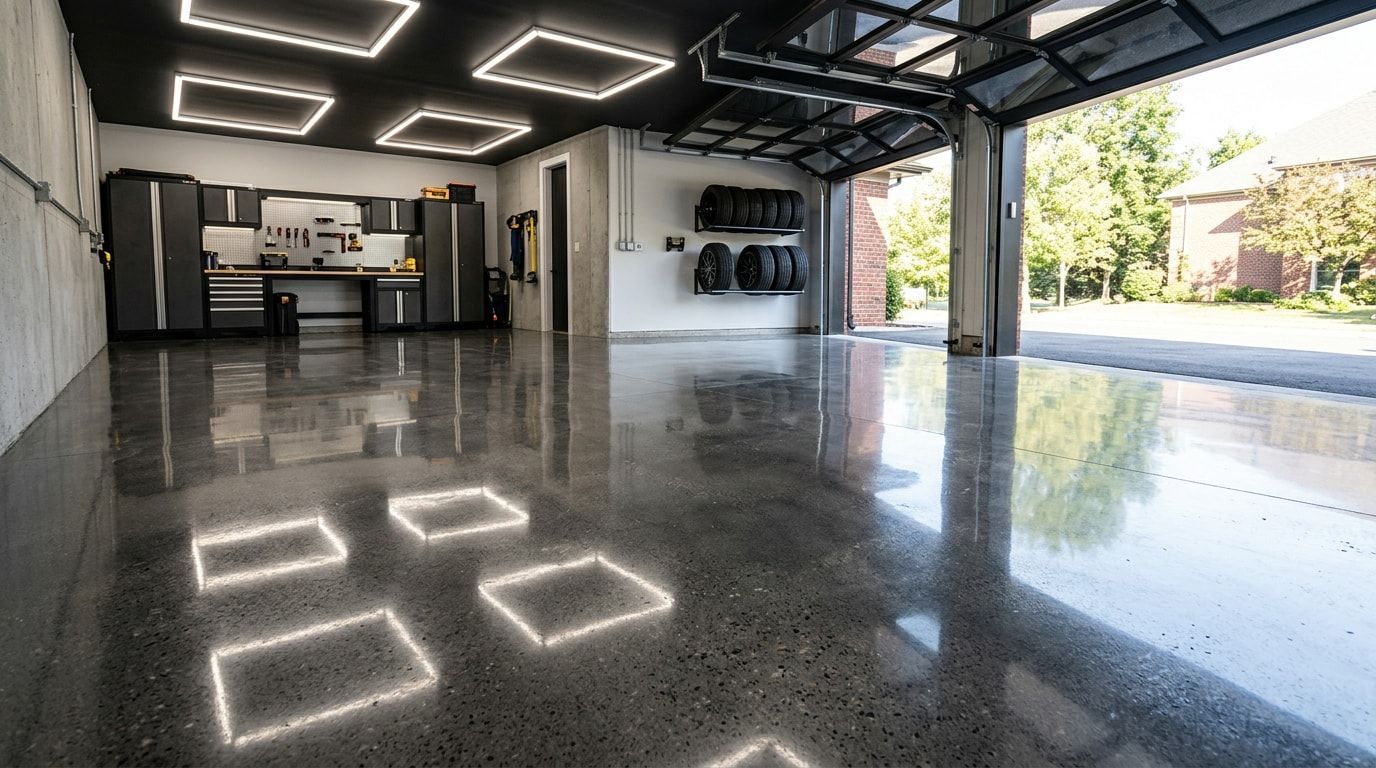
Modern garage with glossy black floor, geometric ceiling lights, and open door to a sunlit driveway
October 31, 2026
If you're searching for concrete polishing near me in Seagoville, TX, you're probably staring at a dull garage floor, a worn warehouse slab, or a retail space that needs a durable upgrade. This guide breaks down real 2026 pricing, finish options, and maintenance steps so you know what a fair quote looks like before a contractor ever walks your site. Our crews at Hi-Tek Paving have ground and polished floors across Seagoville and the greater Dallas area, and the cost ranges below reflect what we actually see on local jobs, not just national averages.
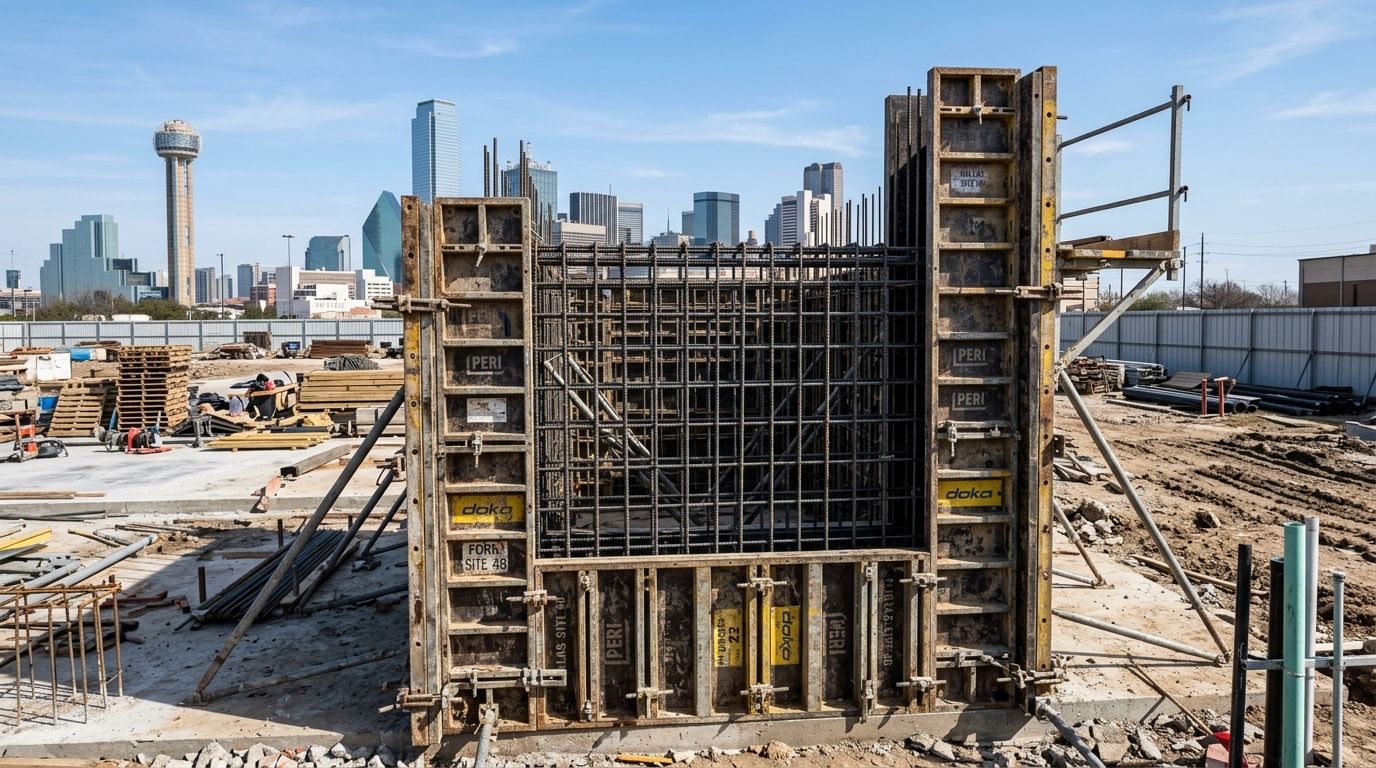
Construction site with a concrete building core, steel scaffolding, cranes, and city skyline in the background
October 29, 2026
Concrete wall forms in Dallas, TX split into three practical categories: job-built lumber or steel forms assembled on-site, rental panelized systems, and engineered precast panels delivered ready to set. Picking the wrong one costs you schedule and money once you factor in Dallas's expansive clay, North Texas wind loads, and the city's amended building code. Here's how each system actually performs on local job sites, so you can match the method to the wall instead of guessing.