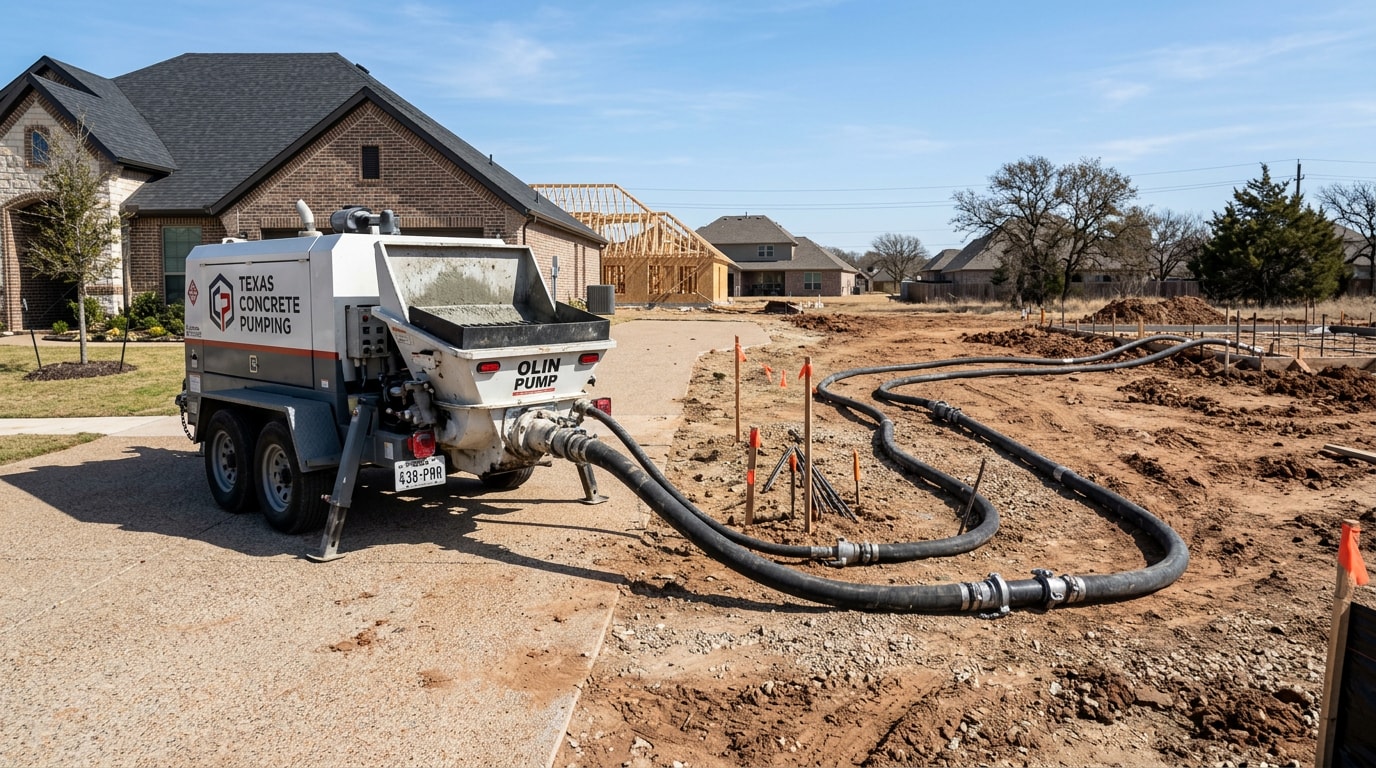
A concrete line pump in Rockwall, TX moves ready-mix concrete through flexible hose to driveways, slabs, and tight-access pours that a chute truck can't reach on its own. Pricing runs on an hourly minimum plus a per-yard rate, and choosing the right equipment can save your crew an hour of hand-wheeling on pour day. Here's what actually drives cost, how line pumps differ from booms, and what our crews check before every Rockwall pour.
Visit HITEK Paving to see our services and request a free estimate.
Concrete Line Pump Cost Factors in Rockwall, TX
Rockwall-area providers typically structure concrete line pump cost around an hourly minimum for the first few hours, then a per-additional-hour fee plus a per-yard-pumped charge. There's no single published 2026 rate card for the region, so treat any flat number you see online as a starting estimate, not a quote.
What actually moves the price on a Rockwall job:
- Yardage pumped — more concrete means more pump time, even at a flat hourly rate.
- Hose distance and runs — a 150-foot backyard run through two gates costs more setup time than a straight driveway shot.
- Mix type — colored, fiber-reinforced, or pea-gravel mixes can change pipe diameter and flow rate.
- Scheduling — weekend, early-morning, or rush bookings often carry a premium.
- Cleanout — washing out the line and hopper is usually billed as part of the job, not an add-on surprise.
| Factor | Why It Changes Price |
|---|---|
| Yardage | Longer pump time, more fuel and labor |
| Hose length/access | Extra sections, extra setup and breakdown time |
| Mix design | Pea-gravel or colored mixes need specific pipe sizing |
| Day/time | Weekend and early slots often cost more |
| Travel distance | Trip fees outside the core Rockwall radius |
Because every pour is different, the fastest way to get a real number is to request a free estimate with your yardage, access conditions, and pour date.
Boom Pump vs. Line Pump: Which Fits Your Rockwall Project
A boom pump uses a hydraulic arm to place concrete at height or distance, while a concrete line pump feeds hose-fed material at ground level into tight-access sites. The American Concrete Pumping Association's own certification materials define the line pump by its hose diameter rather than its reach: "A line pump is defined as: a pump that pumps grout or a 3/8-inch pea gravel mix through pipe and hose that has a diameter of 2 inches, 2-1/2 inches or 3 inches." That's a meaningfully different machine from a boom truck, and it's why line pumps show up on residential driveways while booms show up on commercial slabs and multi-story pours.
For most Rockwall driveways, patios, and pool decks, a line pump sets up faster and costs less per job.
| Factor | Boom Pump | Line Pump |
|---|---|---|
| Reach | High / long-distance | Ground-level, hose-extended |
| Best for | Large commercial pours | Residential slabs, tight access |
| Setup time | Longer | Shorter |
| Cost tier | Higher | Lower |
For the full official specification language on both pump categories, see the American Concrete Pumping Association's certified operator study guide.
Inside a Rockwall Pour: What Our Crew Checks First
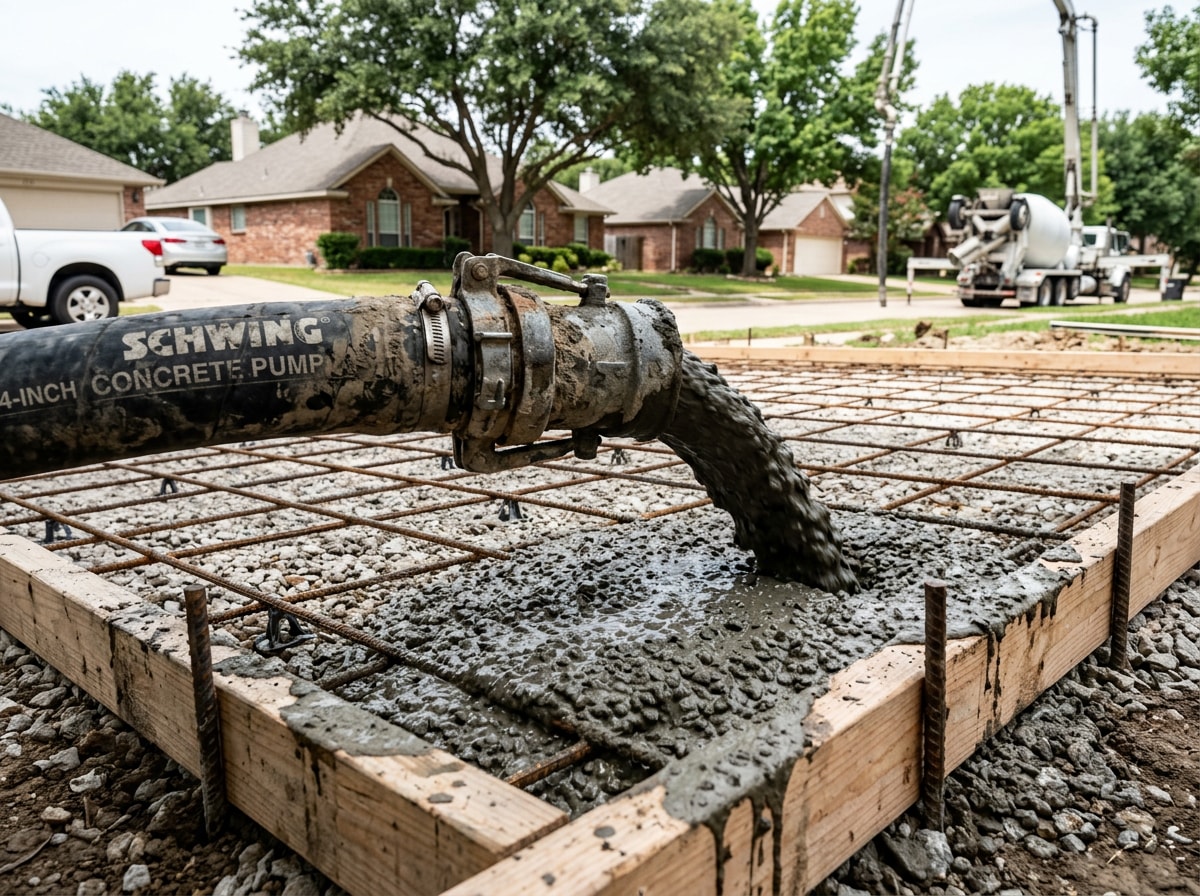
Most of the surprises on a line pump job aren't about the concrete — they're about the site. Our crews routinely run hose through side-yard gates as narrow as 36 inches, around pool equipment, and across finished landscaping that can't take a boom truck's outriggers. On Rockwall's clay-heavy lots, we also walk the pour path before the truck arrives to check for soft ground near the hose run, since a hose section buried in mud slows placement and risks a cold joint in the North Texas summer heat.
Pipe supports aren't optional on these setups. OSHA's construction standard spells it out directly: "Concrete pumping systems using discharge pipes shall be provided with pipe supports designed for 100 percent overload." That requirement, detailed in OSHA's concrete and masonry construction standard, is one reason a trained operator checks every coupling and support before the first yard moves through the line.
Our Line Pump Fleet & Hose Reach
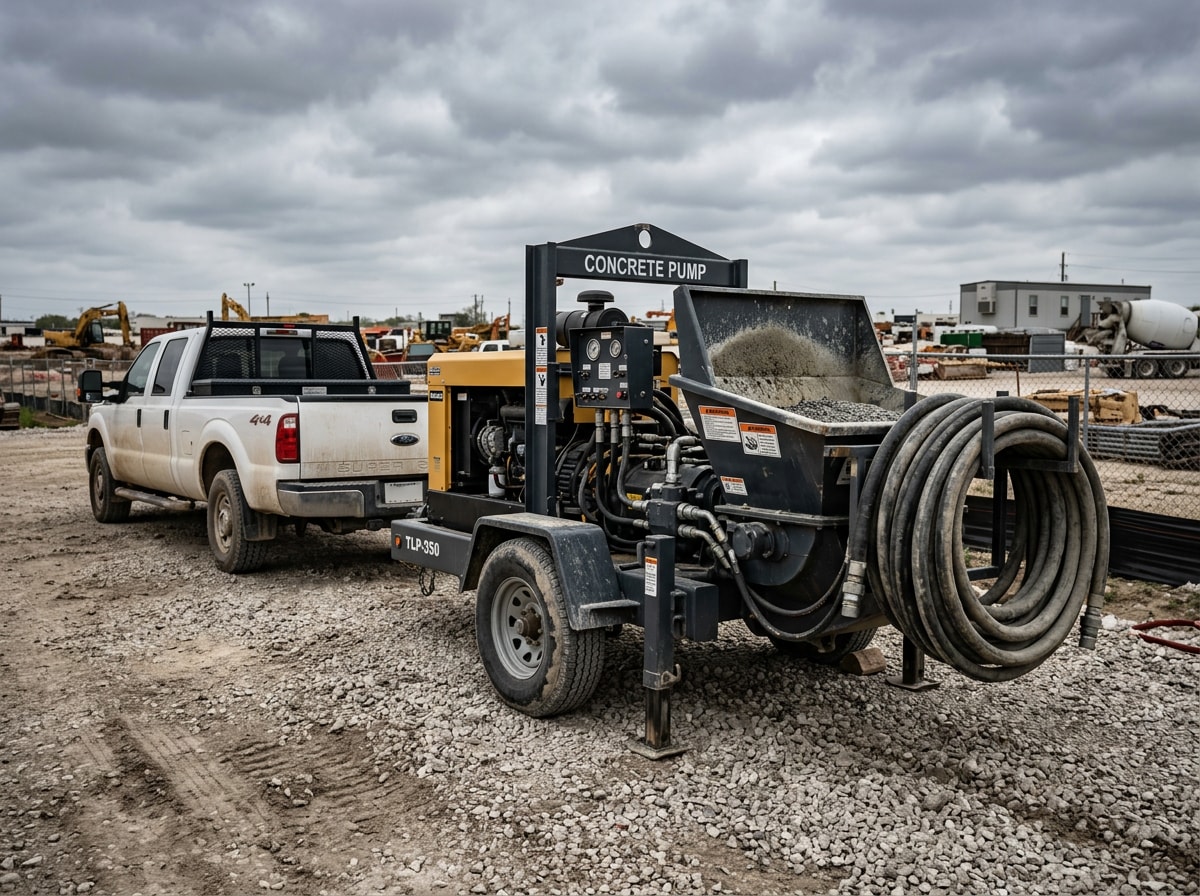
Our concrete pump fleet includes trailer-mounted line pump units sized for tight residential access, with hose lengths suited to most driveway, patio, and slab jobs around Rockwall. Once the concrete is placed, the finishing crew takes over — browse our concrete paving and concrete finishing services to see what happens after the pump truck leaves. If you're weighing equipment options for a smaller DIY-adjacent pour, our guide to concrete mixer rental in Plano, TX covers the rental side of that decision.
Serving Rockwall, Kaufman County & the Fast-Growing DFW Metroplex
Rockwall sits inside one of the fastest-growing construction markets in the state. Texas continued to lead the country with 140,002 single-family permits issued in 2025 , and that volume pushes steadily into the Rockwall and Kaufman County corridor as new subdivisions and commercial pads break ground. You can see the full year-over-year trend on the National Association of Home Builders' permit data portal.
Hi-Tek Paving ({{SITE_URL}}/) runs line pump and finishing crews across Rockwall, TX and Kaufman County, TX, alongside our broader concrete contractor services for driveways, parking lots, and slab work.
FAQ
What's the difference between a concrete line pump and a boom pump?
A line pump feeds hose-fed concrete at ground level for tight-access jobs. A boom pump uses a hydraulic arm for height and reach on larger commercial pours.
How much does it cost to rent a concrete line pump in Rockwall, TX?
Pricing typically includes an hourly minimum plus per-yard fees, with the final cost shaped by yardage, hose distance, mix type, and scheduling. Request a free estimate for a number specific to your pour.
How far can a concrete line pump reach?
Reach depends on hose length and pump model. Most residential line pump jobs run well under the pump's maximum rated distance, since additional hose sections can extend the run as needed.
How long does it take to pump a full truck of concrete?
Unload time varies by mix design and crew experience, but an efficient operator can usually place a full truck well inside an hour once the hose is set and the line is primed.
Do I need a permit to use a concrete pump in Rockwall, TX?
The pump itself typically doesn't require a separate city permit, but the underlying concrete work (driveway, slab, or structural pour) often does. Confirm requirements with the City of Rockwall before your pour date, or ask your contractor to handle the check.
Can a line pump handle colored or fiber-reinforced concrete?
Yes, but the mix design affects pipe diameter and flow rate. Tell your pumping crew about any colorant, fiber, or aggregate size in advance so they can set up the correct hose diameter.
Ready to lock in a pour date? Get a Free Estimate and tell us your yardage, access conditions, and timeline, and we'll scope the right line pump setup for your Rockwall job.