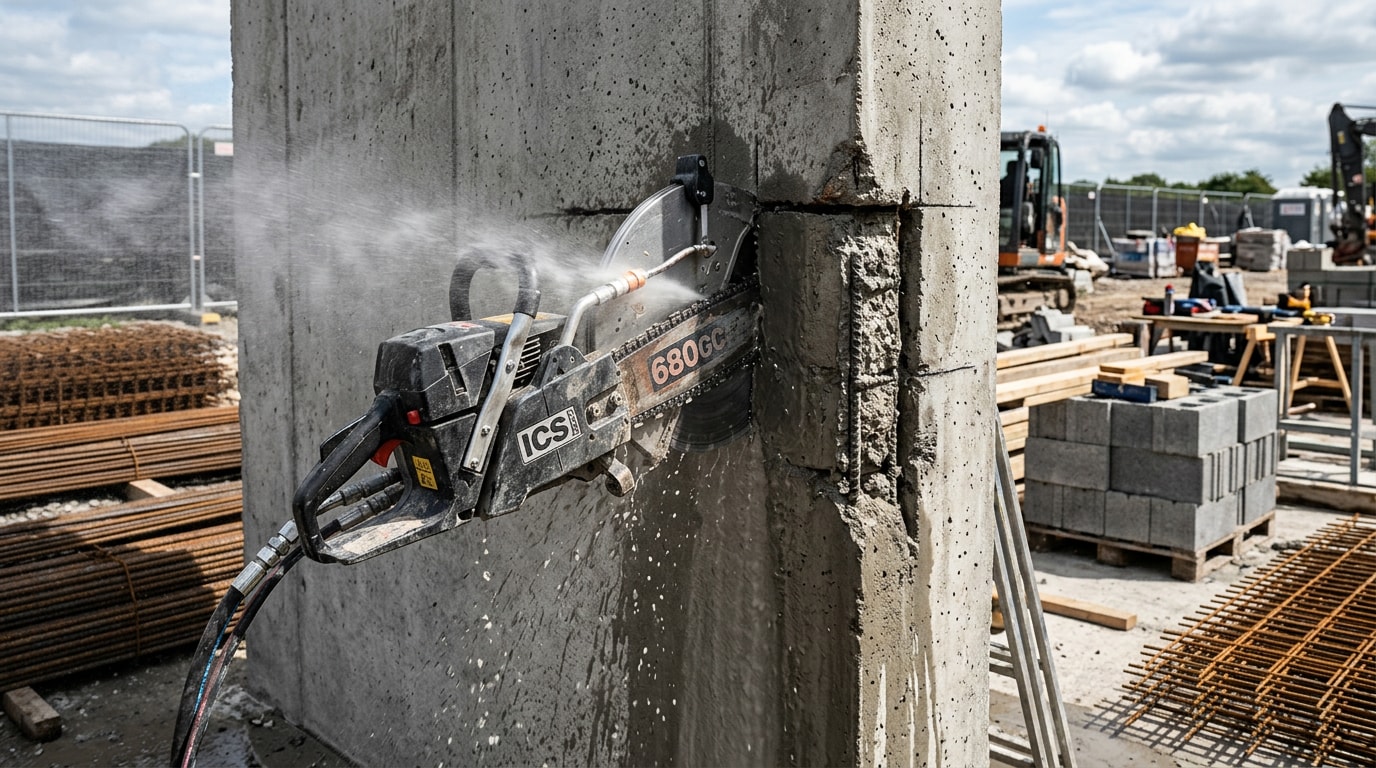
A concrete chain saw in Grand Prairie, TX cuts deep, square openings into slabs, walls, and foundations using a diamond-studded chain instead of a circular blade. Local contractors reach for this tool when a job needs a plunge cut, a tight corner, or access through a confined space that a standard saw can't manage. Here's how the equipment works, what drives the price, and when it beats every other cutting method on a DFW jobsite.
Why Grand Prairie Contractors Reach for a Concrete Chain Saw
A concrete chain saw is a diamond-chain cutting system, not a repurposed wood chainsaw. It runs on gas, hydraulic, electric, or pneumatic power depending on the site.
North Texas commonly calls for thicker, reinforced slabs and grade beams because of the region's reactive clay soils. That added thickness is exactly where a standard circular blade starts to run out of reach, and it's one reason Grand Prairie crews lean on chain saws more than contractors in regions with thinner, non-reactive-soil slabs.
Four things usually decide the call:
- Deep, narrow cuts without widening the opening
- Flush cuts and clean corners other tools struggle to match
- Lower vibration, which reduces the risk of cracking surrounding concrete
- Versatility across concrete, masonry, stone, and brick on the same job
Concrete Chain Sawing vs. Traditional Concrete Cutting Methods
Slab sawing, wall sawing, and hand sawing are the usual points of comparison. All of them cut concrete, but they differ in mechanism, achievable depth, corner precision, and safety profile on an active site.
Concrete Chain Sawing
A diamond chain loops around a guide bar, letting the saw plunge straight into a wall or slab without a pre-drilled starter hole. That plunge-cut ability, paired with square, no-overcut corners, is why it's the preferred choice for window, door, and vent openings.
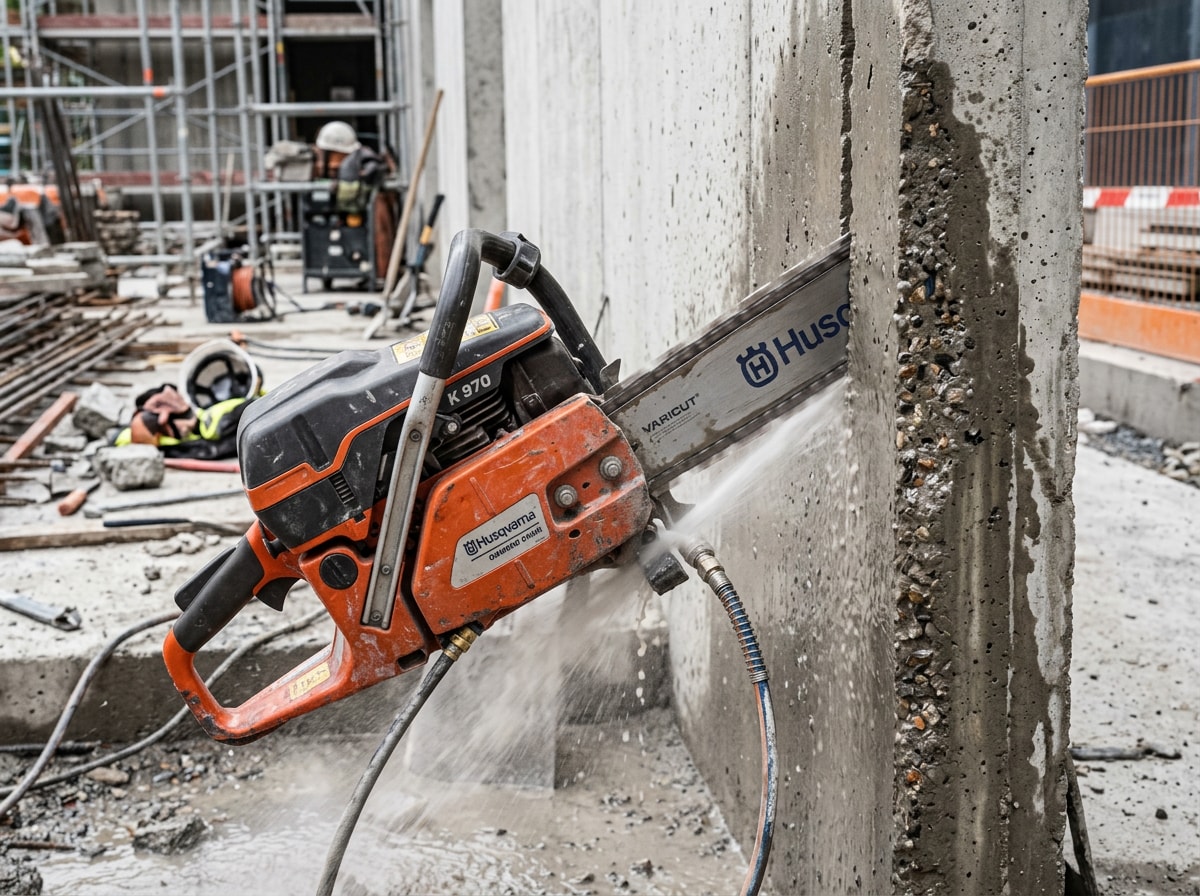
Cutting depth varies by power source, so a single number never tells the whole story.
| Power Source | Typical Cutting Depth |
|---|---|
| Gas-powered | 12-16 inches |
| Electric | 10-14 inches |
| Hydraulic | Up to 25 inches |
Hydraulic saws can cut square corners up to 25 inches deep from one side, which is why they're the standard choice for installing windows, doors, and HVAC ductwork in existing structures . Reinforcement rarely stops a cut, either. Diamond chains are designed to cut through reinforced concrete containing rebar, and most chains handle #4 or #5 rebar (1/2 to 5/8 inch) without issue . Heavier, free-standing steel still needs a different plan, which is a detail most local listings never mention.
Traditional Slab and Wall Sawing
A circular blade typically tops out around 6 to 8 inches of depth per pass. On thicker walls or slabs, that means cutting from both sides to meet in the middle.
Circular blades also struggle at corners. The round blade shape forces an overcut past the intended line, something a chain saw's straight, square-corner path avoids entirely.
When Chain Sawing Beats Core Drilling or Slab Sawing
Core drilling still wins for round penetrations like pipe or conduit openings. Chain sawing is the better call when:
- The opening needs square corners without overcutting
- Access is limited to confined spaces like basements or crawlspaces
- The cut has to start mid-wall through plunge cutting rather than from an edge
- The material runs thick, since hydraulic equipment reaches depths up to 25 inches
That combination makes chain sawing a strong fit for new door and window openings, mechanical penetrations, and foundation modifications where a clean edge matters more than speed. If a project is leaning toward structural changes near footings or grade beams, it's worth a look at our foundation repair page before cutting starts.
Types of Concrete Chain Saws for Grand Prairie Jobsites
Chain saws are generally chosen by power source and jobsite conditions, not a one-size-fits-all spec sheet. ICS's lineup of industrial cutting systems includes gas, electric, hydraulic, and pneumatic powerheads, guide bars, and patented diamond chains for concrete, utility pipe, stone, and masonry work , which covers most situations a contractor runs into.
- Gas-powered saws offer high mobility outdoors and don't need a power hookup.
- Hydraulic saws deliver the deepest cuts and the most sustained power for thick commercial walls.
- Electric saws keep noise and fumes low for indoor jobs.
- Air-powered (pneumatic) saws run with low maintenance and no exhaust fumes, which makes them a common pick for underground work or other confined spaces.
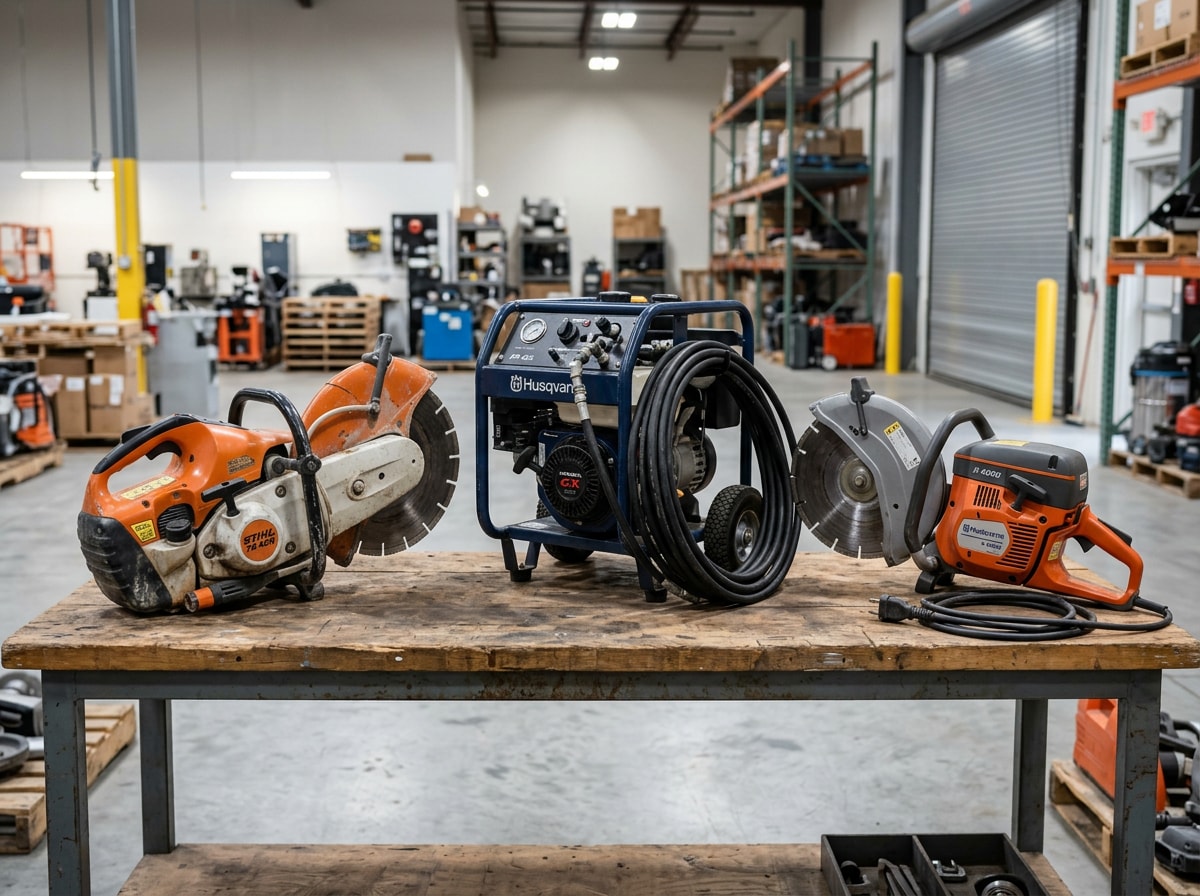
Matching the saw type to the site, not just the material, is what keeps a cut clean and safe. For a broader look at related services, our concrete contractor page covers what else a crew typically handles on the same visit.
How a Concrete Chain Sawing Project Works
A typical project follows a fairly consistent sequence from planning to cleanup:
- Site review – the crew checks drawings, opening dimensions, and the condition of the existing concrete.
- Thickness and reinforcement check – technicians confirm slab or wall thickness and look for rebar or post-tension cable.
- Utility locating – underground and embedded utilities get flagged before any blade touches the surface.
- Water flow setup – cooling water is routed to the chain to manage heat and knock down dust.
- Plunge-and-guide cutting – the saw plunges into the surface, then follows the guide bar along marked lines.
- Slurry control and debris removal – wet slurry and cut material are contained and cleared as the cut progresses.
This structured approach is why hiring an experienced crew matters as much as the equipment itself, especially on a job that also involves concrete demolition work after the opening is cut.
What Drives the Cost of a Concrete Chain Saw Cut in Grand Prairie
Pricing typically runs by the linear foot or by project, and several variables move the number more than any single rate card:
- Depth and thickness – a deeper cut takes longer and wears the chain faster.
- Reinforcement – rebar or post-tension cable adds time and caution.
- Access – confined spaces, upper floors, or tight mechanical rooms add labor.
- Minimum service charges – most cutting contractors apply one, since mobilizing equipment for a single short cut costs nearly as much as a larger job.
A small residential opening costs far less than a thick, reinforced commercial wall cut. The only way to get an accurate number is a site-specific look, so request a free estimate before budgeting around a guess.
Jobsite Safety Checklist for Concrete Chain Sawing
Cutting concrete isn't a job to improvise. The Concrete Sawing & Drilling Association shares safety resources to help crews stay informed, compliant, and committed to safer job sites , and a few of those basics show up on every well-run project:
- Confirm reinforcement and utility locations before the first cut.
- Keep the side cover, hand guard, and mud flap in place at all times.
- Maintain secure footing and keep hoses clear of the work area.
- Run a well-ventilated zone when using a gas-powered saw, since carbon monoxide builds up fast in enclosed spaces.
Dust control matters just as much as the cut itself. OSHA's Respirable Crystalline Silica standard for construction requires employers to limit worker exposure to silica dust , which is exactly why wet cutting, not dry cutting, is standard practice on a chain-saw job.
FAQ
How deep can a concrete chain saw cut?
Depth depends on the power source. Gas-powered saws typically reach 12 to 16 inches, while hydraulic chain saws can go up to 25 inches in a single pass. Actual results vary with concrete thickness, embedded rebar, and the specific chain and bar length used.
What is a concrete chainsaw used for?
It's a diamond-chain cutting tool built for concrete, masonry, brick, and stone, not a standard wood-cutting chainsaw. Diamond segments embedded in the chain grind through hard material instead of slicing it. Contractors use it for door and window openings, mechanical penetrations, and foundation modifications.
How much does concrete cutting cost in Grand Prairie, TX?
Pricing runs by the linear foot or by project and depends heavily on depth, reinforcement, site access, and contractor minimum charges. A small residential opening costs far less than a thick, reinforced commercial wall cut. Request a quote for an accurate number on a specific job.
Is concrete chain sawing safe?
When trained operators use proper PPE and wet-cutting methods, it's a safe, standard construction practice. Respirable silica dust is the main hazard, which is why water-based cutting and OSHA-aligned controls matter on every job.
Can I rent a concrete chain saw instead of hiring a contractor?
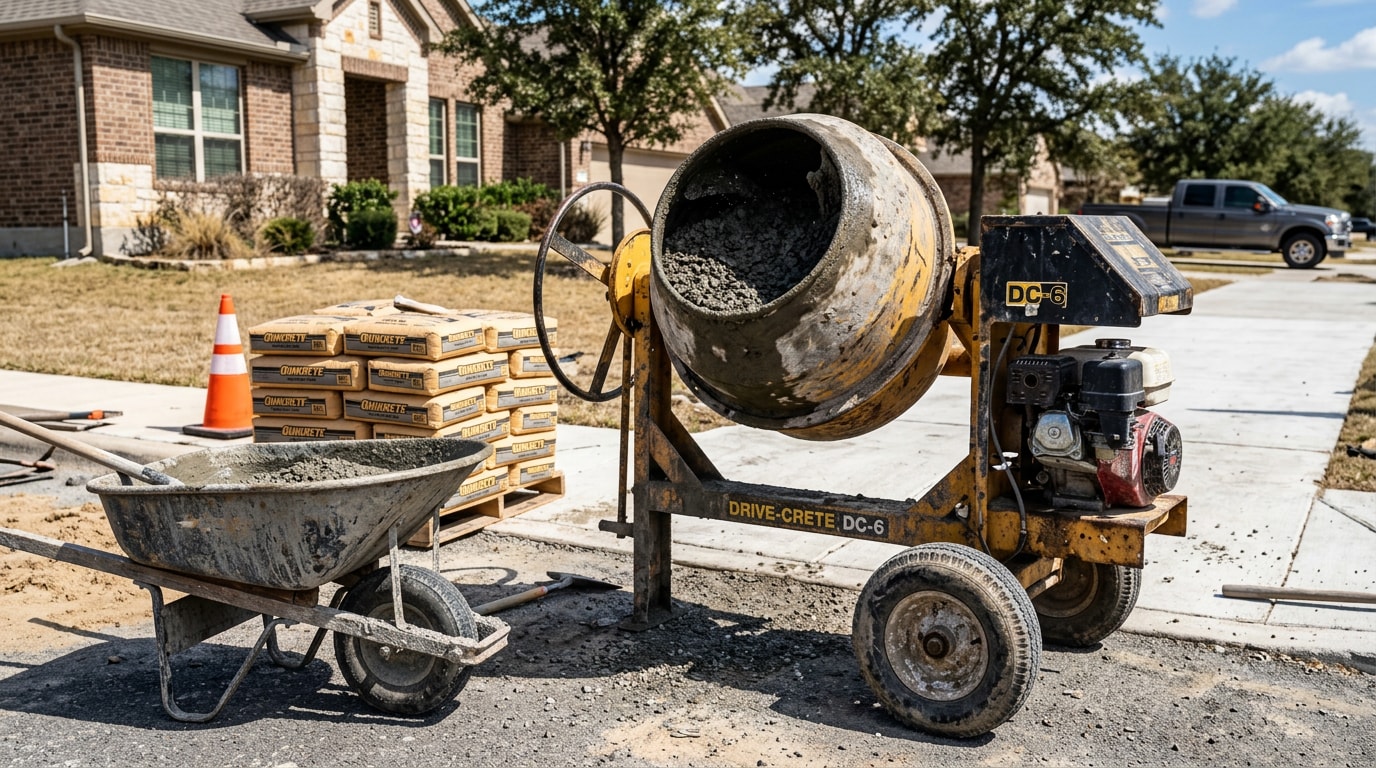
Rental units exist, but diamond chain saws are unforgiving tools around rebar, post-tension cable, and embedded utilities. A missed cable or a misjudged depth can turn a small opening into a structural repair. If DIY equipment rental is still on the table for a smaller task, our concrete mixer rental guide walks through typical rental costs and logistics in the DFW area, though chain sawing itself is best left to a crew that handles it daily.
Hi-Tek Paving works on concrete cutting, demolition, and repair projects across the Grand Prairie, TX area, backed by crews who run this equipment on commercial and residential sites every week. Visit our Grand Prairie service area page for local project examples, or head to the homepage to see the full range of concrete and paving services. Ready to scope a cut? Get a free estimate and we'll walk the site with you before anything gets cut.