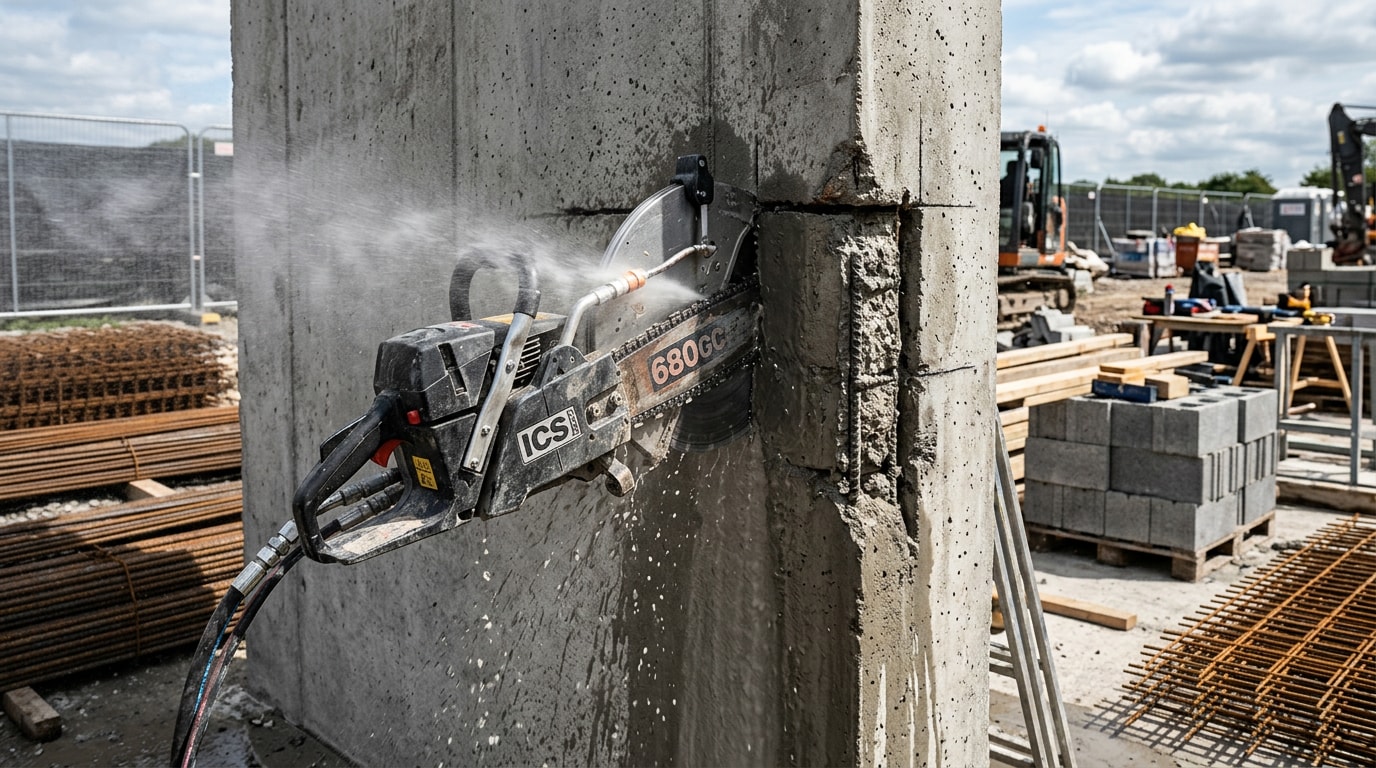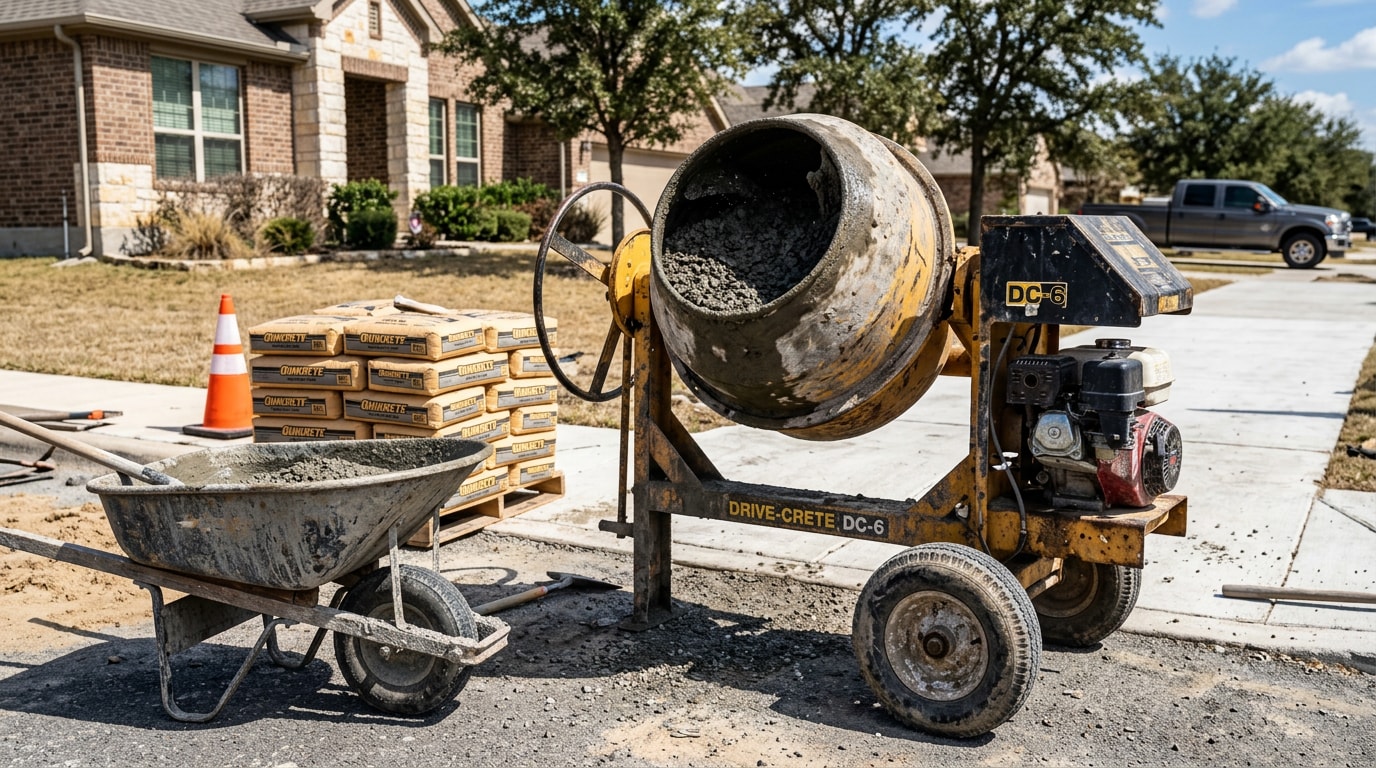
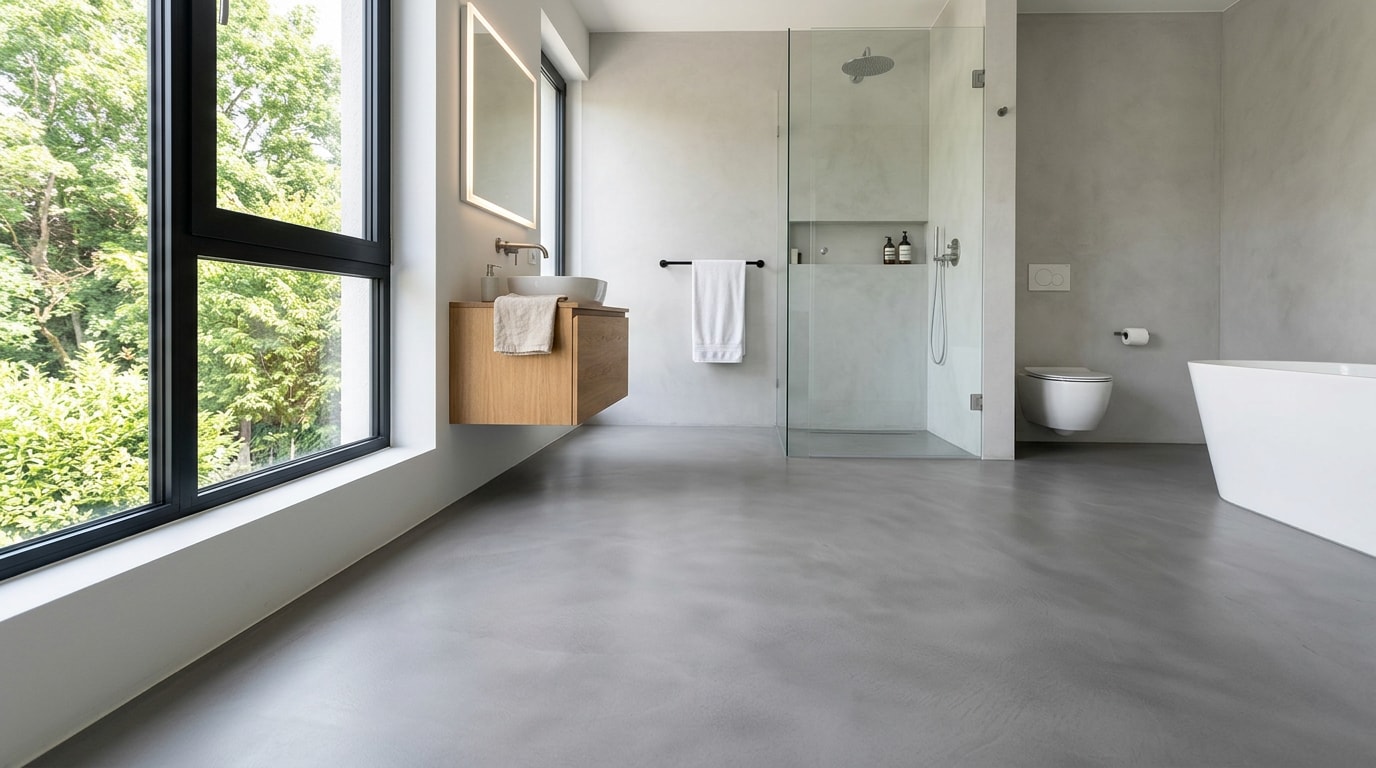
Micro concrete in Seagoville, TX is a thin cement-based overlay that goes directly over existing tile, concrete, or wood subfloor instead of requiring a full tear-out. Homeowners and property managers across southeast Dallas County are using it to update floors, countertops, and even commercial entryways without the mess and cost of demolition. This guide covers what it is, where it works, what it costs in 2026, and how North Texas heat and humidity change the installation timeline.
What Is Micro Concrete?
Micro concrete is applied in several thin layers with a steel trowel or spatula, building up to a total thickness of roughly 2 to 10 mm (0.08 to 0.39 in), depending on the product and the condition of the surface underneath. It is not a replacement slab. It is a surface system that bonds to what is already there.
You will see this material marketed under a few different names, and that is a common source of confusion. Microcement is also known as micro concrete, micro-screed, or micro-overlay, and all of these terms refer to the same thin, versatile cementitious coating. If you searched any of those terms to land here, you are in the right place.
For older Seagoville properties, the appeal is practical. Many homes and small commercial buildings in the area have tile or concrete that is structurally sound but dated. A concrete overlay can go directly over that surface, which cuts out demolition, debris hauling, and weeks of downtime. At Hi-Tek Paving & Concrete, our crews have applied overlay and resurfacing systems on everything from residential bathrooms to commercial walkways across Kaufman and Dallas Counties, and the floors that hold up longest are almost always the ones where substrate prep was not rushed.
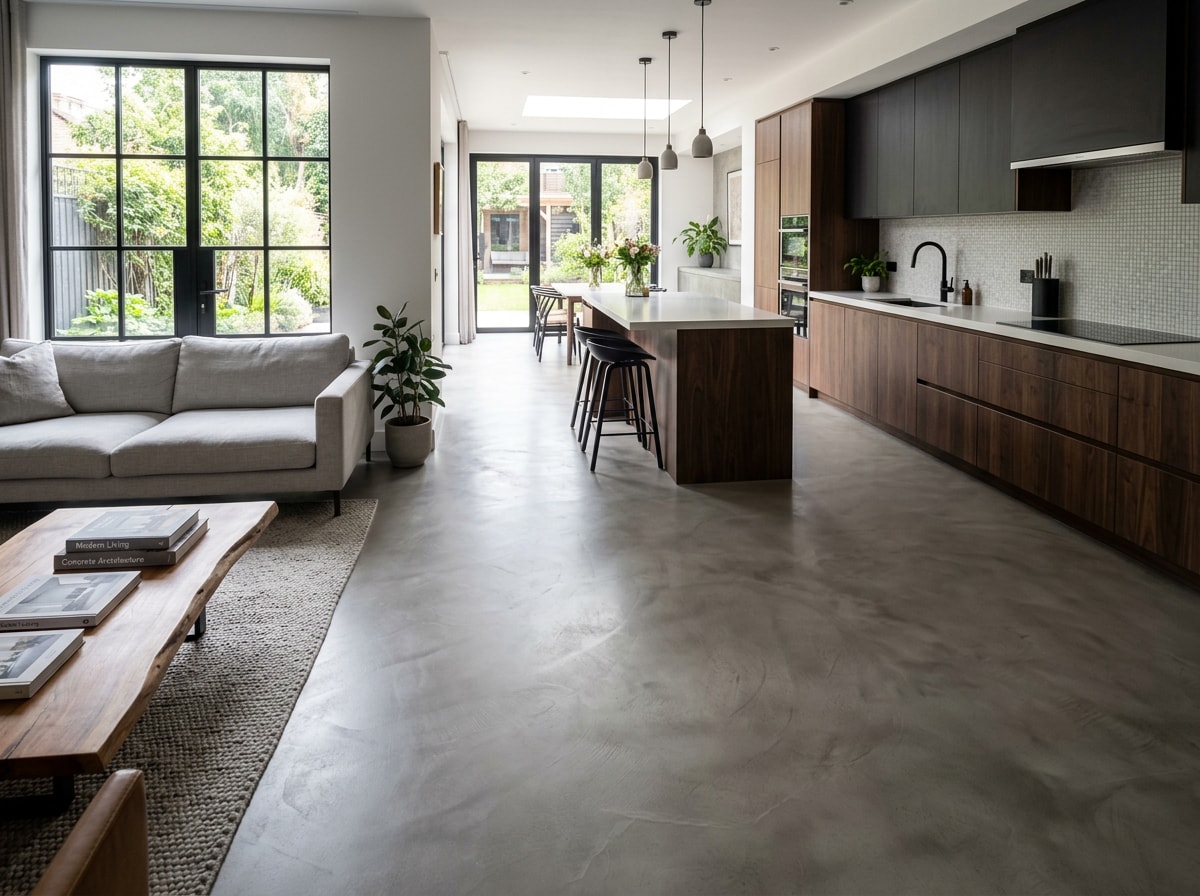
If a full concrete pour makes more sense for your project than an overlay, our concrete paving team can walk you through both options.
Micro Concrete vs. Microcement vs. Polished Concrete
These three terms get used interchangeably, but they are not identical products, and the right choice depends on your project.
| Feature | Micro Concrete / Microcement | Polished Concrete |
|---|---|---|
| Best for | Renovations over existing tile or concrete | New builds or slabs poured in place |
| Thickness | 2 to 10 mm overlay | Full slab thickness |
| Sealed lifespan | 10 to 20 years | 20 to 50 years |
| Demolition needed | Usually no | Yes, requires a fresh slab |
The general rule: micro concrete fits renovation projects where existing floors are in sound condition and demolition is not practical, while polished concrete suits new builds where the slab can be finished in place. If you are starting from scratch, polished concrete may last longer. If you are working around what is already there, micro concrete wins on convenience and disruption.
It is also worth a quick mention of epoxy coatings, since people comparing options often lump it in. Epoxy tends to have a glossier, more plastic look and can yellow with UV exposure, while microcement offers a more natural, matte-to-satin stone-like finish that many homeowners prefer indoors.
Where Micro Concrete Works in Seagoville
Micro concrete is not limited to floors. It shows up on walls, countertops, stair treads, and commercial surfaces. Here is where Seagoville property owners most often ask about using it.
Bathroom Floors and Walls
A sealed micro concrete bathroom floor has no grout lines, which removes the mold and mildew buildup that grout joints trap over time. Micro concrete becomes waterproof once it is sealed with a polyurethane topcoat, making it a strong alternative to tile in bathrooms and wet rooms. Bathrooms need more sealer attention than other rooms: apply three coats instead of the standard two, using a PU sealer rated for wet environments. EPA guidance on mold and moisture control notes that reducing surfaces that trap moisture is one of the most effective ways to limit mold growth indoors, which lines up with why a joint-free floor performs better in a shower or wet room.
Kitchen Floors and Countertops
Kitchens bring a different challenge. Grease, water, and dropped dishes mean slip resistance matters more than in a dry living room. An anti-slip sealer additive is usually worth the small added cost in cooking areas. Picture a common scenario: a 1990s Seagoville kitchen with dated laminate counters and cracked tile. Instead of tearing out cabinets or counters, a micro concrete overlay can resurface both the countertops and the floor in place for a seamless, modern look without a full gut renovation.
Commercial Floors, Patios, and Walkways
Micro concrete is not just a residential product. Retail stores, small offices, and restaurant entries in the Seagoville area use the same thin-overlay approach to refresh worn concrete without closing down for a full replacement. Outdoor patios and covered walkways can also use a UV-rated version of the system. For larger commercial concrete areas like parking lots or loading zones, a full-depth repair is usually the better call. Our concrete parking lot repair team handles that side of the work, while overlay systems are better suited to foot-traffic surfaces.

How Micro Concrete Is Installed: Step-by-Step
A professional installation involves several distinct stages, and skipping or rushing any one of them is where most DIY attempts go wrong.
Substrate Preparation
Surface preparation determines whether micro concrete lasts 2 years or 20. Nearly every failure, whether it is cracking, delamination, or bubbling, traces back to prep shortcuts. Micro concrete bonds to several common substrates:
- Concrete slabs and screed (the most typical base)
- Existing ceramic or porcelain tile, after thorough cleaning and priming
- Plywood or OSB subfloors, primed with a flexible bonding primer
Each substrate needs its own priming approach, and mismatched or skipped primer is the single most common cause of adhesion failure. The International Concrete Repair Institute's surface preparation guideline is the industry reference most overlay manufacturers point to when specifying how rough or clean a substrate needs to be before an overlay goes down.
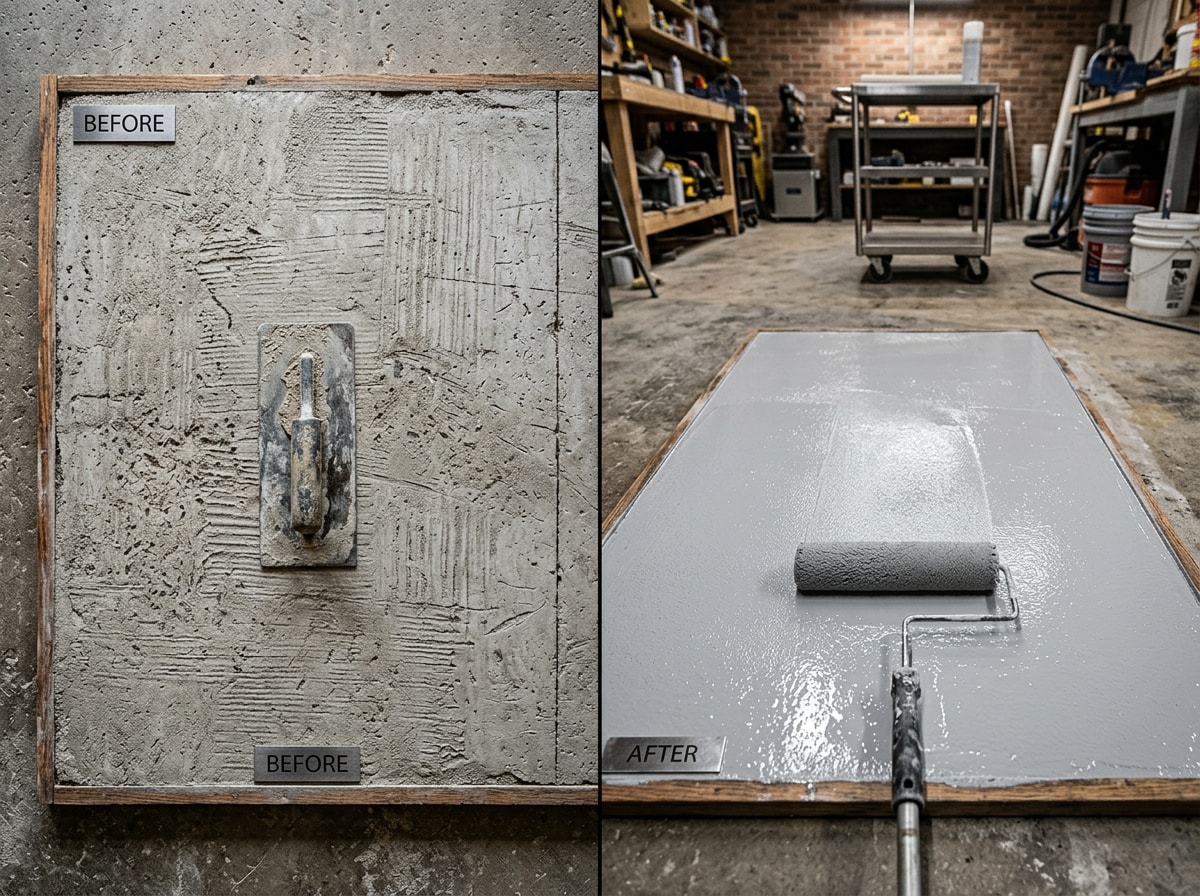
Sealer Topcoat Application
Sealing is not optional. Unsealed micro concrete absorbs water, oil, and stains almost immediately, which defeats the point of the system. Dry time is 24 hours minimum before sealing begins, and the second sealer coat should go on perpendicular to the first. This cross-coat technique evens out coverage and eliminates roller-streak thin spots. Skipping it is a common reason sealed floors end up with uneven sheen.
Drying and Curing Times in North Texas Heat and Humidity
Full cure before foot traffic is typically 24 to 48 hours, and full cure before placing furniture back is about 7 days. These numbers assume a standard lab reference of roughly 65°F and 50% relative humidity. Real jobsite conditions rarely match that baseline, and this is the local detail most national guides skip.
Summer humidity and heat in North Texas work in two different directions at once. Higher temperatures speed up surface drying, but elevated humidity slows moisture evaporation from deeper layers. That combination can mean the surface feels dry to the touch while the material underneath is still curing. The American Concrete Institute confirms that curing depends on maintaining both adequate moisture and favorable temperature for the cement to fully hydrate, which is exactly why humidity and heat pull in opposite directions on a Seagoville jobsite in August.
Winter in Seagoville is milder than most of the country, so cold-weather slowdowns are less of a concern here than farther north. Air-conditioned interiors running low humidity can actually bring cure times closer to the lab baseline than you would expect during a humid Texas summer. We generally build in extra buffer days during peak summer humidity before scheduling furniture delivery or heavy foot traffic.
Micro Concrete Cost in Seagoville, TX: 2026 Pricing
Cost is usually the first question property owners ask, and it affects whether micro concrete makes sense compared to tile, vinyl, or a new slab.
What Drives the Price
- Area size — larger spaces need more material and labor hours
- Design complexity — custom patterns, color blending, or borders add skilled labor time
- Substrate condition — damaged or uneven substrates need extra prep
- Room type — wet areas need extra sealer coats
- Obstacles — cabinets, fixtures, and tight corners slow installation
Average Cost Per Square Foot
| Install Type | Cost Range |
|---|---|
| DIY, material only | $3–$8 per sq ft |
| Professional install, standard finish | $8–$20 per sq ft |
| Professional install, premium/custom design | up to $25 per sq ft |
Translated into a real project: a typical Seagoville bathroom floor of 150 to 250 square feet installed professionally would land somewhere between $1,200 and $5,000, depending on design complexity and prep needs. A midsize kitchen floor around 200 to 300 square feet runs a similar range, often toward the higher end if countertops are included. These are planning-level estimates. Final pricing depends on site conditions, so a walkthrough quote is the only way to get an exact number.
Request a free estimate and we will walk the project with you before you commit to a number.
Micro Concrete: Pros and Cons
Micro concrete has real advantages, but it is not the right fit for every project or budget.
Upside:
- No demolition required; it applies directly over existing tile or concrete
- Thin 2 to 3 mm profile means minimal floor height increase near doorways and transitions
- Seamless, joint-free finish with no grout lines to clean or reseal separately
Downside:
- Costs more upfront than standard tile or vinyl
- Application requires real skill; mistakes are difficult to hide once cured
- Sealer topcoat needs reapplication every 3 to 5 years to maintain water resistance
For property owners planning to stay long-term and who value a seamless, modern look, the tradeoffs tend to make sense. For a quick flip or a tight budget, standard tile may still be the more practical choice. If your project involves an entire slab replacement rather than a surface refresh, our concrete finishing team can advise on which approach fits better.
How to Maintain Micro Concrete Floors
Day-to-day care is simple, but a couple of habits matter more than others.
Wipe up acidic spills, including wine, coffee, citrus juice, and vinegar, within about five minutes. Prolonged contact with acid gradually degrades the polyurethane sealer and can leave dull spots.
Watch for water beading on the surface as your maintenance signal. When the floor stops beading water and starts absorbing it instead, it is time to reapply one to two coats of topcoat sealer, typically every 3 to 5 years under normal household use. Heavier foot traffic or frequent water exposure can shorten that interval.
Why Work With a Local Concrete Contractor
Micro concrete looks simple once it is finished, but the underlying work, substrate assessment, primer selection, sealer scheduling around Texas humidity, is where DIY jobs usually go wrong. Hi-Tek Paving & Concrete serves Seagoville and the surrounding Kaufman County area with both residential overlay work and larger commercial concrete and asphalt resurfacing projects. If you are also dealing with cracked or worn concrete elsewhere on the property, our concrete grinding guide for Kaufman County covers the surface-prep step that often comes before an overlay goes down.
Visit our homepage to see the full range of paving and concrete services we provide across the Dallas-Fort Worth area, or head straight to our Seagoville, TX service area page to see recent local work.
About the Author
This guide was reviewed by the estimating team at Hi-Tek Paving & Concrete, a licensed asphalt and concrete contractor serving Dallas, Kaufman County, and surrounding North Texas communities. Our crews have specified and installed overlay, resurfacing, and concrete repair systems on residential and commercial properties throughout the region. Questions about a specific project? Contact us directly.
FAQ
What is the average lifespan of micro concrete flooring?
Micro concrete flooring can last up to 20 years or more with proper sealing and maintenance. It tends to outperform standard vinyl or laminate flooring, though it generally falls short of polished concrete's 20 to 50 year range, since polished concrete is a full structural slab rather than a thin overlay.
Is micro concrete waterproof?
It becomes waterproof only once it is properly sealed with a polyurethane topcoat. Unsealed, it will absorb water and stain. In bathrooms and other wet areas, three sealer coats are recommended instead of the standard two.
Is micro concrete the same as microcement?
Yes, essentially. Microcement is also known as micro concrete, micro-screed, or micro-overlay, different names for the same thin cementitious coating system. Regional and brand preferences explain most of the naming variation.
Can micro concrete be used outdoors or over heated floors?
Outdoor use is possible, but it requires a sealer specifically rated for UV exposure and weathering, since standard interior sealers break down faster outdoors. Micro concrete is generally compatible with radiant underfloor heating systems, though the heating system should be running during curing per manufacturer guidance to avoid uneven drying.
How much does micro concrete cost per square foot in Seagoville?
Professional installation typically runs $8 to $20 per square foot, with premium or highly custom designs reaching up to $25 per square foot. DIY material-only costs run closer to $3 to $8 per square foot, though skipping professional installation raises the risk of adhesion failure.
Does micro concrete crack over time?
Hairline cracking can occur if the substrate underneath moves or if prep was rushed, since the overlay telegraphs movement from whatever it is bonded to. Proper substrate preparation and a flexible primer significantly reduce this risk, which is why prep work matters more than the topcoat itself.