Searching for concrete mixer rental Plano, TX options usually means you're staring down a driveway, patio, or fence-post job and trying to figure out what size machine actually fits the work. Get the mixer size, rental duration, and total cost right before you call around, and you'll skip the two most common rookie mistakes: paying for more machine than you need, or running out of mixing capacity halfway through a pour. Here's the breakdown our crews wish every first-time renter had before pickup day.
What to Decide Before You Rent a Concrete Mixer
Four things determine whether your rental day goes smoothly or turns into a scramble:
- Project volume. A fence-post job needs a fraction of the mixing capacity a 400-square-foot patio slab requires.
- Mixer type. Electric, gas, or towable, the right match depends on your volume and how much muscle you have on-site.
- Rental duration. A weekend DIY pour might only need a one-day rental, while a multi-day patio project usually makes more sense on a weekly rate.
- Total budget. Delivery, deposits, and fuel or damage waivers all stack on top of the daily sticker price.
Guessing wrong on any of these is the single easiest way to overpay. If you're working in Plano, local availability and delivery windows can shift fast during peak pouring season (spring and early fall), so nail down your numbers before you start calling rental counters.
Types of Concrete Mixers Available to Rent
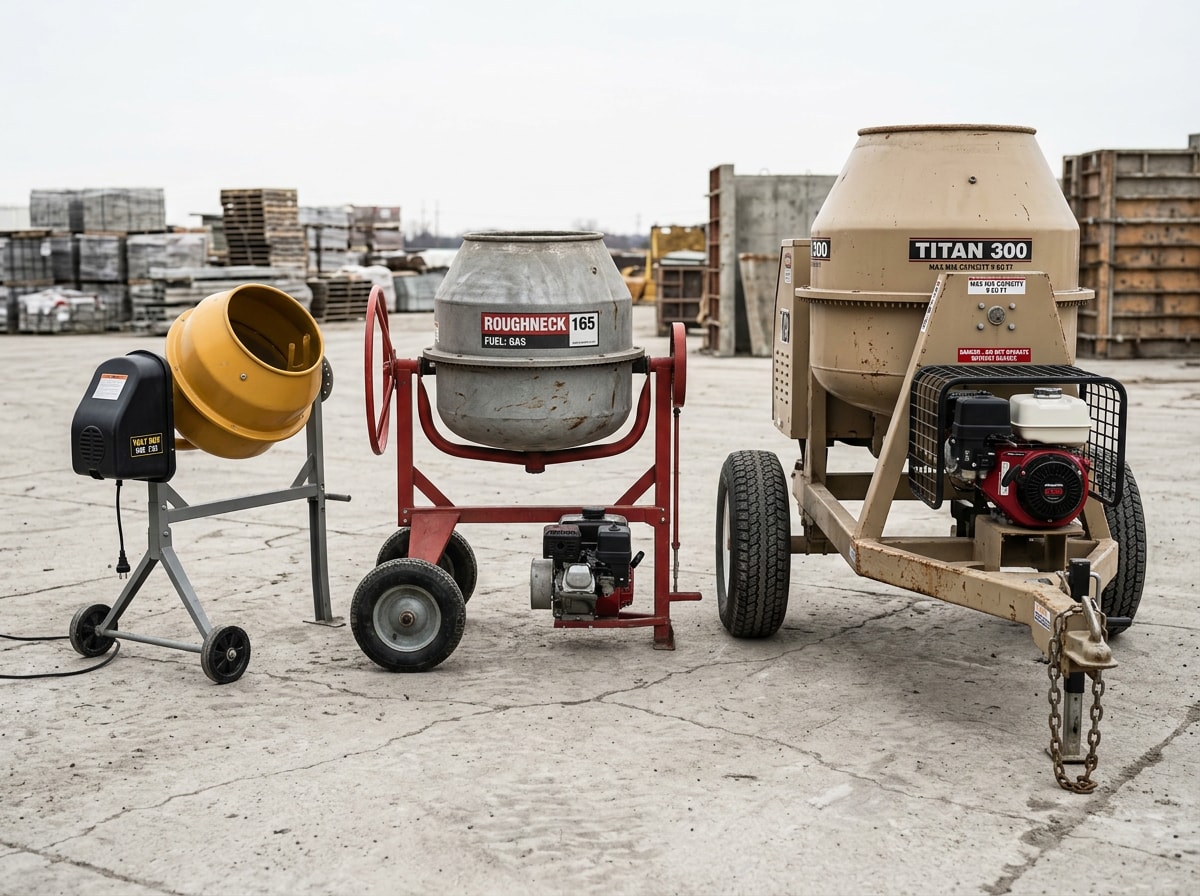
Small electric drum mixers (2 to 3 cubic feet) run on standard 120V outlets and suit light-duty residential work like post holes, small patches, or garden walls. They're quiet, easy to move by hand, and don't need a trailer hitch.
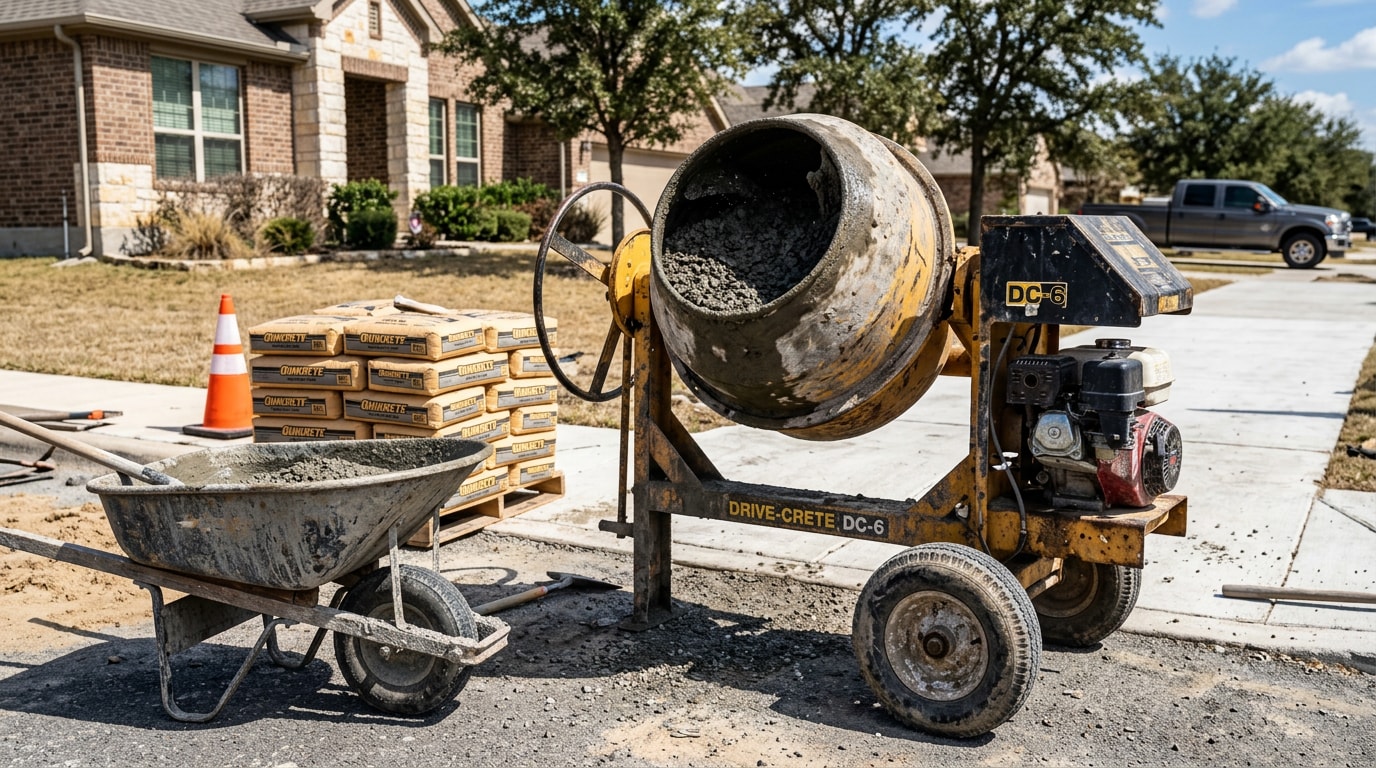
Mid-size gas mixers (5 to 7 cubic feet) are the most versatile category for homeowners tackling a weekend driveway section or shed foundation. They mix faster and handle thicker batches, but they're heavier and usually need two people to load.
Large towable gas mixers (9 cubic feet) are built for production pours, think full driveways or commercial slab work, and they tow behind a truck rather than fitting in a bed. There's also a portable mud mixer class built for mortar and smaller masonry batches, which we've included in the comparison below.
Matching the size class to the task matters more than grabbing the biggest unit available. For most residential jobs, the mid-size gas mixer hits the sweet spot between capacity and ease of handling.
Concrete Mixer Rental Comparison: Capacity, Power & Pricing
Here's a side-by-side comparison built around realistic DFW-area pricing we pulled from current local rental listings, not national averages that don't reflect what Plano shops actually charge:
| Mixer Class | Drum Capacity | Power Source | Best For | Typical Daily Rate | Transport Method |
|---|---|---|---|---|---|
| Small Electric Drum Mixer | 2–3 cu ft | Electric (120V) | Posts, patches, small repairs | $40–$65 | Hand-carry or car trunk |
| Mid-Size Gas Drum Mixer | 5–7 cu ft | Gasoline | Patios, small driveways, footings | $70–$125 | Truck bed, two-person lift |
| Large Towable Gas Mixer | 9 cu ft | Gasoline | Full driveways, production pours | $55–$130 | Trailer hitch, towed |
| Portable Mud Mixer | 1.5–3 cu ft | Electric | Mortar, stucco, small masonry batches | $40–$60 | Hand-carry |
Note the spread on the towable units: pricing varies more by provider than by spec sheet, so always ask for an itemized quote rather than trusting a single published rate.
Which one should you pick? If you're mixing fewer than 10 bags total, go electric. For a weekend driveway or patio pour, the mid-size gas mixer is the safest bet on capacity versus manageability. Anything approaching a full driveway or commercial scope calls for the towable unit, and mortar-only jobs should stick with the portable mud mixer.
Concrete Mixer Rental Cost in Plano: What to Expect
Across Plano-area providers, small electric drum mixers typically run in the $40–$65 per day range, mid-size gas models land between $70 and $125 per day, and towable units vary widely by provider, from roughly $55 up to $130 per day. These are 2026 planning ranges, actual quotes will vary by shop, season, and how long you keep the machine.
What Drives the Price Up or Down
Rates rise with drum capacity, so renting the smallest machine that does the job is the easiest way to control cost. Weekly rates generally run about four to five times the daily rate rather than seven times, which means a multi-day job usually comes out cheaper per day than booking single days back to back.
Delivery and pickup are billed separately from the day rate, typically $75–$200 each way depending on distance and mixer size. Damage waivers are a standard add-on across the rental industry. The American Rental Association is an international trade association for owners of equipment rental businesses and the manufacturers and suppliers of construction and industrial equipment, representing more than 10,000 rental businesses and member shops generally follow similar fee structures for waivers and transport. Ask for an itemized quote before you commit so the cost drivers are clear upfront.
Rent or Buy: When Ownership Makes Sense
The biggest factor in a rent-versus-buy decision is how often you'd actually use the machine. If you'd need a concrete mixer on a near-constant basis, several times a month, every month, buying starts to pencil out once you factor in maintenance savings over time. Below that level of use, renting tends to be cheaper once you count the maintenance, insurance, storage, and depreciation that come with ownership.
For a one-off Plano driveway, patio, or fence-post project, renting almost always wins. Frequent-pour contractors are the exception where ownership makes more financial sense. If you're weighing commercial-scale concrete costs for a larger project, our Hormigon Dallas, TX concrete cost guide breaks down what contractor-grade pours run across the DFW market.
How to Rent a Concrete Mixer: 5-Step Process
Knowing the steps ahead of time removes most of the guesswork from pickup day.
- Determine your needs. Calculate project volume and timeline, then match it to a mixer type.
- Contact the rental provider. Confirm availability and get a written quote covering all fees, not just the day rate.
- Review the rental agreement. Check deposit terms, damage waiver language, and return conditions before you sign.
- Schedule delivery or pickup. Time it so the mixer arrives only after your site prep is actually done.
- Request an equipment demonstration. Have staff walk you through drum rotation, loading, and shutdown before they leave.
Skipping step five is one of the more common first-timer mistakes. A two-minute demo prevents most on-site confusion once the clock starts on your rental.
Tips for a Smooth Mixer Rental Day
A little prep before pickup prevents wasted rental hours and avoidable fees.
- Calculate your volume first. Multiply length × width × depth, then divide by 27 to get cubic yards. That number tells you exactly how much material and mixing capacity you need.
- Stage everything before you start. Water source, dry bags, wheelbarrow, forms, and screeding tools should all be ready. Concrete doesn't wait once it's mixed.
- Check drum rotation direction before loading. Running it backward wastes material and fuel.
- Inspect the equipment at pickup. Document any existing damage, cracks, or excessive wear so you're not billed for it at return.
- Watch your water ratio.
The water-cement ratio is the weight of the mixing water divided by the weight of the cement, and high-quality concrete comes from keeping that ratio as low as possible without sacrificing workability. Too much water at the mixer weakens the final slab.
Safety Protocols You Shouldn't Skip
Operating a rented concrete mixer safely means wearing proper PPE, gloves, safety goggles, and closed-toe boots, before you start mixing, and keeping the work zone clear of bystanders. Before you clean out the drum or clear a jam, shut the machine down completely: no employee should perform maintenance or repair activity on equipment such as mixers where inadvertent operation could occur and cause injury, unless all potentially hazardous energy sources have been locked out and tagged . That standard is written for jobsite crews, but it's good practice on a rental unit too.
Read the operation manual that comes with the rental rather than assuming all mixers work the same way. It's five extra minutes that prevents most of the injuries we see tied to rental equipment.
When a Rental Isn't Enough: Calling In a Concrete Contractor
Not every pour is a rental-mixer job. Full driveways, commercial parking areas, and anything needing engineered thickness or a finished broom or stamped surface usually call for a crew with batching equipment and finishing experience, not a borrowed drum mixer and a weekend. At Hi-Tek Paving, we've watched plenty of DIY pours in Plano and across Collin County hit a wall when the mixer couldn't keep pace with a crew trying to finish a slab before it set up, which is the exact failure point a rented mixer can't fix no matter how many bags you stage.
If your project is bigger than a patio or a few fence posts, our concrete contractor services cover everything from concrete paving to concrete finishing for jobs that need batch-consistent mix and a crew that pours and finishes before the Texas heat sets it up early. Get a free estimate and we'll tell you honestly whether your project is a rental-mixer job or one that needs a professional crew.
FAQ
How much does it cost to rent a concrete mixer per day in Plano?
Rates typically run between $40 and $130 per day, depending on drum size and whether the unit is electric or gas-powered. Towable units have the widest price spread, so get a few quotes before booking.
Do I need a deposit to rent a concrete mixer?
Most rental providers require a refundable deposit, often in the $50–$200 range, held on a credit card and returned once the mixer comes back clean and undamaged.
What size mixer do I need for a driveway?
Most single-car driveway sections are handled well by a mid-size gas mixer (5–7 cubic feet). Full driveways or anything approaching commercial scope usually call for a 9 cubic foot towable unit, or a ready-mix delivery instead of a rental altogether.
Can I rent a concrete mixer for just one day?
Yes, daily rentals are standard. If your pour will realistically take more than a day or two, ask about the weekly rate, it's usually a better deal than booking consecutive daily rentals.
What do I need to do before returning the mixer?
Clean the drum thoroughly before returning it. Add water and a few shovelfuls of gravel to break up residue, then rinse completely. Returning a mixer with hardened concrete inside can trigger damage fees.
What's the difference between a portable and a towable concrete mixer?
Portable mixers are compact, often electric units designed to sit on a stand and move by hand, ideal for backyard projects with limited space. Towable mixers are gas-powered, larger-capacity units on a wheeled frame with a hitch, built for bigger, more professional pours.