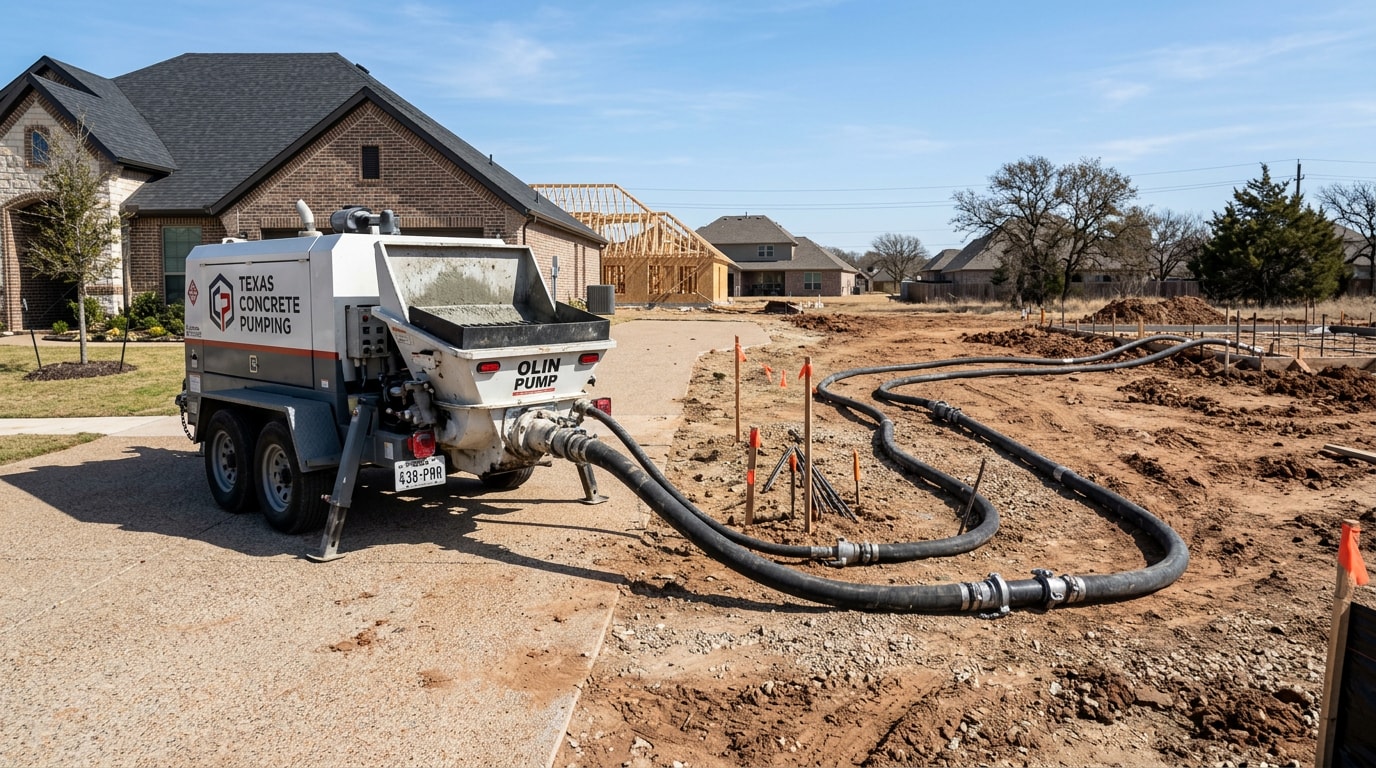
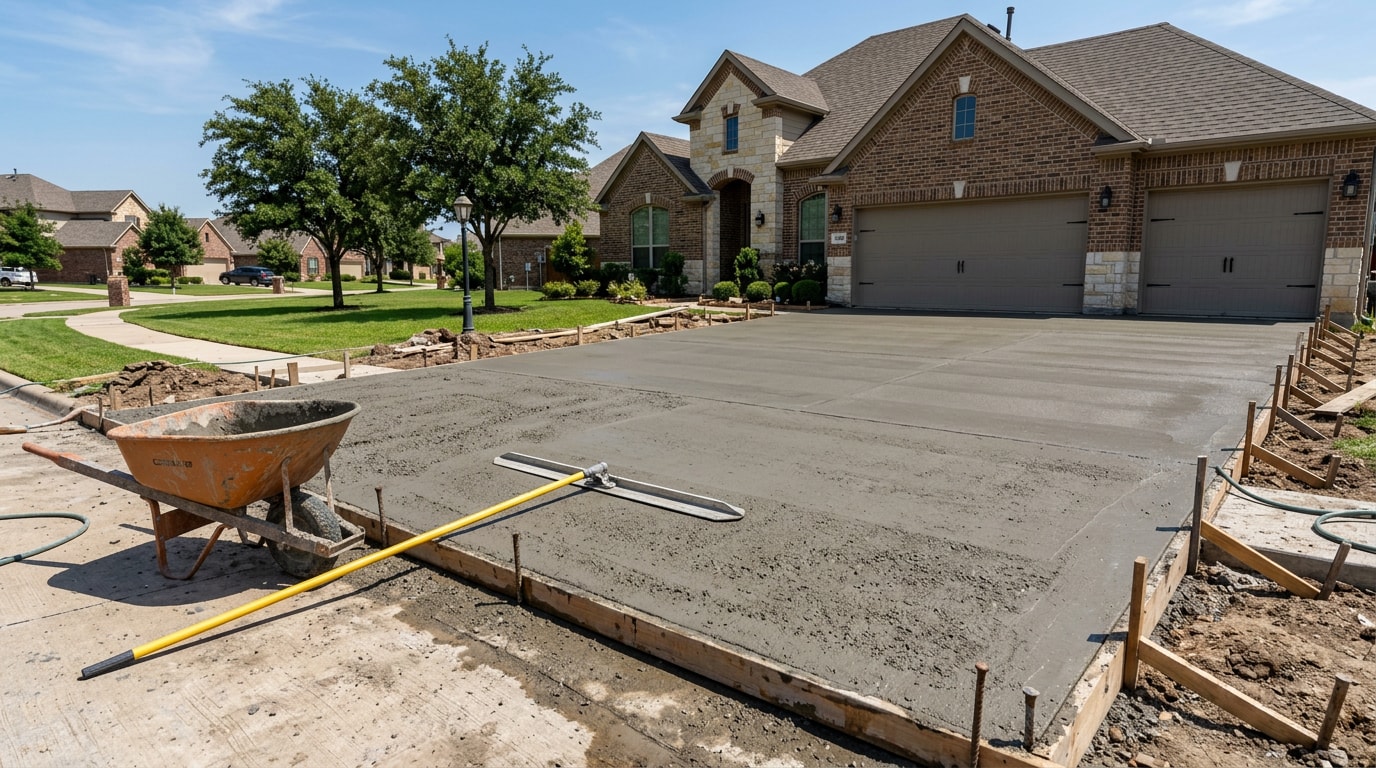
Concrete density in Plano, TX isn't one fixed number. It shifts with mix design, moisture state, and whether steel reinforcement is present, which means two "standard" slabs can weigh noticeably different amounts per cubic yard. Guess wrong and you'll underorder a truck or blow a structural load calculation. This guide gives the exact lb/ft³ and kg/m³ ranges, the formulas to convert volume to weight, and the Texas-specific specs our crews check before every pour.
Visit HITEK Paving to see our services and request a free estimate.
Concrete Density Chart by Type
Not all concrete weighs the same, and the differences aren't small. Lightweight mixes can weigh roughly half as much as heavyweight shielding concrete.
That's why a single "standard" density figure doesn't work across every project type. The table below consolidates the most commonly cited ranges across lightweight, normal-weight, reinforced, and heavyweight concrete.
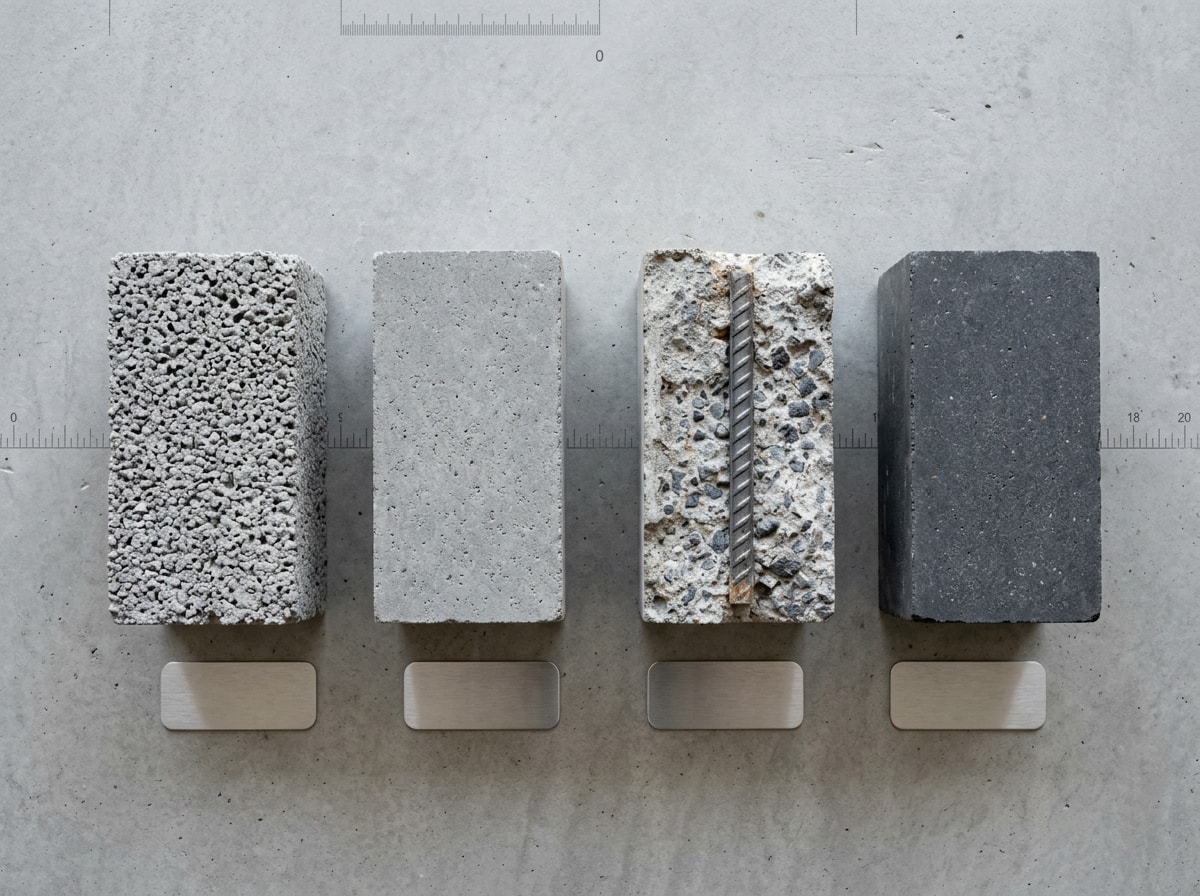
| Concrete Type | lb/ft³ | kg/m³ | lb/yd³ |
|---|---|---|---|
| Lightweight | 90-115 | 1,440-1,840 | 2,430-3,105 |
| Normal-weight | 145-150 | 2,320-2,400 | 3,915-4,050 |
| Reinforced | 150-155 | 2,400-2,500 | 4,050-4,185 |
| Heavyweight | 180-250 | 2,880-4,000 | 4,860-6,750 |
Lightweight vs. Normal vs. Heavyweight
Lightweight concrete runs 90 to 115 lb/ft³, normal-weight sits at 145 to 150 lb/ft³, and heavyweight reaches 180 to 250 lb/ft³. That's a wide enough spread that picking the wrong category can throw off a weight estimate by 50% or more.
Lightweight mixes use expanded shale, clay, or slate aggregate. The National Ready Mixed Concrete Association notes that structural lightweight concrete has an equilibrium density roughly 25 to 30 lb/ft³ below normal-weight mixes, which is why it shows up most often in roof decks and elevated floor systems where cutting dead load matters.
Normal-weight concrete, made with standard sand and gravel, covers most driveways, sidewalks, and residential slabs around Plano. Heavyweight concrete, built with aggregates like magnetite or barite, is reserved for specialty work: radiation shielding, counterweights, and some industrial foundations.
If you're not sure which category your project needs, check the mix design sheet before assuming the standard figure applies.
How to Calculate Concrete Density and Total Weight
The core formula is simple: Density = Mass ÷ Volume. Flip it around for ordering purposes and you get Weight = Volume × Density, the number that actually matters when figuring out how many cubic yards to order.
Here's a quick conversion. A slab that's 10 feet by 10 feet by 6 inches deep equals 50 cubic feet. Divide by 27 cubic feet per cubic yard and you get about 1.85 cubic yards.
Multiply that by a standard density of roughly 150 lb/ft³ and the total comes out to around 7,500 pounds, or 3.75 tons. The density measured this way follows ASTM C138, the standard test method for determining unit weight of freshly mixed concrete at the batch plant or job site.
If you're mixing smaller batches yourself rather than ordering ready-mix, our concrete mixer rental guide for Plano breaks down rental sizes and output per batch. For anything beyond a small patch job, contact our team and we'll run the volume-to-weight math for you before you order.
Why "Concrete Weighs 150 lb/ft³" Is a Half-Truth
That 150 lb/ft³ figure only tells part of the story. Concrete's density changes as it moves through three distinct moisture states.
- Fresh, just-placed concrete: typically 148 to 152 lb/ft³
- Cured at ambient humidity: drops to roughly 142 to 148 lb/ft³
- Fully oven-dried in a lab: can fall as low as 138 to 145 lb/ft³
Air-entrained concrete, mixed with microscopic air bubbles for freeze-thaw resistance, drops density further still. It typically runs 3 to 6 lb/ft³ lighter than a non-air-entrained mix of the same strength.
Here's how that plays out at the same strength class, using a 4,000 psi mix as the example:
| Moisture State | Density (lb/ft³) | Approx. Weight per Cubic Yard |
|---|---|---|
| Fresh (wet, just placed) | 148-152 | 3,996-4,104 lb |
| Cured (28-day, ambient humidity) | 142-148 | 3,834-3,996 lb |
| Oven-dry (lab-dried) | 138-145 | 3,726-3,915 lb |
Ready-mix suppliers quote and deliver by fresh, wet density. Anyone calculating a slab's long-term dead load needs the cured figure instead. Mixing up the two is one of the most common ordering mistakes we see.
Concrete Density Considerations for Plano, TX and North Texas
Plano's building conditions add a few wrinkles that generic density charts don't cover. Three matter most for local projects.
Clay soil changes the stakes on dead-load accuracy. Much of Plano and Collin County sits on high-plasticity clay that swells and shrinks with moisture, so foundation and slab designs built on an off-target density figure compound an existing soil-movement risk rather than correcting for it.
North Texas heat speeds up the moisture transition. Summer heat and low humidity here can push a slab from fresh to cured density within days rather than weeks, while a humid stretch slows evaporation and keeps the slab closer to its wet-placement weight longer. That timing matters if you're calculating loads on formwork or shoring that has to carry the slab before it fully cures.
Texas has its own lightweight concrete spec. For road, bridge, and structural work, the Texas Department of Transportation requires lightweight concrete to meet a 28-day unit weight target, tested fresh against a hardened-weight correlation rather than relying on a generic national default. That's a different verification path than the ASTM C138 fresh-density test most residential pours use, and it's one reason density specs on a TxDOT-adjacent commercial job can look different from a homeowner's driveway spec.
If your project falls anywhere in our Plano, TX service area checks which spec applies before the mix design goes to the batch plant, not after the truck shows up.
Common Concrete Density Mistakes
- Applying a flat 150 lb/ft³ to a lightweight mix. This overestimates actual weight by 25% to 40%, throwing off both structural load calculations and delivery planning. Lightweight concrete doesn't behave like standard sand-and-gravel mix, and treating it the same way skews everything downstream.
- Ignoring air entrainment. Air-entrained concrete, standard for most exterior Texas slabs exposed to freeze-thaw cycles, weighs 4 to 6 lb/ft³ less than its non-entrained counterpart. Skip that adjustment and you'll overorder material or overstate the dead load on a design.
- Mixing up fresh versus cured weight. Suppliers deliver at fresh density; structural dead-load calculations need the cured figure. Confusing the two leads to underordering trucks or underestimating how much a finished slab actually weighs.
Building codes don't leave this to guesswork. The International Building Code's dead-load provisions, IBC Chapter 16, Section 1606.2, require that design calculations use the actual weights of materials of construction rather than assumed defaults. That's exactly why getting the density figure right matters beyond just ordering convenience.
Contractor Worked Example: 200-Foot Driveway Pour
Density numbers only become useful once you apply them to a real pour. Take a 200-foot by 12-foot driveway poured at 6 inches thick, using an air-entrained 4,000 psi mix.
First, find the volume: 200 × 12 × 0.5 feet equals 1,200 cubic feet, or 44.4 cubic yards after dividing by 27.
Using a fresh-concrete density assumption of around 150 lb/ft³ (accounting for air entrainment slightly below the 152 lb/ft³ ceiling), that volume comes out to roughly 180,000 pounds, or 90 tons. A typical ready-mix truck carries about 10 cubic yards per trip, so this pour needs roughly 4.5 truckloads of 4,000 psi driveway mix, a number a dispatcher can actually plan a delivery schedule around.
For driveway and flatwork projects specifically, our concrete paving team runs this same calculation before scheduling trucks, so the pour doesn't stall waiting on a late load or sit on an oversized order.
Why This Guide Is Different
Most online density charts repeat the same national averages without touching what changes when the pour happens in Plano. We've poured and finished concrete across Collin County driveways, parking lots, and commercial flatwork, and the density figure you use changes depending on local soil, climate, and which spec (ASTM, ACI, or TxDOT) governs the job.
If you want a mix spec checked against your actual project rather than a generic chart, get a free estimate from Hi-Tek Paving & Concrete before you place your order.
FAQ
What Is the Standard Density of Concrete?
The standard density of concrete is about 2,400 kg/m³, which equals roughly 24 kN/m³ or 145 to 150 lb/ft³. This figure applies to normal-weight concrete and serves as the default baseline most codes and calculators use.
How Much Does 1 Cubic Foot of Concrete Weigh?
Standard normal-weight concrete weighs about 145 pounds per cubic foot once cured at standard humidity. Fresh, just-placed concrete weighs more, typically 148 to 152 lb/ft³, before moisture evaporates during curing.
What Is the Density of RCC Concrete?
Reinforced concrete (RCC) generally ranges from 2,400 to 2,500 kg/m³, depending on how much steel reinforcement the mix contains. More embedded rebar pushes the overall density slightly higher than plain concrete.
Can the Density of Concrete Vary on the Same Site?
Yes. Poor batching, inconsistent aggregate sourcing, or improper vibration during placement can all change actual density from one batch to the next, even on the same pour. That's why quality control testing matters on larger structural jobs.
How Much Does a Cubic Yard of Concrete Weigh?
Using the standard 150 lb/ft³ figure, a cubic yard (27 cubic feet) weighs about 4,050 pounds. In practice, the commonly cited range runs from roughly 3,900 to 4,050 pounds, depending on mix design and moisture content at delivery.
How Much Does a Full Ready-Mix Truck Weigh?
A standard ready-mix truck carries about 10 cubic yards. At an average density of 150 lb/ft³, that works out to roughly 40,500 pounds, or just over 20 tons, of concrete per load.
What's the Difference Between "Density" and "Unit Weight" in a Concrete Spec?
They're the same measurement: mass per unit volume. "Unit weight" is the older term used in older ASTM documents, while "density" is the current terminology. If a spec sheet uses one term and a supplier uses the other, they're referring to the same number.