
Modern stamped concrete patterns in Waxahachie, TX now rival real stone, wood, and pavers at a fraction of the price. Homeowners across Ellis County are swapping busy, high-contrast stamp jobs for cleaner geometric layouts and large-format textures. This guide breaks down which patterns actually read as "modern" in 2026, what they cost, and why Waxahachie's soil and summer heat change how they need to be installed.
What Makes a Stamped Concrete Pattern "Modern" in 2026
A modern stamped pattern favors large-format layouts, fewer grout lines, and muted, low-contrast color palettes instead of the busy, multi-tone looks that were popular a decade ago. Clean geometric lines and subtle texture replace deep relief and ornate detailing.
This shift lines up well with the farmhouse-modern and transitional homes going up across newer Waxahachie subdivisions. A large-format ashlar slate pattern in a soft gray tone complements a white-brick farmhouse better than a traditional cobblestone texture would. Geometric stamp patterns with crisp linear joints also pair naturally with the black-trim, metal-roof exteriors common in the area's newer builds.
Top Modern Stamped Concrete Patterns for Waxahachie Homes
Most homeowners we talk to choose from five pattern families. Each suits different surfaces and home styles.
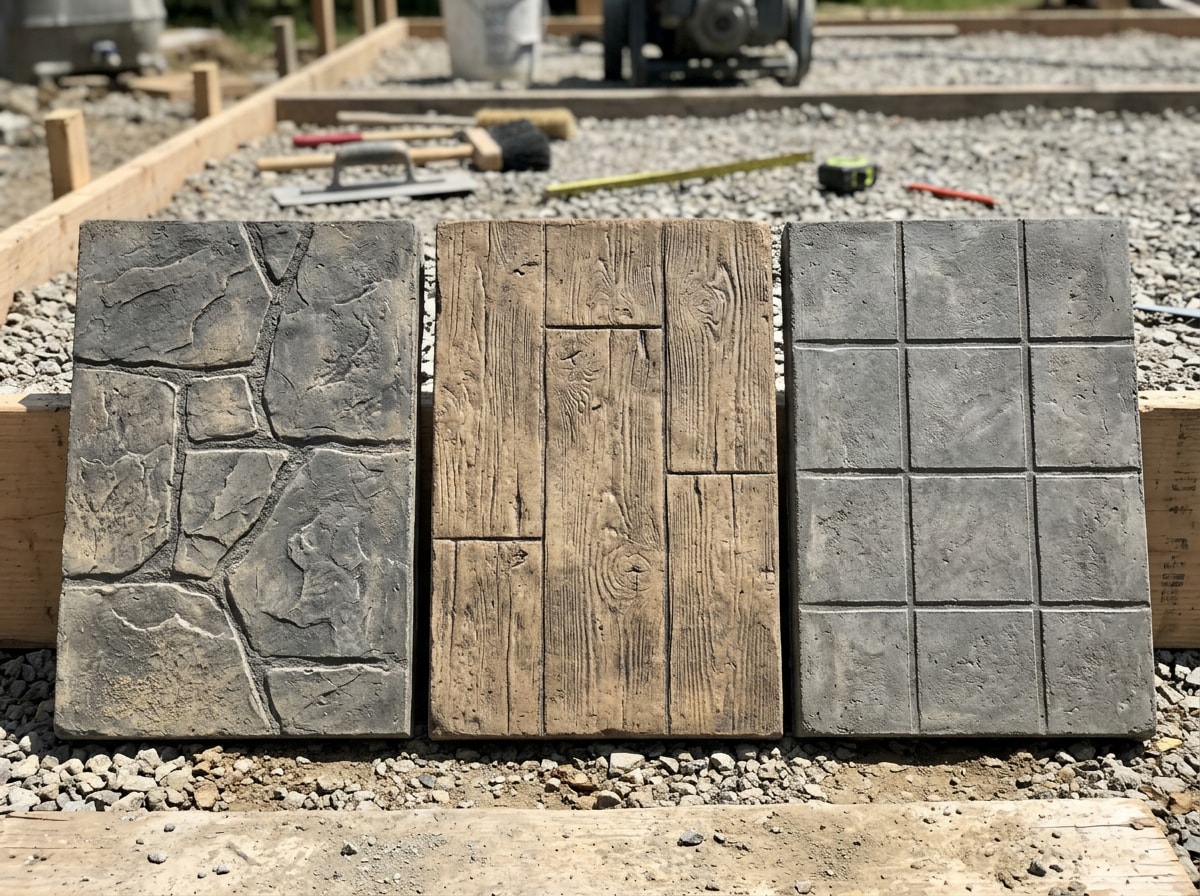
- Large-format ashlar slate – irregular rectangular "stones" in a repeating layout; works on patios, pool decks, and driveways alike.
- Wood plank – realistic grain texture for covered porches and patios, without the rot or re-staining a real deck needs.
- Geometric tile/slab – 16x16 or 24x24-inch squares in a grid; the cleanest, most minimalist option for entryways and modern patios.
- Seamless or skip-trowel texture – subtle surface variation with no defined joint lines, popular for homeowners who want texture without a "pattern."
- Running-bond brick or cobblestone – tighter, more traditional joint lines that still work on transitional homes, especially driveways.
For patios, ashlar slate and large-format layouts create an open, uninterrupted look that suits outdoor living spaces and pool surrounds. Driveways generally hold up better visually with geometric or running-bond patterns, since tighter joint lines help hide the minor cracking that heavy vehicle loads can cause over time.
Modern Color Trends: Muted Palettes Over Bold Contrast
Color selection happens in two layers: a base color integrated into the concrete mix, and an antiquing release color dusted on top to add depth and highlight the texture pattern. Modern designs favor tighter, monochrome color pairings, think slate gray with a charcoal accent, instead of the high-contrast tan-and-brown combinations that dominated the 2010s.
After stamping, the slab needs sealing to protect against UV fading, moisture, and intense North Texas summer sun. Staining can also be applied later to refresh color without re-stamping the surface. Our crews see the most call-backs on jobs where the sealer was skipped or applied too thin, not on jobs with a "wrong" pattern choice.
Stamped Concrete vs. Pavers vs. Natural Stone
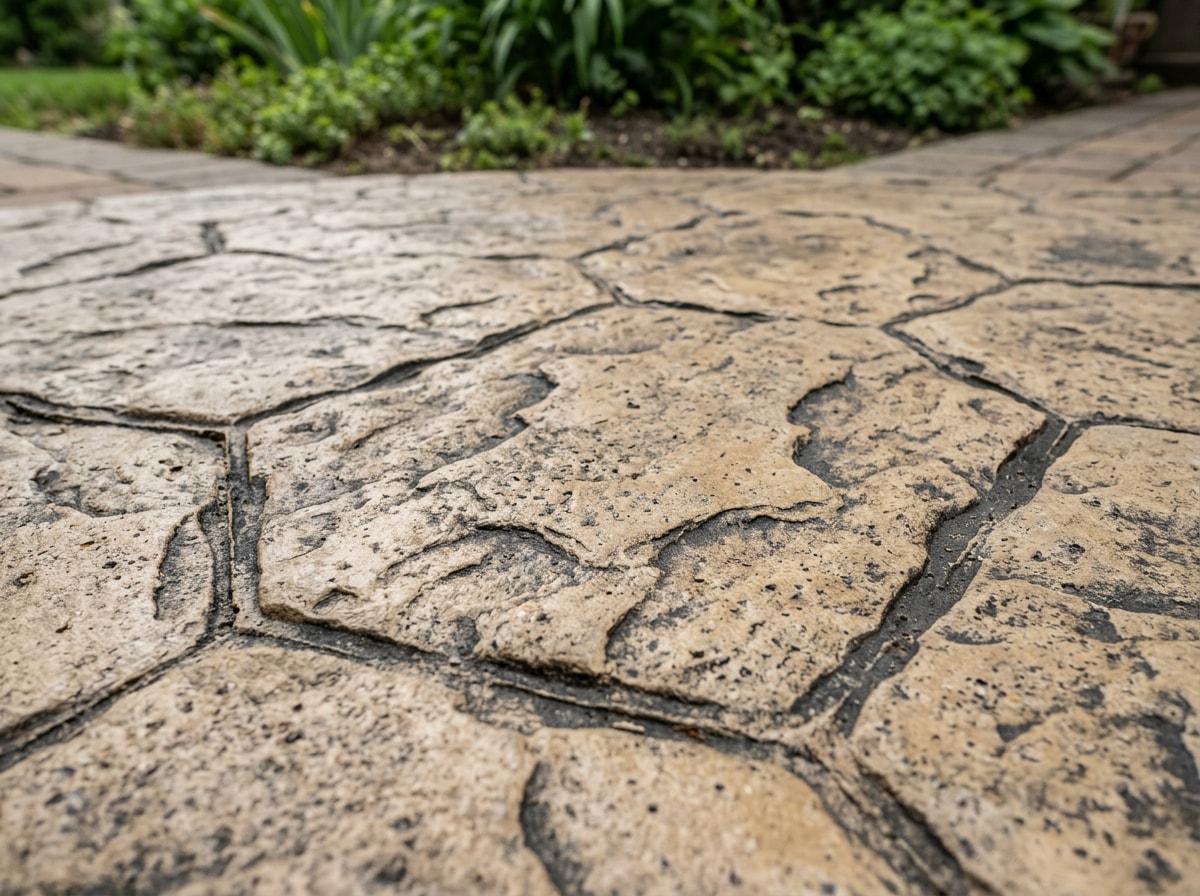
Stamped concrete generally costs less than natural stone and roughly the same as or slightly less than pavers, while requiring less long-term maintenance than either. The National Ready Mixed Concrete Association notes that stamped concrete combines the look of traditional slate, brick, and stone paving with concrete's long-term performance and economy of installation , and its own materials page advertises the faux finishes as as much as 33% less expensive than the real materials they imitate.
| Material | Typical Cost per sq ft* | Maintenance | Typical Lifespan |
|---|---|---|---|
| Stamped concrete | $12–$22 | Reseal every 2–3 years | 25+ years |
| Pavers | $15–$30 | Weed/joint sand upkeep | 25–50 years |
| Natural stone | $25–$45 | Periodic sealing | 50+ years |
| Broom-finish concrete | $6–$11 | Minimal | 20–25 years |
*Ranges vary by project size and pattern complexity. Confirm current local pricing with a contractor before budgeting.
Where Modern Stamped Concrete Works Best
Stamped concrete works well almost anywhere a traditional slab would go: patios, driveways, walkways, pool decks, and entryways all benefit from the upgrade. A stamped patio extends living space visually, while a stamped driveway adds curb appeal without the long-term upkeep pavers require.
Pattern choice should follow function:
- A pool deck calls for a texture with enough grip to stay slip-resistant when wet.
- A walkway can favor finer, flatter detailing since foot traffic is lighter than vehicle loads.
- A driveway needs adequate thickness and joint spacing to handle daily vehicle weight without the pattern cracking along its lines.
If you're still deciding between a stamped finish and a plain slab for a new pour, our guide to concrete slabs in Waxahachie covers base thickness and pricing side by side. (See the linked guide below for full specs.)
How Modern Stamped Concrete Is Installed
Installation follows a fairly consistent sequence regardless of contractor:
- Prepare and form the site, including base compaction.
- Pour and level the concrete.
- Apply color hardener once the slab reaches the right workability.
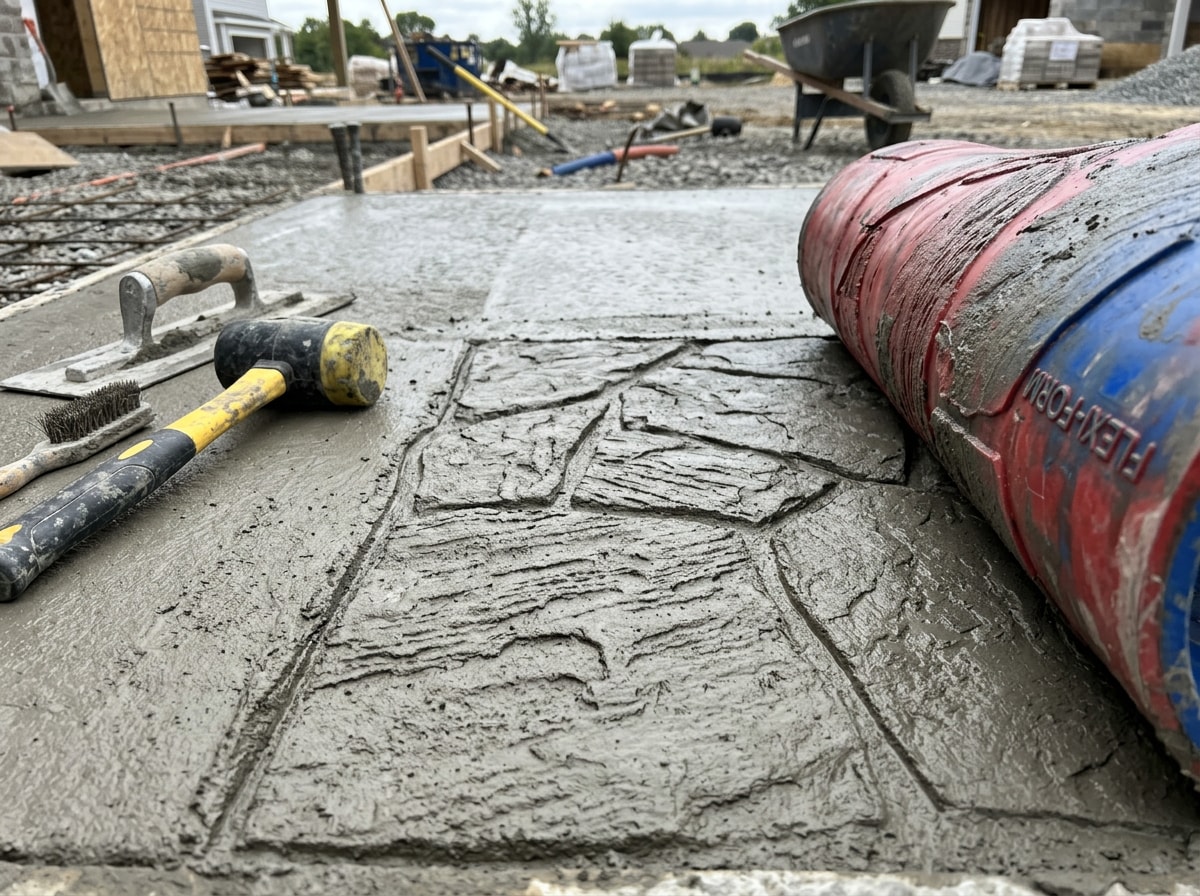
- Press the chosen stamp pattern into the surface.
- Allow the slab to cure, then seal it.
Timelines run roughly three to five days from pour to initial cure, though full strength takes closer to 28 days. The American Concrete Institute's guidance on decorative finishes confirms that different techniques and materials are used to create decorative finishes , and that timing during the pour directly affects how well the final texture and color hold up over the life of the slab.
Why Ellis County's Soil and Heat Change the Plan
Local experience matters more with stamped concrete than most homeowners expect, and it's the one thing most pattern-idea articles skip entirely. Waxahachie sits on Blackland Prairie soil, and the dominant soil type in Ellis County is Houston Black clay. According to the Ellis County Master Gardener Association, a Texas A&M AgriLife Extension-affiliated group, Houston Black is recognized throughout the world as a classic example of a vertisol, and smectite, the clay mineral that swells and shrinks, makes up 60 to 80 percent of that soil .
That shrink-swell cycle is why a pattern that looks perfect on a brochure can crack unevenly within a year if the base prep and control-joint spacing weren't adjusted for local soil. In our own projects across Waxahachie and the rest of Ellis County, the call-backs we get for cracked stamped slabs almost always trace back to skipped or oversized control joints, not to the stamp pattern itself.
Summer heat adds a second variable. Curing too fast in high temperatures can weaken surface strength if a crew doesn't adjust timing and moisture retention during the pour. A local installer who plans for both factors, not just a national pattern catalog, is what separates a stamped patio that lasts 20+ years from one that needs patchwork by year three.
Need a slab poured correctly from the start? Get a free estimate from our concrete crew before you commit to a pattern.
Choosing a Modern Stamped Concrete Contractor in Waxahachie
Look for a local installer with proper licensing, insurance, and a visible local portfolio, ideally one that can show you finished stamped work in Ellis County's climate and soil, not just stock photos. Ask specifically how they plan control-joint spacing for Blackland clay and how they adjust curing time during peak summer heat.
Our concrete contractor services cover everything from concrete finishing to full concrete paving for patios and driveways. You can also see examples of our work on the Waxahachie service area page or learn more on our homepage. If you're comparing a stamped patio against a plain poured slab for cost, our Waxahachie concrete slabs guide breaks down pricing for both.
FAQ
What is the most popular stamped concrete pattern?
Ashlar slate remains the most requested pattern. Its irregular, large-format layout suits both modern and traditional home exteriors without clashing.
Can you stamp existing concrete?
No. Stamping requires pressing patterns into wet, workable concrete during a specific window before it sets. Existing cured slabs need a decorative overlay instead of a true stamp.
Are imprinted concrete driveways any good?
Yes, with proper installation and periodic resealing. They cost less than pavers long-term but require more upkeep than plain broom-finish concrete.
How much would a 20x20 stamped concrete patio cost?
A 20x20 patio (400 sq ft) typically runs $4,800–$8,800 depending on pattern complexity and color choices. Confirm current local pricing with a contractor before budgeting.
Is stamped concrete slippery when wet?
It can be if sealed with a high-gloss finish and no texture. A matte or satin sealer with a slip-resistant additive keeps pool decks and walkways safer in wet conditions.
Can stamped concrete withstand heavy vehicle traffic on driveways?
Yes. With adequate slab thickness, proper reinforcement, and a well-compacted base, suited to Ellis County's clay soil, stamped concrete handles daily vehicle traffic reliably.