If you're searching for concrete polishing near me in Seagoville, TX, you're probably staring at a dull garage floor, a worn warehouse slab, or a retail space that needs a durable upgrade. This guide breaks down real 2026 pricing, finish options, and maintenance steps so you know what a fair quote looks like before a contractor ever walks your site. Our crews at Hi-Tek Paving have ground and polished floors across Seagoville and the greater Dallas area, and the cost ranges below reflect what we actually see on local jobs, not just national averages.
What Is Polished Concrete?
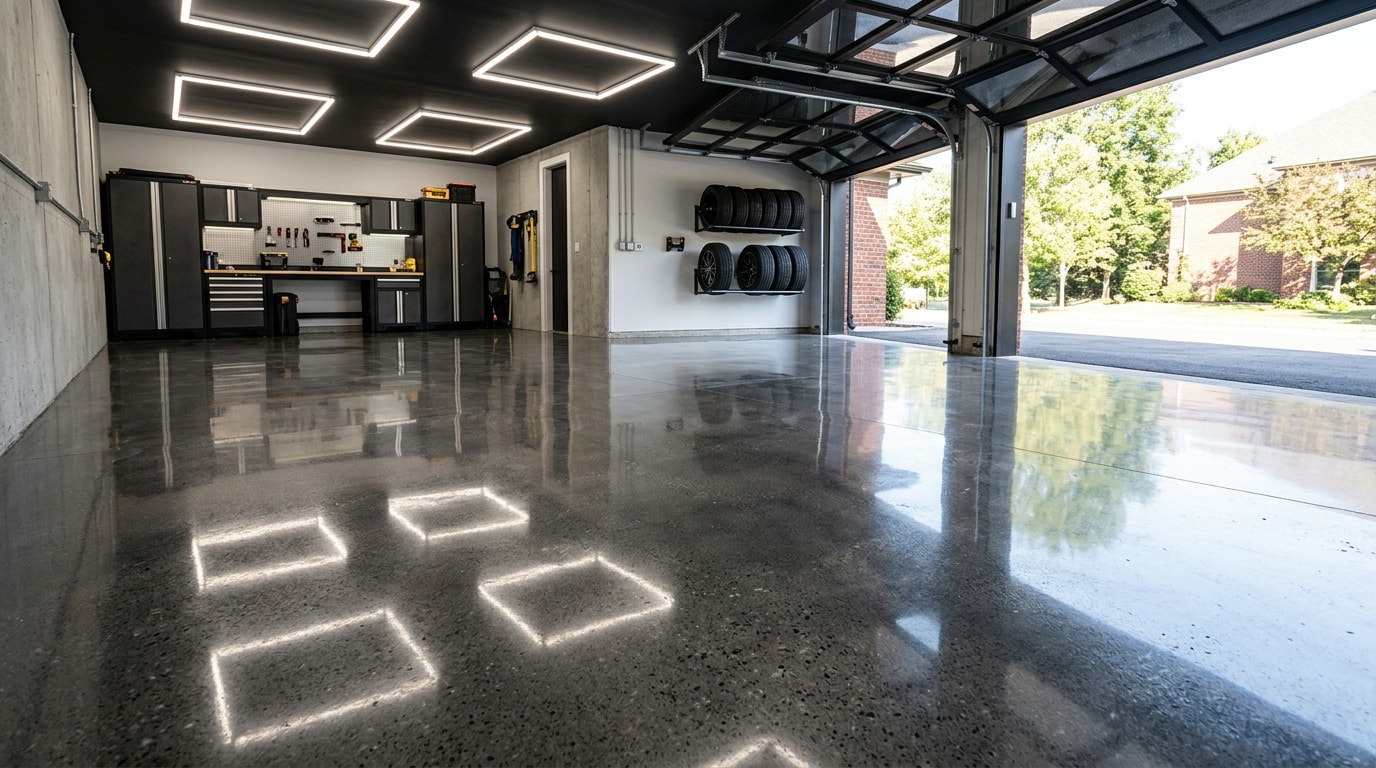
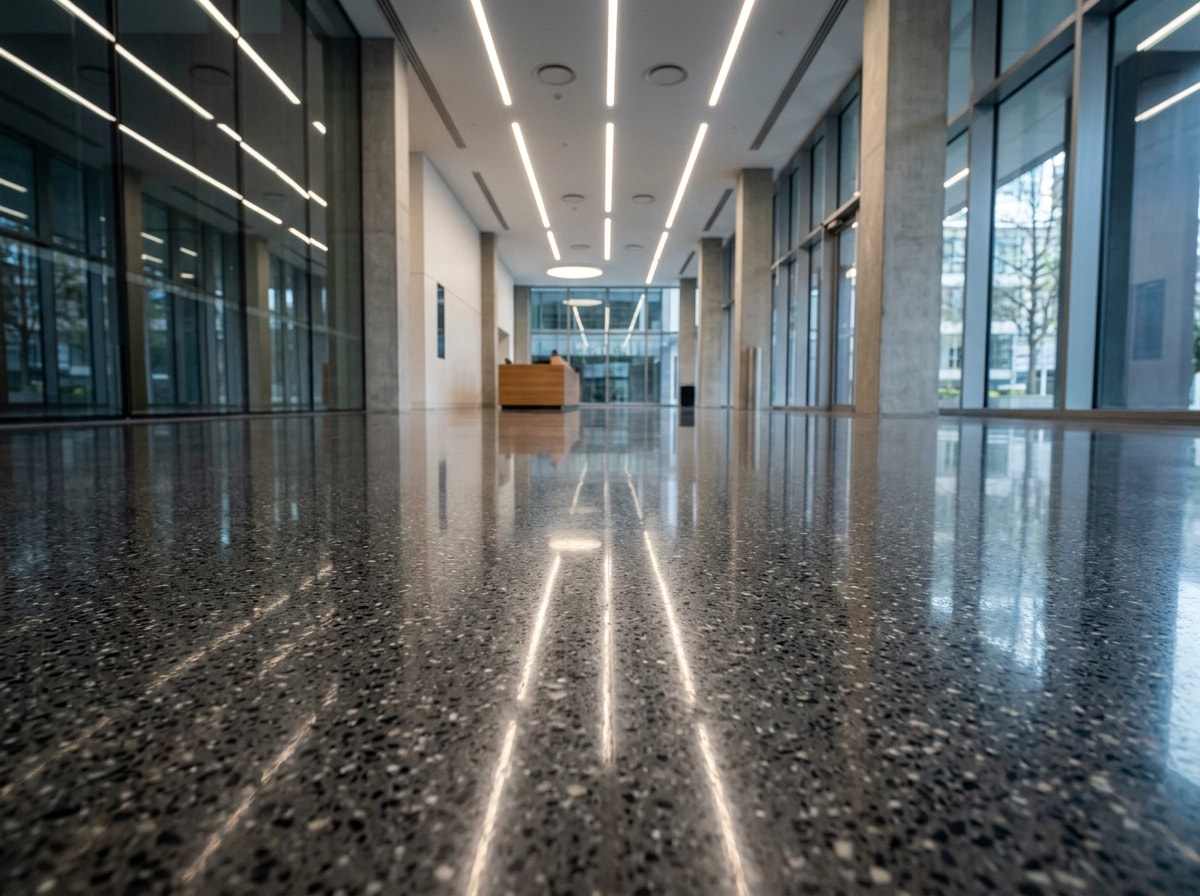
Polished concrete is an existing slab that's mechanically ground, honed, and densified with a chemical hardener. It is not a coating or topical finish.
Contractors run progressively finer diamond-impregnated pads across the slab in a grit sequence until it reaches the desired sheen, anywhere from a soft matte to a mirror-like gloss.
Homeowners and business owners around Seagoville choose polished concrete because it holds up to heavy foot traffic, resists stains, and needs far less upkeep than carpet, tile, or sealed coatings. It's also a practical way to upgrade an existing floor without a full tear-out. See how our crews approach these jobs on the concrete finishing services page.
How Much Does Concrete Polishing Cost?
Cost is usually the first question once people understand what polished concrete actually is. The final number on your quote depends mainly on two things: square footage and finish level.
Cost by Square Foot
Most polished concrete projects run $3 to $12 per square foot, depending on slab condition, finish level, and whether the work is residential or commercial.
- A small 400-square-foot garage might land between $1,200 and $4,800 total.
- A 10,000-square-foot commercial space could run $30,000 to $120,000, depending on finish and prep.
Larger spaces often see a lower per-square-foot rate because labor and equipment setup costs spread across more area. Polished concrete price estimates should always come from an on-site look at the slab, since hidden cracks or old adhesive residue can change the math quickly.
Cost by Finish Type
Pricing also shifts based on the finish level you want.
- Cream or matte finish: roughly $3 to $6 per square foot, since it requires fewer grinding passes.
- High-gloss or decorative finish (exposed aggregate, dyes, saw-cut patterns): typically $7 to $12 or more per square foot, since gloss levels need more passes with finer diamond grits.
Decorative polished concrete cost climbs further with custom coloring or logos. Ready to see what your space would run? Request a free estimate and a local crew can walk you through your options.
What Affects Concrete Polishing Cost?
Square footage and finish level set the baseline, but a few other factors can swing your final quote.
Existing Concrete Condition
Cracks, old coatings, uneven patches, and leftover adhesive residue all add prep time before grinding can start. A slab in rough shape may need crack repair or extra grinding passes just to reach a flat, workable surface.
Crack repair cost varies by severity, but even minor repairs add labor hours a well-maintained slab wouldn't need. This is one reason two homes with the same square footage can get very different quotes. Our concrete grinding guide for Kaufman County walks through how prep-level grinding differs from full polishing if you're trying to tell the two apart.
Residential vs. Commercial Concrete Polishing Cost
Residential and commercial polishing costs differ mainly because of job size, access, and equipment scale. A homeowner's garage is a quick, contained job; a warehouse requires industrial-grade grinders, more labor hours, and often after-hours scheduling to avoid disrupting operations.
Here's a general side-by-side look using current North Texas pricing patterns:
| Project Type | Typical Space | Price Range (per sq ft) | Estimated Total |
|---|---|---|---|
| Residential garage (Dallas-area) | 400–600 sq ft | $4–$8 | $1,600–$4,800 |
| Residential whole-home floor | 1,500–2,500 sq ft | $5–$9 | $7,500–$22,500 |
| Small commercial unit (Seagoville-area) | 3,000–5,000 sq ft | $4–$7 | $12,000–$35,000 |
| Warehouse floor polishing | 10,000+ sq ft | $3–$6 | $30,000+ |
Labor hours, equipment size, and job-site access explain most of the gap between categories. The industry's standard gloss classifications, published by the American Concrete Institute in conjunction with the American Society of Concrete Contractors as a standard specification known as ACI 310.1-20: Specification for Polished Concrete Slab Finishes , help contractors justify which finish tier fits a given space.
DIY vs. Professional Concrete Polishing
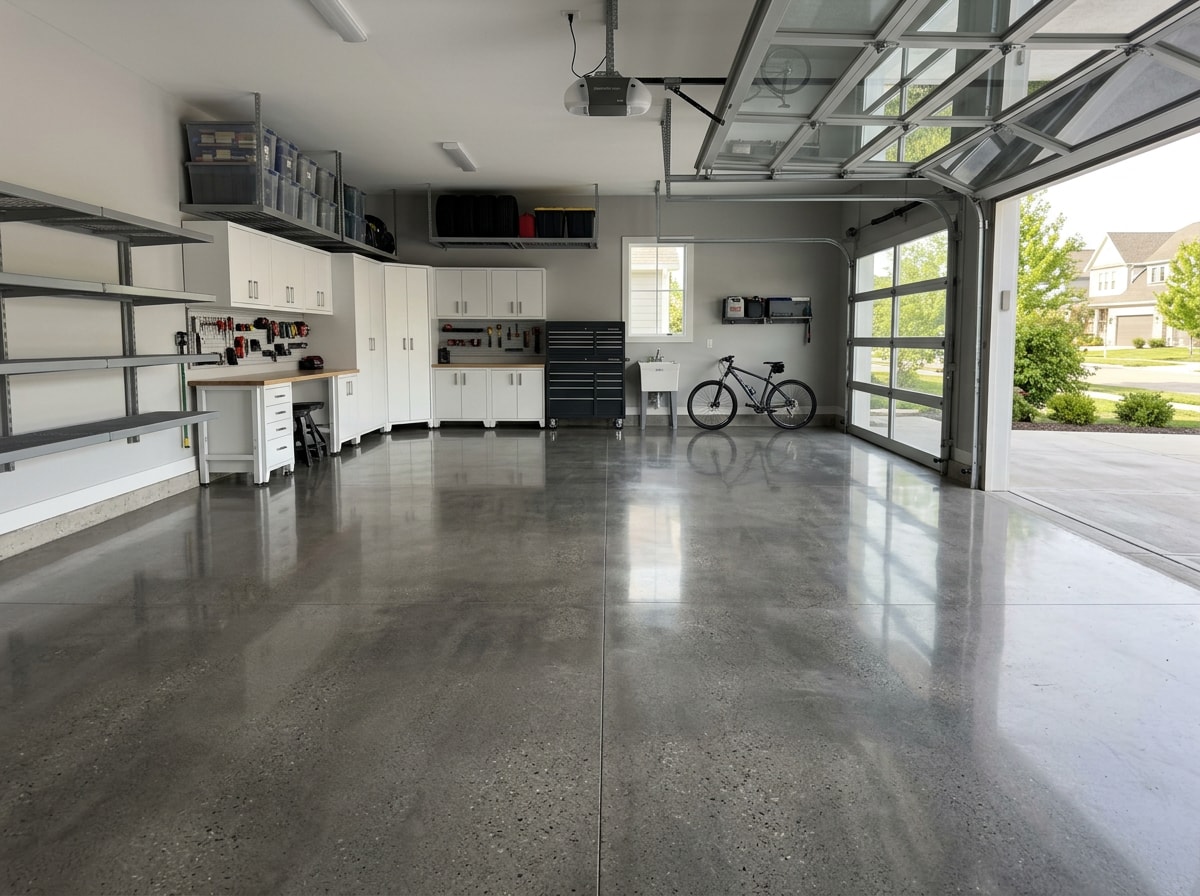
Renting a concrete grinder sounds like an easy way to cut costs. Grinder rental alone might run $100 to $300 per day plus pads and densifier.
But DIY concrete polishing carries real risk. Uneven pressure, inconsistent grit progression, and missed spots create swirl marks or a patchy sheen that's hard to fix afterward.
There's also a safety issue most DIYers overlook: dry grinding throws off fine silica dust. OSHA's construction standard applies to all occupational exposures to respirable crystalline silica in construction work, except where exposure stays below 25 micrograms per cubic meter of air as an 8-hour average . Professional crews run grinders with vacuum shrouds and dust collection built for this; a weekend rental unit usually isn't.
Professional crews also bring commercial-grade equipment and experience reading how a specific slab responds to each grinding pass. That's why many homeowners who attempt a DIY job end up searching for concrete polishing near me in Seagoville, TX anyway, hoping to find someone who can fix or finish the work correctly. For most projects beyond a small closet or utility space, hiring a pro protects your investment. Contact Hi-Tek Paving to talk through your floor before you rent equipment.
Pros and Cons of Polished Concrete Flooring
Weighing the trade-offs helps set realistic expectations before you commit.
Benefits of polished concrete:
- Exceptional durability under heavy foot and equipment traffic
- Low maintenance compared to carpet, vinyl, or sealed coatings
- Strong resistance to stains and moisture
- Lower long-term cost since it doesn't need periodic replacement
Drawbacks to plan around:
- Hard underfoot, which can tire you out standing on it for long stretches
- Stays cool to the touch, not ideal in every room
- Can be slippery when wet if unsealed or poorly maintained, so proper sealing and entryway mats matter
Polished Concrete vs. Other Flooring Options
Once you understand cost and trade-offs, it helps to see how polished concrete stacks up against flooring types you might already be considering.
Polished Concrete vs. Hardwood
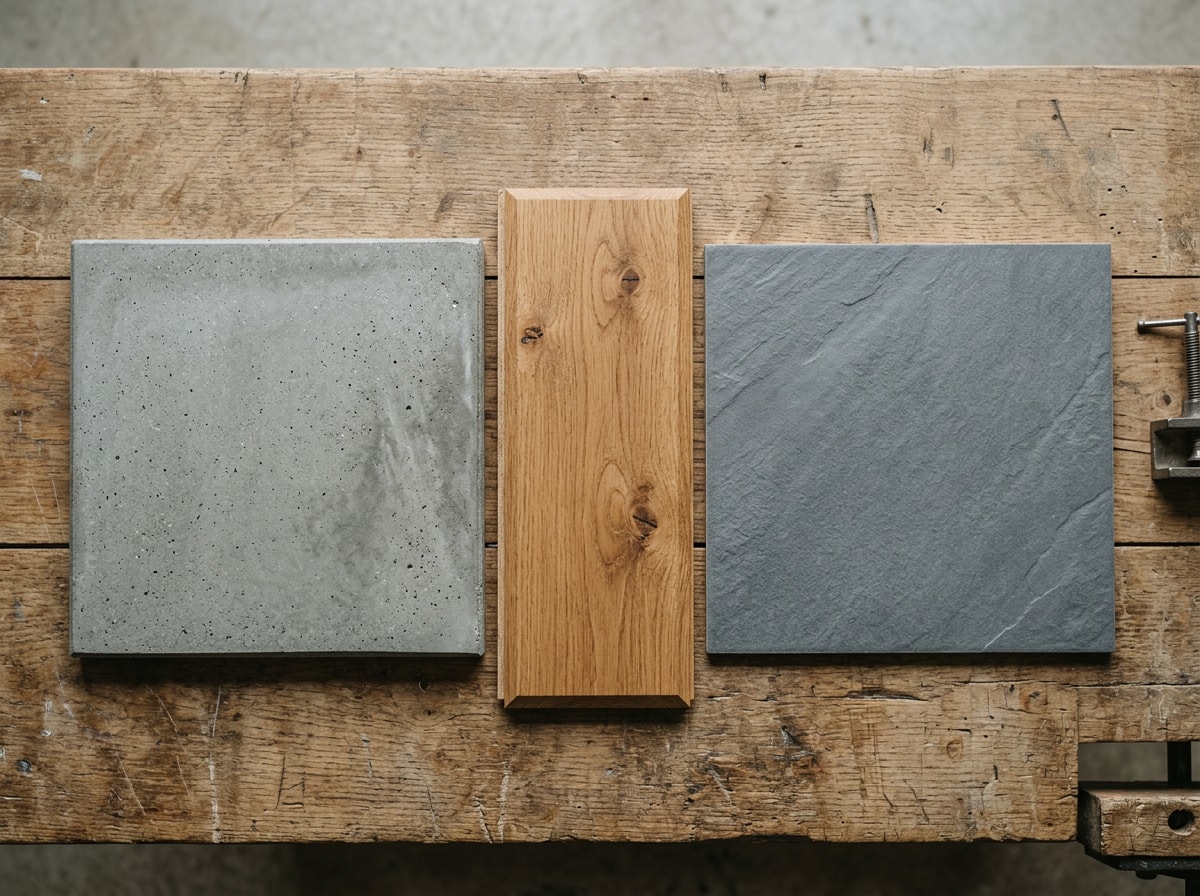
Hardwood typically costs $6 to $12 per square foot installed and needs refinishing every several years. Polished concrete costs less over time and resists scratches, water damage, and wear far better. For a direct lifetime-value comparison, concrete usually wins, though hardwood offers a warmth some homeowners still prefer.
Polished Concrete vs. Tile
Tile installation runs roughly $5 to $15 per square foot, putting it close to concrete for basic options but favoring concrete for large commercial spaces. Tile grout lines require ongoing cleaning and can crack or stain, while a polished slab has no seams to maintain. Under heavy foot traffic, polished concrete generally outlasts tile.
Concrete Polishing Maintenance and Care
Routine care is simple:
- Sweep or dust mop regularly to remove grit.
- Mop occasionally with a pH-neutral cleaner.
- Avoid harsh acidic or ammonia-based cleaners, which break down the densified surface over time.
Most polished floors benefit from resealing every one to three years, depending on foot traffic and finish level, to maintain shine and stain resistance. Specification bodies like the Concrete Polishing Council, a specialty council of the American Society of Concrete Contractors, maintain charts such as the Polished Concrete Aggregate Exposure Chart and the Polished Concrete Appearance Chart that help contractors and owners agree on what a finished floor should actually look like. Following guidance like this helps you avoid over- or under-sealing. With this light routine, a polished floor can look new for well over a decade.
The Long-Term Value of Polished Concrete Floors
Polished concrete is a long-term investment, not a quick cosmetic fix. A properly installed and maintained floor can last 20 years or more, avoiding the tear-out and reinstallation costs that come with carpet, vinyl, or some tile.
That lifespan translates into real ROI for homeowners and business owners alike, since you're not budgeting for replacement every decade. If you've been comparing concrete polishing near me in Seagoville, TX options, check our Seagoville service area page or visit the Hi-Tek Paving homepage to see the full range of concrete and paving work we handle across DFW.
FAQ
Why Is Polished Concrete So Expensive?
Polished concrete costs more than basic flooring because the process is labor-intensive. Multiple grinding passes with diamond tooling, plus densifier and sealer application, take skilled time, and skilled trade labor is a major driver of the final price, not just materials.
How Much Does It Cost to Grind and Seal a Concrete Floor?
A grind-and-seal finish, a lighter-prep alternative to full mechanical polishing, typically costs $2 to $5 per square foot. It skips some of the finer grinding steps used for high-gloss finishes, making it a budget-friendly option when a mirror shine isn't the goal.
What Is the Average Cost of Concrete Per Square Foot in Texas?
Texas concrete flatwork and polishing costs generally range from $3 to $10 per square foot, varying by region, labor availability, and project scope. North Texas pricing, including Seagoville, tends to fall in the middle of that range for standard residential work.
Is Polished Concrete Cheaper Than Hardwood?
Generally, yes. Polished concrete costs less upfront than hardwood and avoids the recurring refinishing expenses hardwood floors require over time, which makes it the more budget-friendly option for most spaces long term.
Do Polished Concrete Floors Crack?
Hairline cosmetic cracks can appear over time, but they're different from structural cracking and rarely affect the floor's function. Proper control joints and quality surface preparation during installation significantly reduce the odds of visible cracking down the road.
How Long Does It Take to Polish a Concrete Floor?
Most residential jobs take one to three days depending on square footage and finish level. Commercial floors with heavy prep, crack repair, or decorative work can take a week or more.
Is Polished Concrete Slippery When Wet?
It can be if it's unsealed or over-polished to a high gloss without a slip-resistant additive. A properly sealed floor with the right finish level is no more slippery than sealed tile, and entryway mats in wet-prone areas add extra traction.
Ready to get a real number instead of a national average? Get a free estimate from Hi-Tek Paving and we'll walk your slab before we quote it.