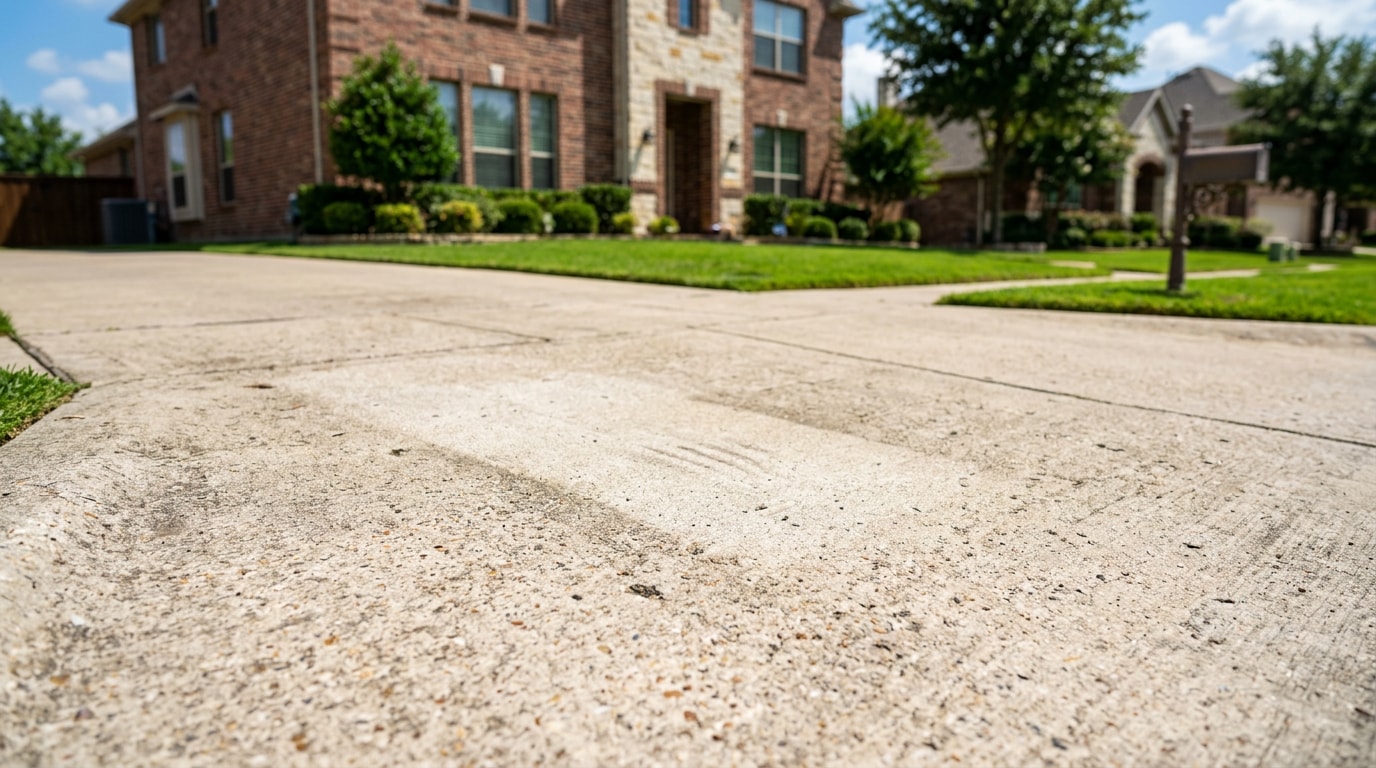

Learning how to clean concrete floors in Grand Prairie, TX starts with understanding why North Texas heat and clay soil make stains set in faster than almost anywhere else. The right method depends on what's staining your slab: motor oil, rust, paint, or mildew each need a different fix. This guide walks through supplies, step-by-step cleaning, stain-specific treatments, and when it's worth calling a pro instead.
This guide was put together by the concrete crew at Hi-Tek Paving, a Dallas-Fort Worth concrete and paving contractor that cleans, repairs, and seals garage and driveway floors throughout Grand Prairie. On service calls across the area, our crews see the same pattern over and over: oil stains near the garage entry and rust rings under lawn equipment, both made worse by how fast DFW summer heat sets them into the slab.
Why Grand Prairie Concrete Floors Get Dirty So Fast
Concrete looks solid, but it's full of microscopic voids that pull liquid downward instead of letting it sit on the surface where it's easy to wipe up. That's why a fresh spill needs attention within minutes, not hours, if you want to avoid a permanent mark.
Grand Prairie's climate doesn't help. Summer heat lowers the viscosity of oil and grease, letting them soak in faster, while humid stretches and the occasional winter freeze-thaw cycle open hairline cracks that trap dirt and moisture over time. The result: stains here tend to set in deeper and faster than in cooler, drier climates.
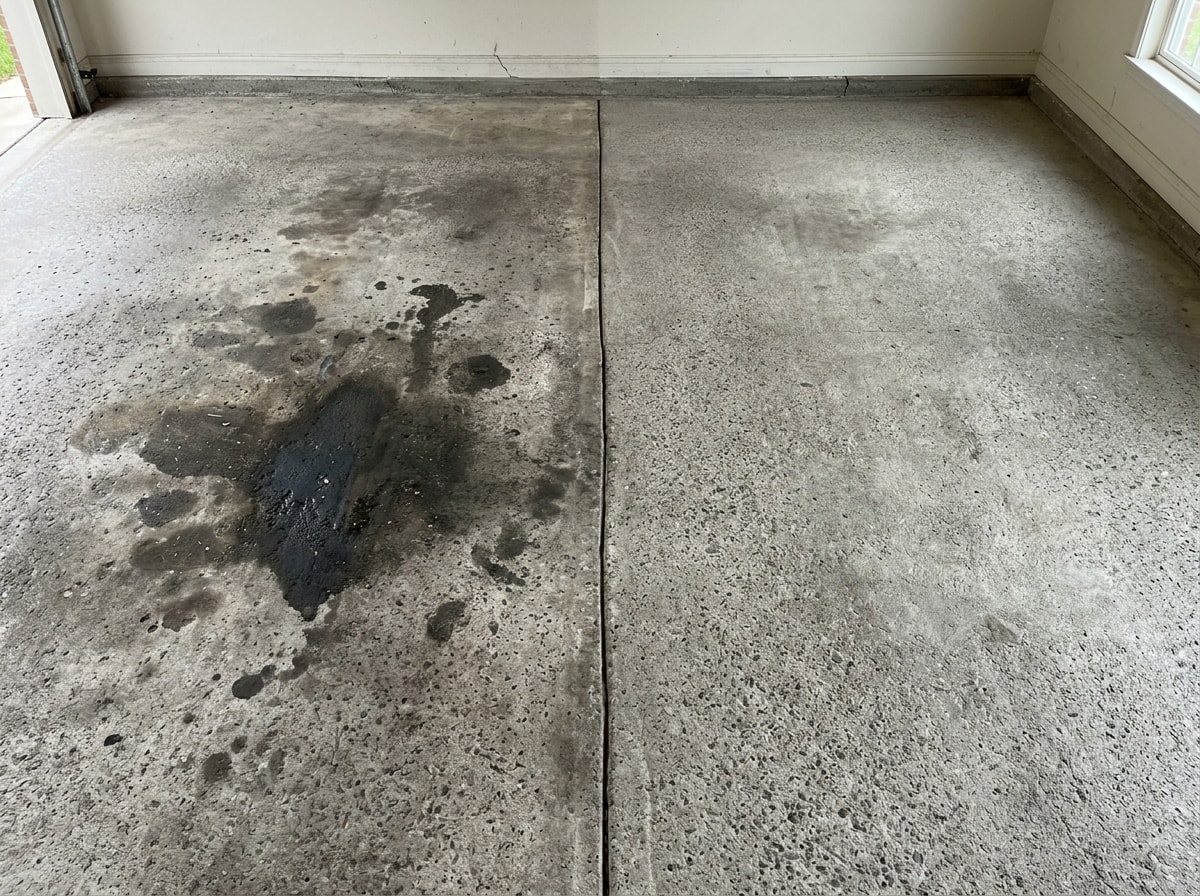
Garage floor contaminants generally fall into a few categories: motor oil, grease, rust, paint drips, and mildew in damp corners. Oil and rust are the hardest to remove because they penetrate below the surface instead of sitting on top like everyday dirt. Identifying the contaminant before you start saves time and keeps you from grabbing the wrong product.
Supplies You Need Before You Start
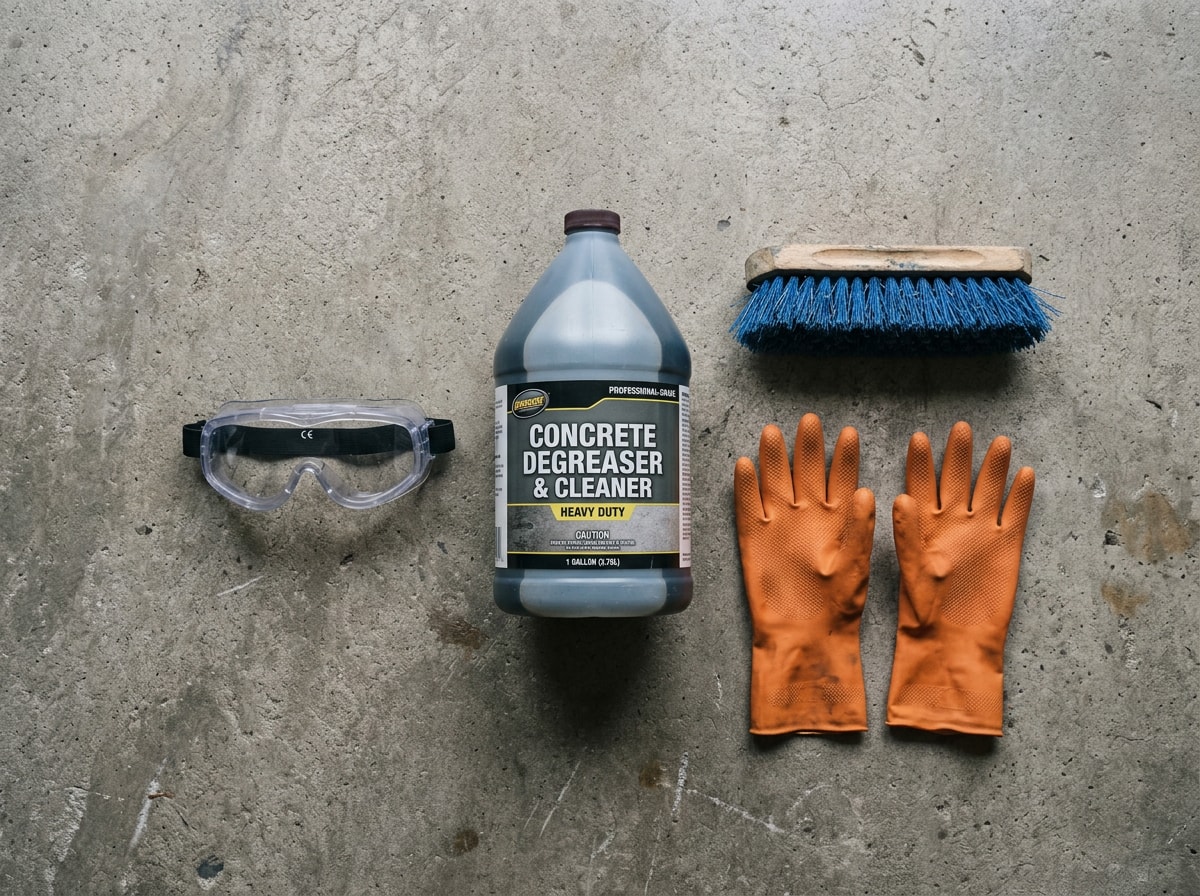
Most of what you need is available at any Grand Prairie hardware store:
- A concrete-safe degreaser for oil and grease
- A stiff-bristle scrub brush or push broom
- A pressure washer or garden hose with a nozzle attachment
- A pH-neutral cleaner for routine, non-stain cleaning
- Rubber gloves and eye protection
A basic DIY cleaner for light jobs can be mixed from warm water, dish soap, and baking soda. For tougher stains, a dedicated degreaser works faster with less scrubbing. If you're using any acidic or chemical cleaner, wear eye protection that meets OSHA's eye and face protection standard, since splashes from concrete cleaners and rust removers are a real hazard, not just a formality.
Step-by-Step: How to Clean a Concrete Floor
- Sweep first. Clear loose debris so it doesn't get ground into the surface during washing.
- Pre-treat stains. Apply a targeted cleaner to oil or rust spots and let it sit before the main wash.
- Apply cleaning solution. Use a pH-neutral cleaner for general dirt or a degreaser for grease.
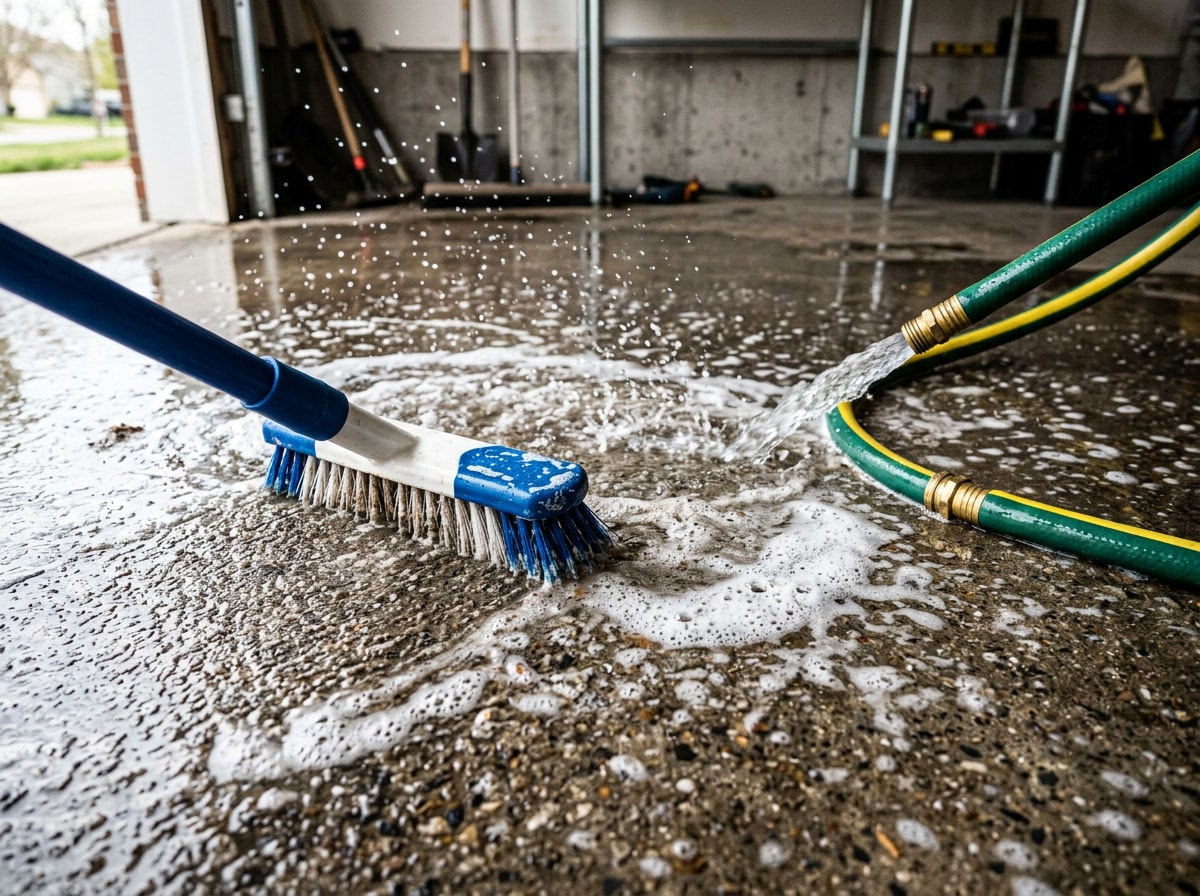
- Agitate with a brush. Scrub in small sections to lift embedded grime.
- Rinse thoroughly. A pressure washer clears more buildup in less time than a hose, though hand scrubbing works fine for smaller, lighter areas.
- Let it dry completely before sealing or coating.
How to Remove Specific Concrete Stains
Not every stain responds to the same treatment, and using the wrong one wastes time or makes the stain harder to lift.
Oil Stains
Blot fresh spills immediately, then apply a degreaser or dish soap and scrub with a stiff brush before rinsing.
| Treatment | Best For | Tradeoff |
|---|---|---|
| Dish soap | Light, fresh spots | Weak on older stains |
| Enzymatic cleaner | Older, set-in oil | Works slower |
| Baking soda/cat-litter poultice | Oil soaked deep into pores | Takes hours to overnight |
If you're dealing with a stubborn spot that keeps reappearing, our Rockwall oil stain removal guide walks through the poultice method in more detail. For disposing of the used motor oil itself, follow EPA guidance on managing used oil rather than rinsing it into a storm drain or yard.
Dried Paint
Apply a paint softener or solvent directly to the spot, then gently scrape with a plastic putty knife once it loosens. Avoid metal scrapers, which scratch or chip the surface. Stubborn spots may need a second application and a light scrub.
Rust Stains
An acidic cleaner or commercial rust remover applied and left to sit briefly, then scrubbed and rinsed, handles most rust. Go easy on strength: overly harsh acids can etch concrete, leaving a dull or pitted mark that's harder to fix than the original rust. Test any rust remover on a hidden spot first.
Mold or Mildew
A diluted bleach solution or commercial mildewcide, scrubbed in and rinsed, clears most mold on concrete. Grand Prairie's humid stretches in late spring and summer make mildew more common in poorly ventilated garages. Let the area dry completely afterward to discourage regrowth.
DIY Cleaning vs. Professional Service
| Factor | DIY Cleaning | Professional Cleaning |
|---|---|---|
| Cost | Lower, just supplies | Higher, but includes labor and equipment |
| Equipment | Consumer pressure washer or hose | Commercial-grade pressure washing |
| Stain depth | Handles light to moderate stains | Better for deep-set or large-area stains |
| Time | Can take a full afternoon | Usually faster with the right tools |
| Follow-up | You handle sealing separately | Often bundled with sealing/coating |
If scrubbing stains out yourself doesn't sound appealing, or the slab covers a large driveway or parking area, a concrete contractor can handle pre-treatment, pressure washing, and sealing in one visit. Get a free estimate if you'd rather have the job done right the first time.
Preventing Future Stains
A few habits cut down how often you need to break out the degreaser:
- Sweep regularly so dirt doesn't grind into the surface.
- Place mats under vehicles to catch drips.
- Wipe up spills as soon as they happen.
- Reseal periodically, since a sealed surface is far less porous and easier to wipe clean.
If your floor needs resurfacing before sealing makes sense, our concrete finishing services cover everything from smoothing to prepping a slab for a coating.
Best Time to Seal or Coat Your Concrete
Timing matters once the floor is clean and dry. Most epoxy coatings need moderate temperatures and low humidity to cure properly. Rust-Oleum's EpoxyShield line, for example, specifies application between 60-85°F with relative humidity no higher than 85%. In Grand Prairie, that window usually lands in spring or fall, since summer heat can cure coatings too fast and winter cold can slow adhesion. Always check the specific product's technical data sheet before scheduling, since ranges vary by brand.
Once a floor is clean, it's also the easiest time to consider an epoxy coating, since the surface needs to be free of oil, dirt, and moisture for proper bonding. DIY kits exist, but professional installation typically means better surface prep, more durable results, and a warranty backing the work. Homeowners looking into other concrete upgrades around the same time might also browse our homepage for the full range of paving and concrete services we offer across the Dallas-Fort Worth area.
FAQ
How do you scrub clean concrete floors?
Apply a pH-neutral or degreasing cleaner, scrub with a stiff-bristle brush in small sections, then rinse thoroughly before it dries on the surface.
Can you use Dawn to clean concrete floors?
Yes. Dawn's degreasing properties work well on light oil and grease spots, though tougher or older stains usually need a dedicated concrete degreaser.
What is the best floor cleaner for cement floors?
Use a pH-neutral cleaner for routine maintenance and a degreaser specifically for oil or grease, rather than one product for everything.
How do you clean a concrete sidewalk or driveway?
Outdoor concrete relies mainly on pressure washing since it faces constant weather exposure and doesn't need the squeegee or drain setup a garage floor does.
Can you use vinegar to clean concrete floors?
Avoid it on sealed or decorative concrete. Vinegar is acidic enough to dull sealers and etch bare concrete over repeated use, so stick to pH-neutral cleaners for routine mopping.
How often should concrete floors be sealed in Texas?
Most sealers need reapplication every two to three years in North Texas, since summer UV exposure and freeze-thaw cycles wear sealant down faster than in milder climates.
Ready to skip the scrubbing? Contact Hi-Tek Paving for a free estimate on concrete cleaning, sealing, or a full floor coating in Grand Prairie.