Aggregate concrete in Kaufman County, TX gives driveways, patios, and commercial pours a textured, slip-resistant surface that holds up to North Texas heat better than plain broom-finish slabs. It costs more upfront than standard concrete but needs fewer repairs over its life. This guide breaks down what it is, what it costs in 2026, how it's installed correctly, and what local code requires before a crew ever shows up with a mixer.
What Is Exposed Aggregate Concrete?
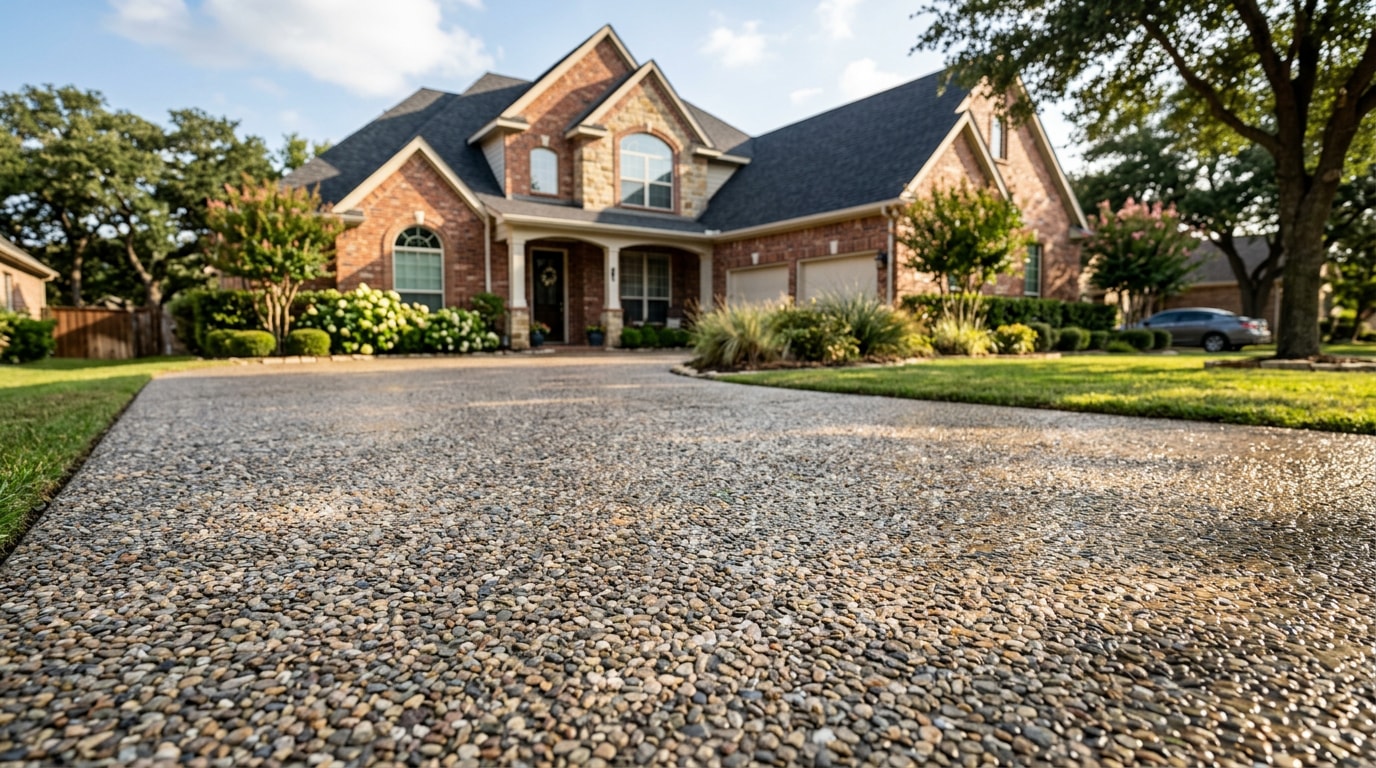
Exposed aggregate concrete starts as a standard pour. Before the slab fully cures, the top layer of cement paste is washed or brushed away, revealing the stone, pebble, or shell aggregate mixed into the mud underneath.
The result is a speckled, textured surface instead of smooth troweled or broom-finish concrete. Kaufman County homeowners and builders pick it over stamped or plain concrete because it pairs slip resistance with a natural, upscale look that shrugs off sun, heat, and steady foot or vehicle traffic.
Aggregate Concrete Cost in Kaufman County, TX (2026)
Pricing depends on aggregate type, slab size, site access, and whether the stone is seeded on top or blended through the whole mix. Standard local aggregate keeps costs down; imported decorative stone adds $20 to $60 per cubic yard to the concrete order.
| Finish | Cost/Sq Ft (2026) | Lifespan | Maintenance |
|---|---|---|---|
| Exposed aggregate | $8–$14 | 20–30+ yrs with sealing | Reseal every 2–3 yrs |
| Stamped concrete | $10–$18 | 20–25 yrs | Reseal every 1–2 yrs |
| Broom-finish | $6–$10 | 20–25 yrs | Minimal |
A typical 500 to 600 square foot driveway in exposed aggregate runs roughly $4,000 to $8,400 installed, depending on stone choice and site prep. Want an exact number for your lot? Get a free estimate before you budget the rest of the project.
Benefits of Exposed Aggregate Driveways and Patios
Exposed aggregate earns its higher price tag in a few specific ways:
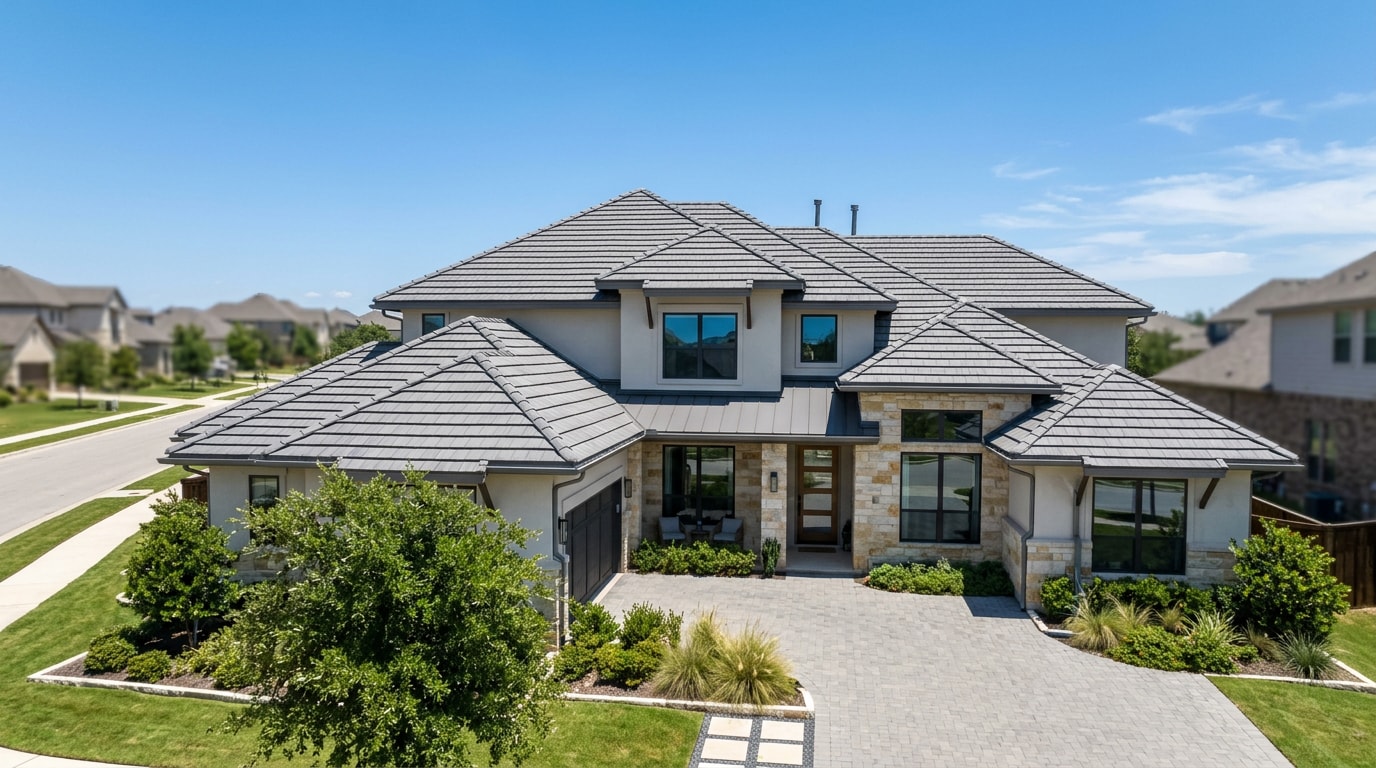
- Traction — the textured surface grips better than smooth or troweled concrete, which matters on sloped driveways and pool decks.
- Heat tolerance — the aggregate itself carries the look, so it doesn't rely on a coating or stamp pattern that can wear thin under Texas sun.
- Design range — stone color, size, and seeding pattern can be matched to brick, stucco, or landscaping.
- Lower long-term repair cost — properly sealed aggregate holds its finish longer than stamped concrete, which needs more frequent color sealing to stay sharp.
The trade-off: a damaged section is harder to patch invisibly than plain concrete, since the aggregate color and size have to match the original pour closely.
How Professional Installation Works
General flatwork crews can pour a slab, but exposing aggregate correctly takes timing most crews don't practice often. The surface has to be leveled with a bull float or darby before bleed water appears, and finishing work has to wait until that water sheen is gone. Rush either step and the stone exposes unevenly or the surface weakens.
The process generally runs like this:
- Site prep and forming — grading, subbase compaction, and form setting to the correct thickness.
- Pour and level — concrete is placed and bull-floated flat before bleed water rises.
- Seed or blend the aggregate — decorative stone is either broadcast onto the wet surface and pressed in, or mixed through the full batch.
- Expose at the right cure window — a surface retarder, light brushing, or washing reveals the stone without over- or under-exposing it.
- Seal — a topical sealer locks in color and protects against the stone coming loose later.
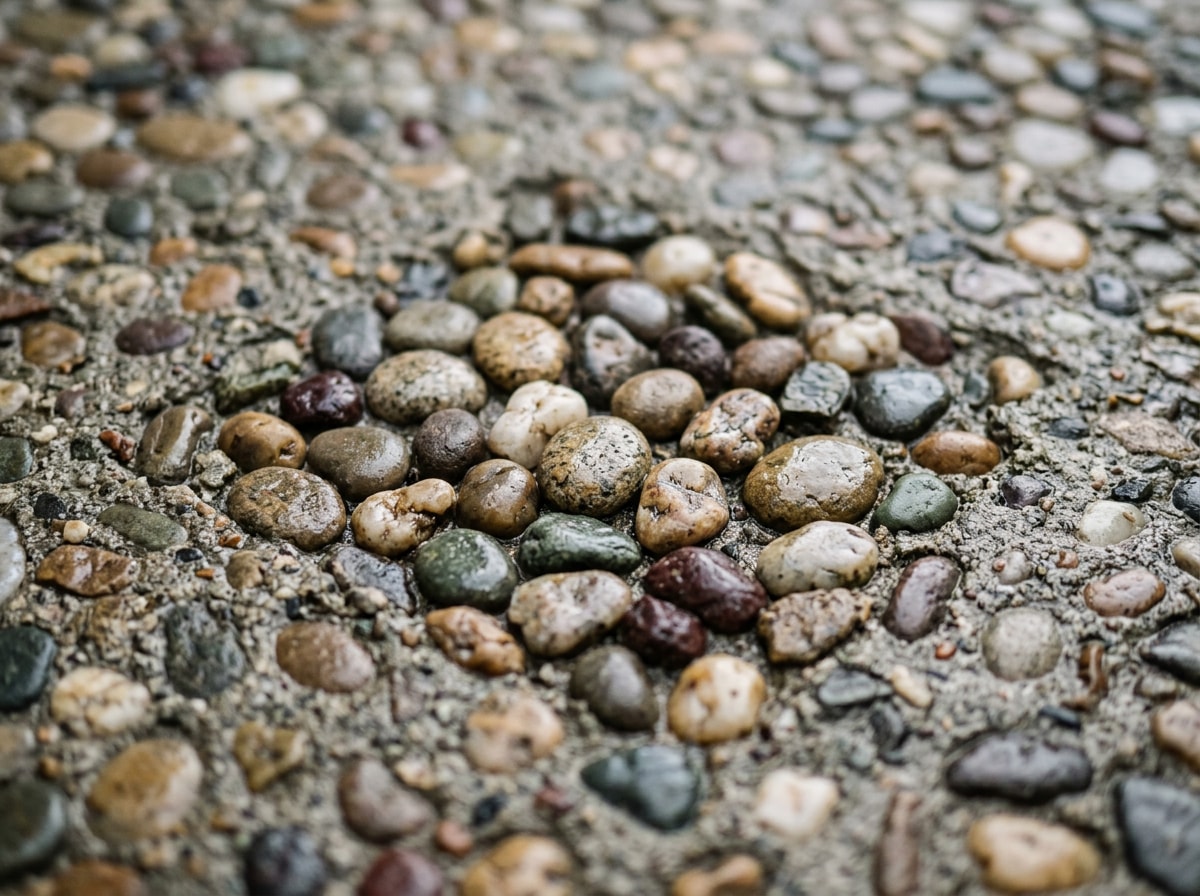
In our crews' experience pouring driveways from Forney to Terrell, the step homeowners underestimate most is the wash timing. Wash too early and the surface looks washed out and gray; wash too late and the stone barely shows. That's the gap between a DIY pour and a finish that still looks sharp a decade later. The National Ready Mixed Concrete Association documents the same sequence for any flatwork crew finishing decorative concrete, and it's worth reviewing before you hire anyone who hasn't poured aggregate before.
If you're weighing a full concrete paving project versus resurfacing an old slab, our concrete finishing team can walk through which approach fits your site and budget.
Kaufman County Concrete Codes & Permits
Local rules affect both the slab specs and whether you need a permit before pouring.
Inside Kaufman city limits, minimum construction standards call for four inches of concrete with #3 rebar on eighteen-inch centers for driveways and parking approaches, per the city's Code Compliance standards. Gravel driveways over 50 feet are allowed only in Agriculture/Open zoning.
Outside city limits, if your new driveway crosses the county right-of-way, Kaufman County requires a culvert permit before installation, and that permit expires 12 months after issuance. Skipping this step is one of the more common reasons a driveway pour gets flagged after the fact.
Requirements vary by municipality within the county, so confirm specifics with your local building department, or ask your contractor to handle the paperwork as part of the bid.
Concrete Services We Provide Across Kaufman County
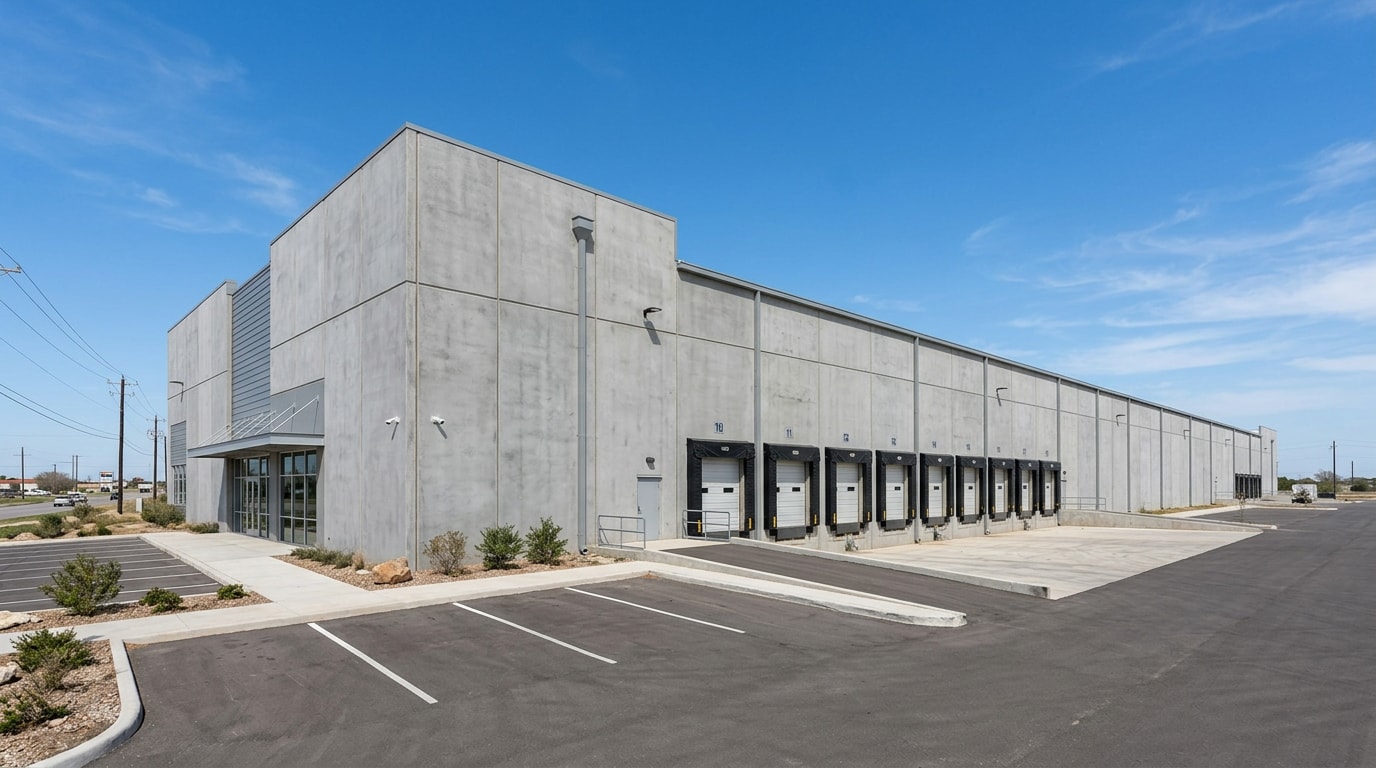
Aggregate finishes are one piece of a broader concrete scope. A full-service crew typically handles driveways, patios, sidewalks, foundation slabs, and commercial pours, applying aggregate finishes wherever a decorative, slip-resistant surface makes sense.
That range matters because the same crew that pours a homeowner's exposed aggregate patio one week can handle a commercial concrete parking lot repair or concrete road construction project the next. If you're removing an old slab before a new aggregate pour, concrete demolition is usually the first line item on the estimate. See our full concrete contractor page for the complete service list.
Where We Pour Around Kaufman County, TX
Our Kaufman County service area covers Kaufman, Forney, Terrell, Crandall, and the surrounding communities. If you've searched "concrete contractor near me," expect a clear mobilization timeline, on-site quality checks against the project spec, and straight communication from bid through closeout.
If you're also dealing with an existing slab that's uneven, cracked, or just rough underfoot, our guide on concrete grinding in Kaufman County covers when grinding fixes the problem versus when a full repour makes more sense.
Maintenance Tips for Your Exposed Aggregate Surface
Keeping an aggregate finish looking like day one comes down to three habits:
- Reseal every 2 to 3 years, depending on sun exposure and traffic. Skipping resealing is the single biggest reason stones come loose early.
- Clean with mild soap and water. Acid washes strip the sealer and dull the stone faster than normal wear does.
- Watch for freeze-thaw stress. North Texas doesn't see deep freezes often, but the swings between summer heat and winter cold snaps still stress sealant and joints, so a quick inspection each spring catches problems before they spread.
FAQ
What is exposed aggregate concrete?
It's a concrete finish where the top layer of cement paste is washed or brushed away before full cure, revealing the stone or pebble aggregate mixed into the slab. It's not stone sprinkled on top; the aggregate is part of the mix itself.
How much does aggregate concrete cost in Kaufman County, TX?
Expect roughly $8 to $14 per square foot installed in 2026, depending on aggregate type and site access. A 500 to 600 square foot driveway typically runs $4,000 to $8,400.
Is exposed aggregate concrete slippery when wet?
No. It generally offers better traction than smooth or troweled concrete because the exposed stone creates a textured, non-slip surface, which is one reason it's common around pools and sloped driveways.
How long does an exposed aggregate driveway last?
With proper sealing and maintenance, 20 to 30+ years is typical. Skipping resealing shortens that window because loosened stones lead to small holes that spread if left unrepaired.
Do I need a permit for a new driveway in Kaufman County?
If the driveway crosses the county right-of-way, yes, a culvert permit is required and must be renewed if not used within 12 months. Inside city limits like Kaufman, a building permit and inspection are typically required as well. Your contractor can usually handle this filing for you.
What areas of Kaufman County do you serve?
We serve Kaufman, Forney, Terrell, Crandall, and nearby communities across the county. See our Kaufman County service area page for the complete list.
How quickly can you start a concrete project in Kaufman County?
Most projects fall within a one-to-two-week mobilization window, depending on weather, permitting, and current crew scheduling.
Exposed aggregate vs. stamped concrete: which costs less?
Exposed aggregate usually runs $8 to $14 per square foot versus $10 to $18 for stamped concrete, and it needs resealing less often, which lowers the long-term cost even though the upfront gap is small.
Ready to get a real number for your driveway, patio, or commercial pour? Get a free estimate from the Hi-Tek Paving & Construction team, or visit our homepage to see our full range of paving and concrete work across North Texas.
About the Author
This guide was written by the project estimating team at Hi-Tek Paving & Construction, a Kaufman County-area asphalt and concrete contractor that has poured driveways, patios, and commercial lots across Kaufman, Forney, Terrell, and the greater Dallas-Fort Worth area. Questions about a specific project? Contact us directly.