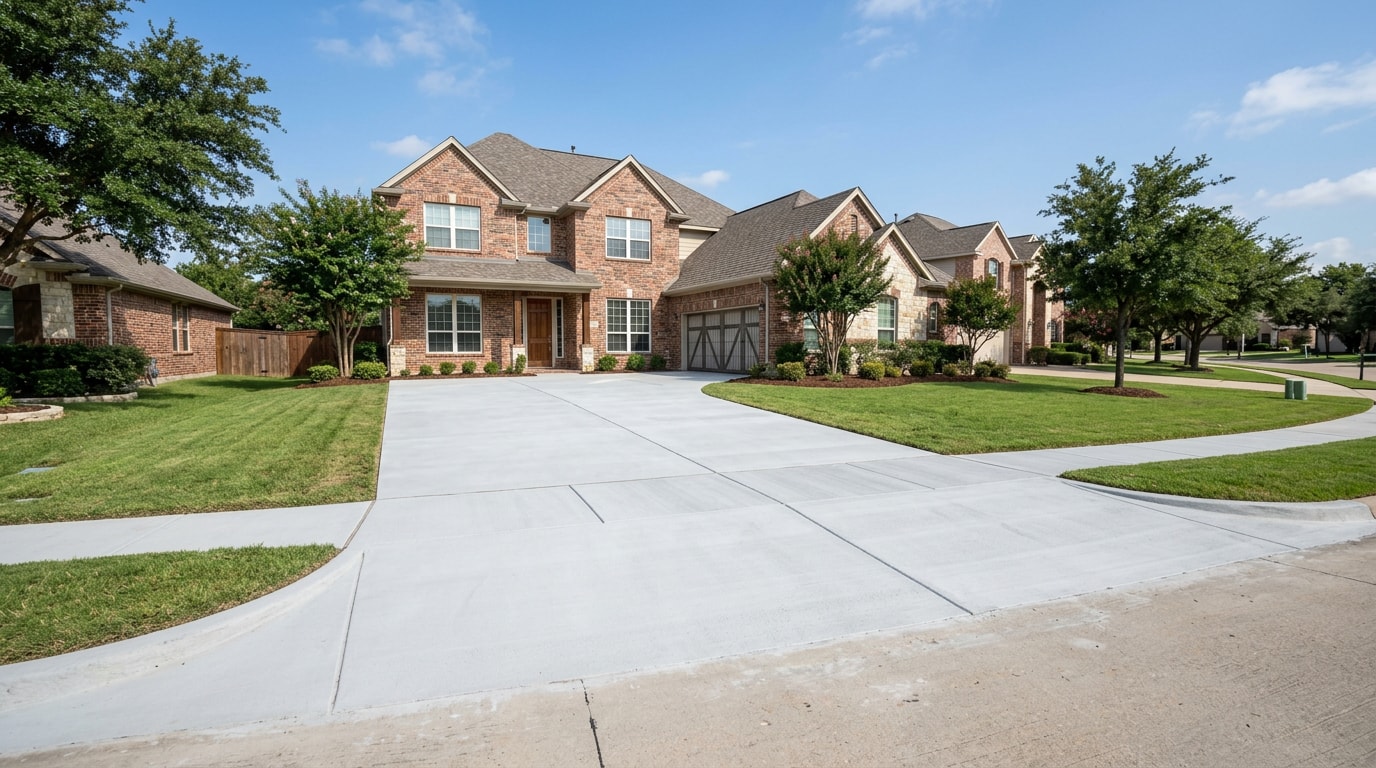
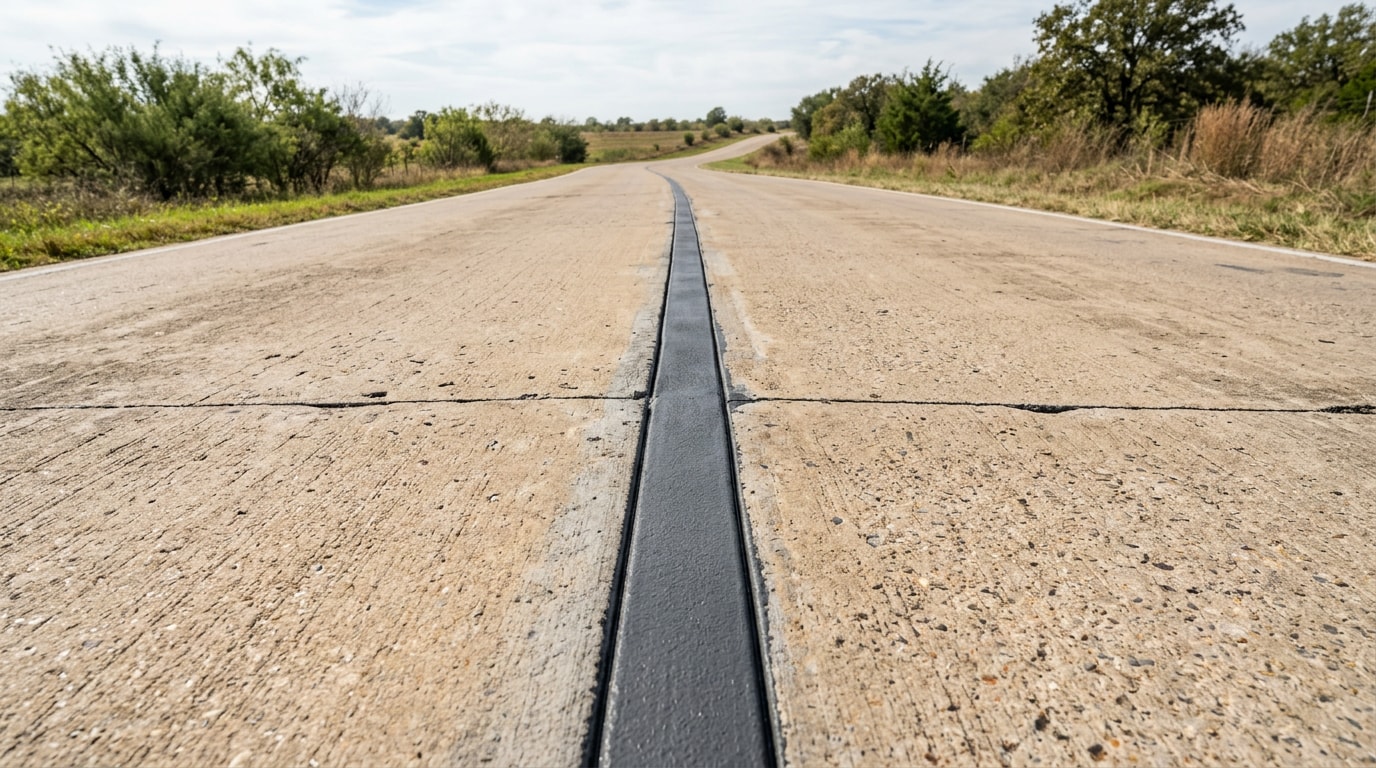
A concrete expansion joint in Kaufman County, TX works harder than most homeowners realize, especially once our Blackland Prairie clay starts its yearly shrink-swell cycle. Ignore a failing one for a season or two, and a hairline gap turns into a cracked driveway or a sunken sidewalk slab. Here's what actually works in our soil, and what repair costs in 2026.
Hi-Tek Paving repairs and installs these joints on driveways, patios, and parking lots across Kaufman County, from Forney to Terrell. You can see our full service footprint on the homepage.
What Is a Concrete Expansion Joint, and Why Does Kaufman County Need One?
A concrete expansion joint is a planned gap filled with flexible material that lets a slab expand and contract without cracking. People sometimes confuse these with control joints, which are shallow surface cuts rather than full-depth gaps, and serve a different purpose: guiding where a crack happens instead of letting the slab move freely.
The American Concrete Institute and the Portland Cement Association both classify expansion joints as one of the primary joint types used in concrete construction, alongside construction, contraction, and isolation joints. That framework matters here because Kaufman County sits inside the Texas Blackland Prairie, where the dominant soil is Houston Black clay.
That soil developed from calcareous clays and marls deposited during the Cretaceous Age, turns sticky and moldable when wet, and is nicknamed "black gumbo" for exactly that reason.
The same clay belt runs north through Dallas, Tarrant, Collin, Kaufman, and Hunt counties , which is why joints that work fine in sandier soil tend to fail faster here.
Properly maintained joints:
- Absorb the thermal and soil-driven movement that would otherwise crack the slab
- Extend the usable lifespan of the concrete
- Keep walking surfaces level and free of trip hazards

Why Every Expansion Joint Needs the Right Filler
An open gap invites water, debris, and roots. Cheap filler degrades within a few years, which triggers the very sinking and cracking the joint was supposed to prevent. Material choice matters more in Kaufman County than in milder climates, because our clay moves harder and our summers run hotter.
Typical Installed Cost & Lifespan by Filler Type
| Filler Material | Installed Cost (per linear ft) | Typical Lifespan Locally | Climate Notes |
|---|---|---|---|
| Wood/fiberboard | $1–$3 | 2–4 years | Swells in humidity, rots, invites termites |
| Vinyl | $3–$5 | 5–8 years | Holds moisture out but turns brittle under UV |
| Polyurethane | $5–$8 | 8–12 years | Flexes well with clay-soil heaving |
| Silicone | $6–$10 | 10–15+ years | Best overall match for DFW-area heat swings |
Prices vary by contractor, joint width, and total footage, so treat this as a planning range rather than a quote.
Wood Fillers: Traditional but Short-Lived Here
Wood and fiberboard filler is inexpensive and easy to install during the original pour. That convenience fades fast in Kaufman County. Humidity swings and heavy summer rain cause rapid swelling and warping, and termites add another risk. Most wood joint material needs replacing within a few years.
Vinyl and Polyurethane: A Step Up, Still Imperfect
Vinyl resists moisture better than wood and comes pre-sized for easier installation. It still turns brittle under prolonged UV exposure. Polyurethane flexes better through our clay's shrink-swell cycle, but silicone outlasts both when budget allows.
Signs Your Kaufman County Driveway or Patio Needs Joint Repair
Texas heat, intense UV exposure, and sudden downpours accelerate joint failure faster than milder climates. Catching the warning signs early can save a far costlier repair later.
Watch for:
- Cracked, brittle, missing, or sunken filler material
- A visibly widening gap between slabs
- Standing water that lingers in the joint after rain
- Chipped concrete edges near the joint line
- Weeds or ants collecting in the gap
- Uneven slab height on either side of the joint

Ignoring these signs lets water erode the soil and base material beneath the slab, causing sections to shift or sink. In some cases, settlement progresses far enough that full cut-out and replacement becomes the only option. Unsealed joints also let roots take hold, breaking down concrete from the inside before visible damage appears.
If you're seeing two or more of these signs, request a free estimate before the damage spreads past the joint itself. Driveway-specific repairs fall under our concrete paving services.
How Professional Silicone Joint Repair Stops Further Damage
Fixing a failing joint isn't about stuffing in whatever filler is handy. A proper repair follows a sequence:
- Clean the joint thoroughly, removing old filler and debris
- Install a backer rod where the gap is too deep for sealant alone
- Apply a professional-grade silicone sealant built to flex with slab movement
Crews also weigh surface type, traffic volume, and the slab's current grade before choosing a sealing approach. A driveway handling daily vehicle weight needs different treatment than a quiet patio joint, and commercial lots need a heavier-duty approach still, which is where our concrete parking lot repair crews come in.
How Far Apart Should Expansion Joints Be Placed?
Guidance from the National Ready Mixed Concrete Association puts maximum joint spacing at 24 to 36 times the slab's thickness, meaning a standard 4-inch slab should have joints roughly every 10 feet, never spaced more than 15 feet apart. That spacing principle guides where joints belong along longer driveways, sidewalks, and patios, though exact placement still depends on slab thickness and layout.
If the slab edges along an existing joint have settled unevenly, grinding them flush is often the first step before resealing. Our guide to concrete grinding in Kaufman County covers that process in more detail.
FAQ
What is the difference between an expansion joint and a control joint?
Expansion joints are full-depth gaps that let concrete slabs move independently. Control joints are shallow grooves cut into the surface that guide where cracking happens, rather than preventing movement.
Will concrete crack without expansion joints?
Yes. Without joints to absorb thermal and moisture-driven movement, internal stress builds up inside the slab and eventually releases as unpredictable, uncontrolled cracking.
How much does expansion joint repair cost?
Residential joint repair typically runs $5 to $12 per linear foot, with most driveway projects totaling $200 to $800 depending on length and filler type. Get a free estimate for an exact number on your project.
How long does expansion joint sealant last?
Wood and vinyl fillers often need replacement within 2 to 8 years, while professional-grade silicone can last 10 to 15 years or longer in North Texas conditions.
How deep and wide should a concrete expansion joint be?
Most residential expansion joints run about 1/2 inch to 1 inch wide and 3 to 4 inches deep, enough to let the filler and sealant flex without bottoming out against the slab.