A concrete sink in Dallas, TX is custom-poured, not pulled off a warehouse shelf, and that's exactly why homeowners request one. Each basin is hand-built to a client's size, color, and style, giving kitchens, baths, and commercial washrooms across the Metroplex a one-of-a-kind centerpiece. Here's what Dallas buyers need to know about styles, real pricing, and upkeep before ordering one from a local fabricator.
Concrete Farmhouse (Apron) Sinks
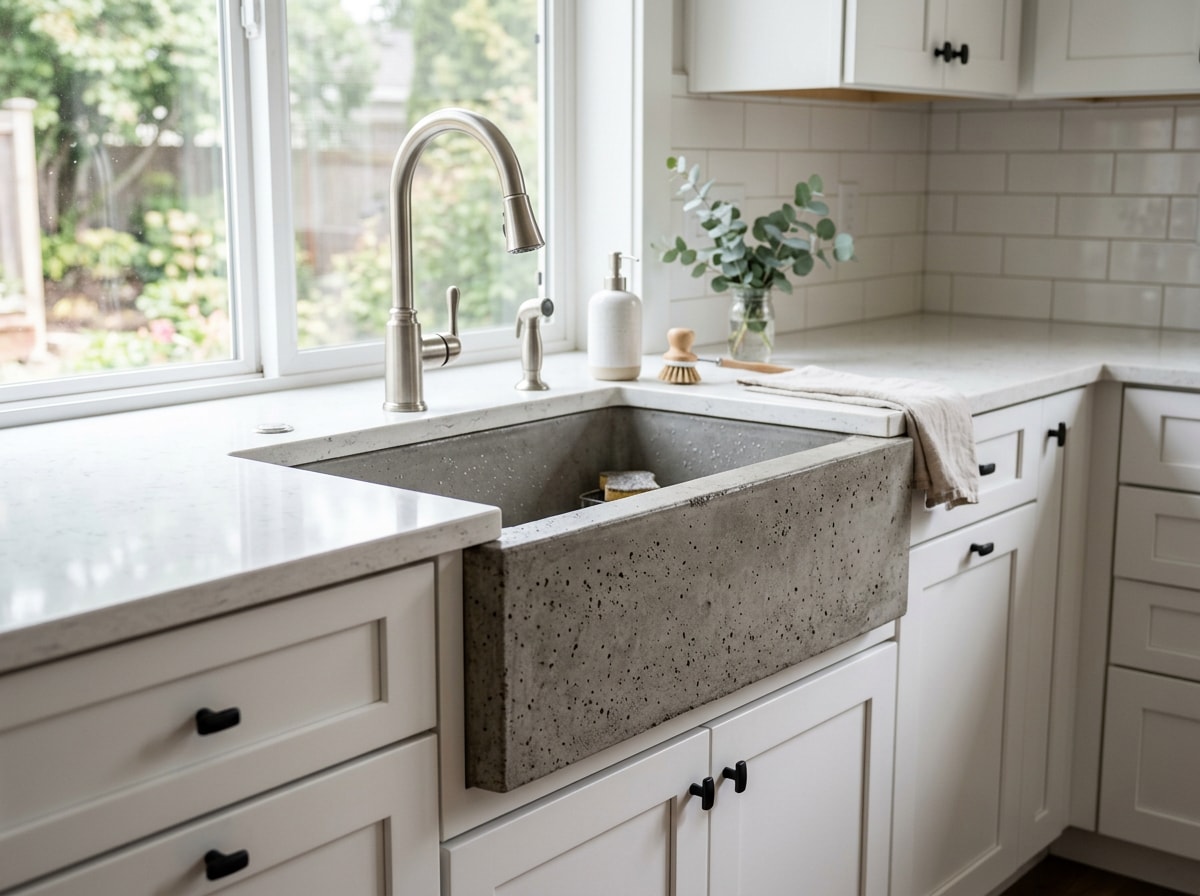
A concrete farmhouse sink, also called an apron sink, uses one large basin with an exposed front panel that sits flush against the cabinet face. It's a popular kitchen choice for homeowners who want a bold, handmade focal point instead of a drop-in bowl.
Installing one usually means modifying base cabinets to fit the apron, so plan for that early in a remodel. Builders who skip this step end up trimming cabinet rails on-site, which adds a day to the schedule.
Concrete Trough Sinks for Dallas Homes and Businesses
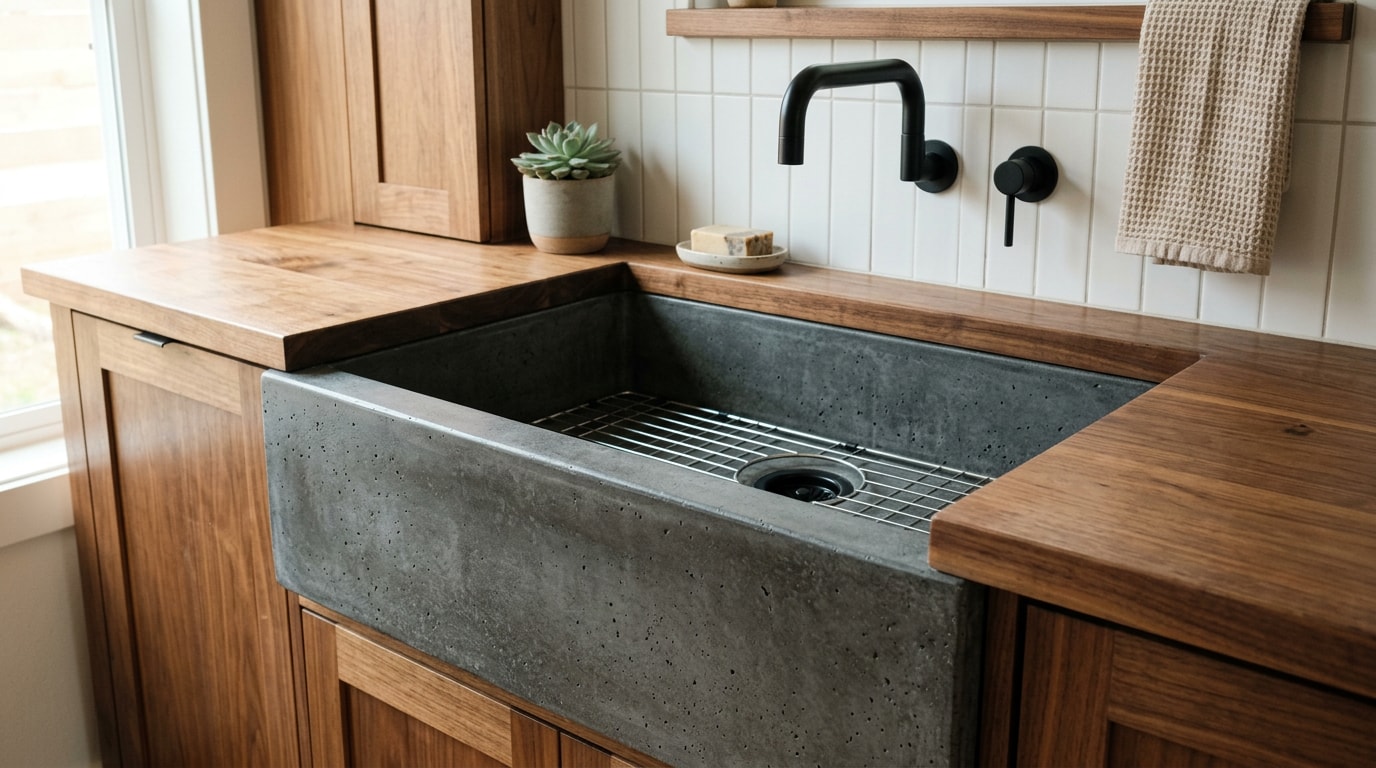
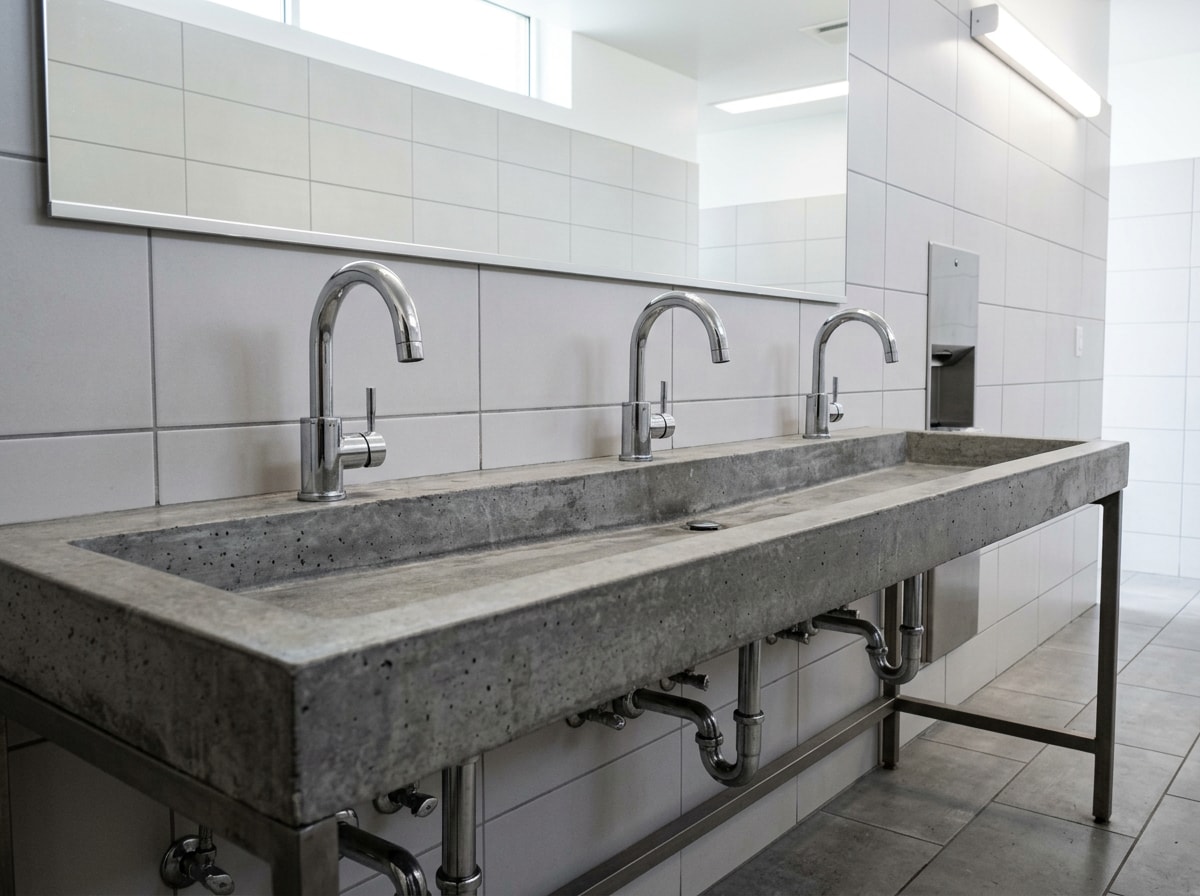
A concrete trough sink combines the counter and basin into one continuous piece, often used in commercial bathrooms, restaurants, and schools. Its long, shallow shape easily accommodates multiple faucets, which makes it practical for high-traffic restrooms.
Trough sinks can sit on cabinetry or hang from wall brackets, depending on the space and plumbing layout. DFW fabricators have built troughs almost six feet long with three equally spaced holes for faucets for matching bathroom pairs , a common spec for restaurant and office washrooms in this market.
Concrete Ramp Sinks: The Modern DFW Favorite
A concrete ramp sink slopes gently toward a narrow slot drain instead of a standard drain hole, creating a clean look with no visible hardware breaking up the basin. One regional example fits the pattern exactly: a Fort Worth concrete ramp style sink with a slot drain located at the bottom of the ramp instead of a hole .
This style has caught on in contemporary commercial spaces, offices, boutiques, restaurants, where the minimal look matters as much as function.
Concrete Sink Cost and Durability vs. Other Materials
Here's how concrete stacks up against the materials most North Texas homeowners compare it to:
| Material | Typical Cost | Durability | Maintenance |
|---|---|---|---|
| Concrete | $$$ (custom) | Very high with sealing | Reseal every 12-24 months |
| Stainless Steel | $$ | High | Low |
| Granite/Quartz | $$$ | High | Moderate |
| Porcelain | $ | Moderate | Low to moderate |
Local DFW fabricators commonly list custom concrete sinks starting as low as $950, with pricing rising based on size, shape, and finish . Expect a custom trough or large farmhouse basin to land well above that entry point.
North Texas's water supply is another factor most national buying guides skip. USGS mapping data shows a nearly unbroken band of hard-to-very-hard water stretching from the Dakotas through Texas , and most major Texas cities run hard to very hard, typically in the 10-25+ grains-per-gallon range . Harder water speeds up mineral buildup on a sealed surface, which is why a Dallas-area concrete sink often needs resealing sooner than the same sink installed somewhere with naturally soft water. The USGS water hardness primer explains how mineral content affects surfaces over time, worth a skim before you pick a sealer schedule.
How Custom Concrete Sinks Are Made
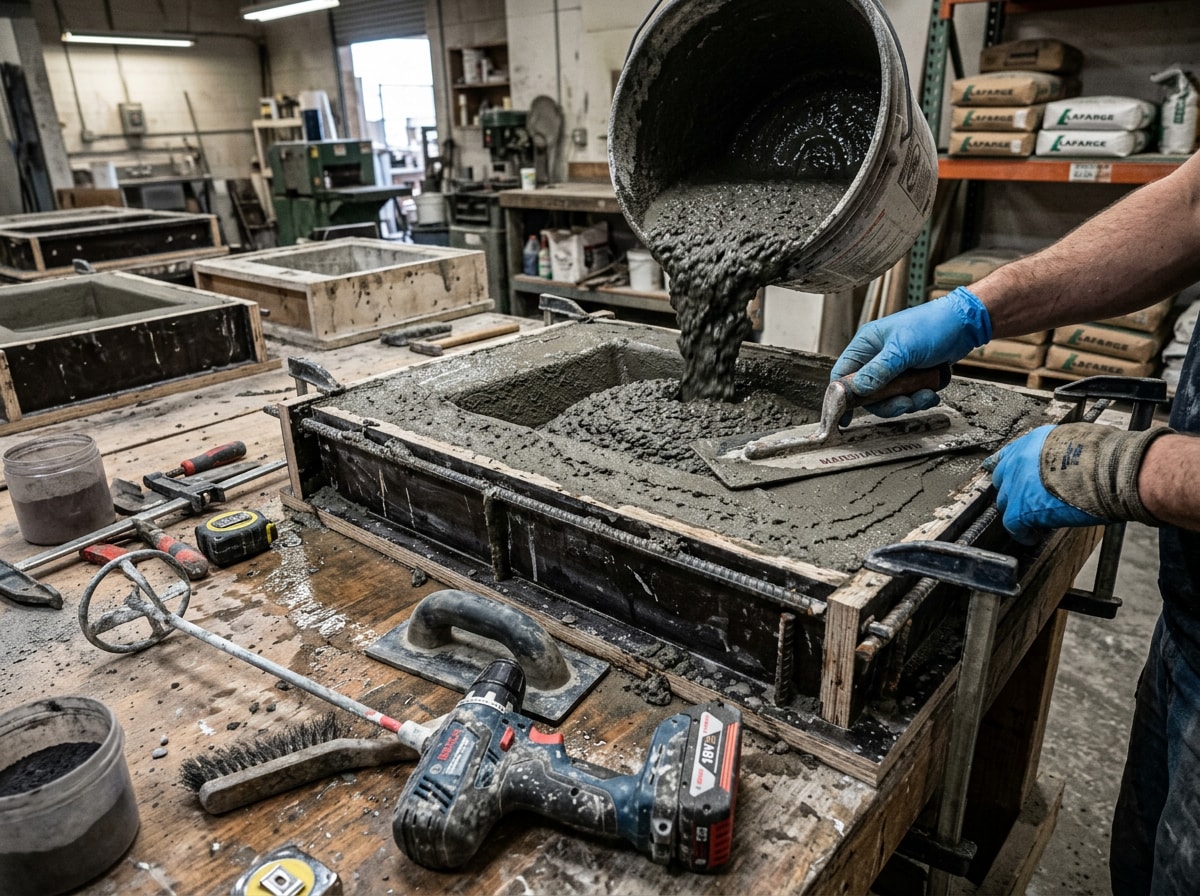
Understanding how concrete sinks are made explains why quality varies between fabricators. The process starts with a mold built to the client's exact dimensions.
Most fabricators pour sinks from glass fiber reinforced concrete (GFRC), which uses glass fibers mixed into the cement to give the piece strength and durability at a lower weight than traditional concrete, and lets it flex slightly under stress instead of cracking .
After curing for several days, the mold comes off, the surface is ground smooth, and the sink gets sealed to resist stains and moisture. Guidance from the American Concrete Institute on specifying and producing fiber-reinforced concrete backs up why fiber dosage and curing time matter for long-term strength; you can review the ACI fiber-reinforced concrete guide for the technical side of it.
Sealing and Maintenance: What Dallas Homeowners Should Expect
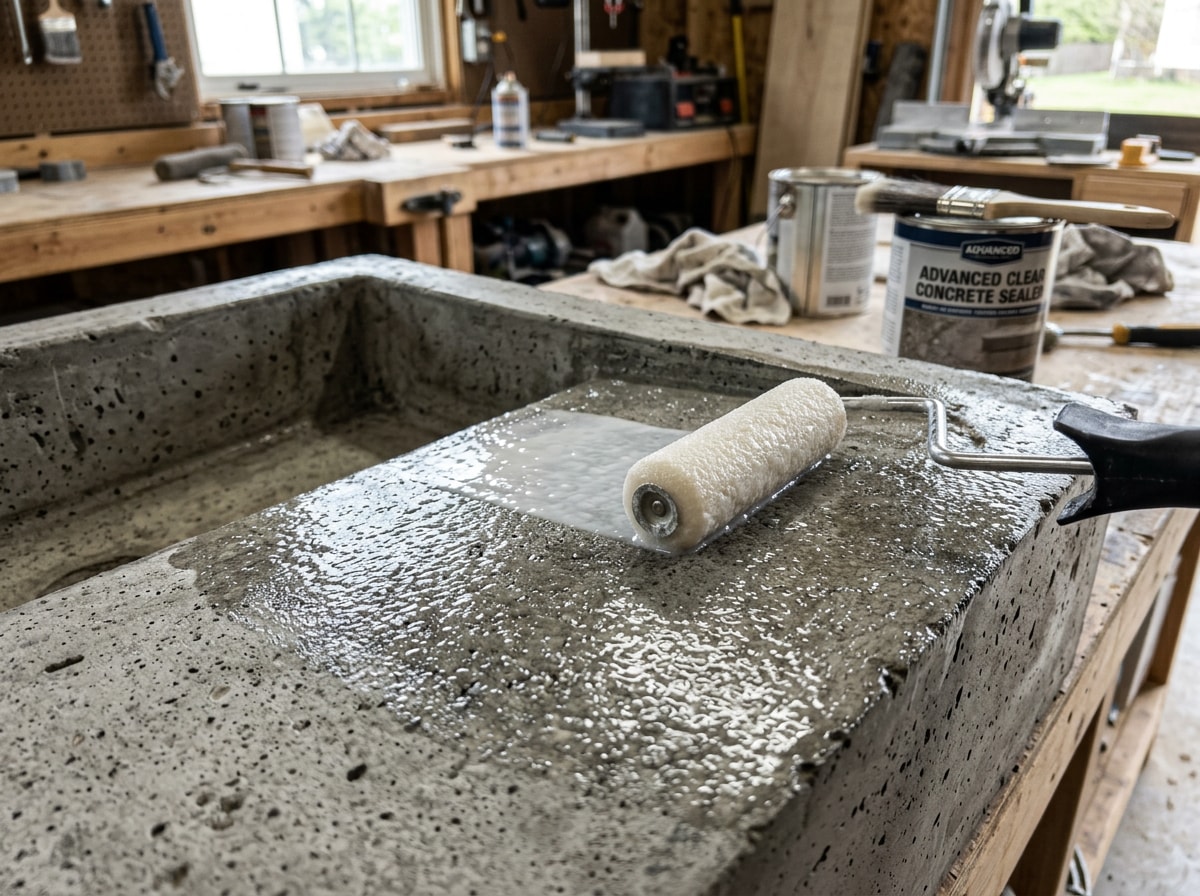
Concrete is porous by nature. A sealer either forms a thin protective film over the surface or soaks into the pores and blocks them from the inside, and every care rule for a concrete sink comes back to protecting that sealer .
Clean with pH-neutral soap and a soft cloth. Skip abrasive scrubbers and acidic cleaners (vinegar, citrus, wine) that eat through sealer over time. The ASCC sealer selection guide walks through sealer types in more detail if you want the full picture before choosing one.
Our Process at Hi-Tek Paving & Concrete
A quality fabricator turns that general process into a guided experience:
- Submit your request with size, style, and finish preferences.
- Review a design and confirm specs before anything gets poured.
- Approve the mix and color.
- Pour, cure, and finish the piece in our shop.
- Delivery and installation across the Dallas-Fort Worth Metroplex.
Lead times vary by complexity, so ask early if you're working around a remodel deadline. We serve Dallas, TX, Plano, TX, Rockwall, TX, Grand Prairie, TX, and Waxahachie, TX, along with the rest of the Metroplex. If you've got a custom concrete finishing project beyond sinks, like poured countertops or decorative floors, our concrete finishing crew uses the same hand-trowel techniques.
Ready to spec yours? Get a free estimate and we'll walk through size, style, and budget before anything gets poured.
Are Concrete Sinks Sold in Stores?
True custom concrete sinks rarely sit on store shelves since most are made to order, though a handful of mass-produced options exist online. Working with a local Dallas-area fabricator means you can see samples, ask questions, and get a sink built for your exact space instead of guessing from a product photo. Visit our homepage to see our full concrete and paving service lineup, or check our Hormigon Dallas, TX commercial concrete guide if you're pricing out a larger concrete project alongside the sink.
FAQ
How Much Does a Custom Concrete Sink Cost in Dallas?
Local fabricators commonly price custom concrete sinks starting around $950 , with larger troughs, double basins, and premium finishes pushing the price well past that starting point. Get an exact number by sharing your dimensions and style preference with a fabricator.
What Are Concrete Sinks?
Concrete sinks are fixtures made from a mixture of cement, sand, aggregate, and water, hand-built to create a durable, modern, industrial-looking basin for kitchens or bathrooms.
What Are the Advantages of Concrete Sinks?
Concrete sinks offer full customization in shape, size, color, and texture, plus strong heat and stain resistance once properly sealed. They're sculptural, quietly warm in a way porcelain isn't, and no two basins turn out exactly alike .
What Are the Disadvantages of a Concrete Sink?
Concrete is porous and must be treated to prevent staining and discoloration, and its surface is fairly easy to scratch or nick . It also weighs more than stainless or porcelain, so cabinetry needs to support the extra load.
Can Concrete Sinks Crack?
Cracking is a concern for some homeowners unfamiliar with concrete, but hairline cracks are normal and won't affect the stability of the sink; bigger cracks might . Small chips at the edges or drain opening can usually be patched with color-matched epoxy rather than requiring a full replacement.
Do Concrete Sinks Require Special Maintenance?
Yes. Reseal every 12 to 24 months depending on use and water hardness in your area. Clean with pH-neutral soap and a soft cloth, and skip abrasive scrubbers or acidic cleaners that wear down the sealer faster.